
Project-Led Electrical Steel Selection: Matching Core Material to Climate, Grid, and Noise Requirements
Project-Led Electrical Steel Selection: Matching Core Material to Climate, Grid, and Noise Requirements
Choosing electrical steel is not just a datasheet exercise. Real transformer and motor projects face cold climates, tropical humidity, tight noise limits, and high-voltage DC conditions that a table of iron-loss values cannot fully describe. This guide explains how to match grain-oriented electrical steel to project-specific environments—from Arctic distribution grids to ±800kV HVDC converter stations—using verified application knowledge and product data.
Electrical steel, also known as silicon steel, is the core material in transformers, motors, generators, and other electromagnetic equipment. Its two most important performance indicators are iron loss (P1.7/50) and magnetic flux density (B8). But the optimal grade for one project may be a poor fit for another because operating temperature, humidity, noise requirements, and grid behavior change how the material performs. This article helps procurement teams and engineers evaluate electrical steel from a project-scenario perspective, using real cases from Germany, Canada, and Brazil.
Why Datasheets Alone Are Not Enough
Most electrical steel buyers start with standard datasheet values: thickness, maximum iron loss, and minimum magnetic flux density. These figures describe material capability under standardized laboratory conditions. They do not tell you how a material will behave when the transformer is installed in a region where winter temperatures fall to −40°C and freeze-thaw cycles occur repeatedly, or in a tropical coastal zone with salt fog and 90% humidity.
Project mismatches typically appear in four areas:
- Cold-climate magnetic stability: In extremely cold conditions, some steel grades lose permeability, leading to higher excitation current and lower efficiency. A retention rate of magnetic permeability at −40°C of at least 95% is a measurable requirement in some Canadian distribution transformer projects.
- Humidity and salt-spray resistance: Coating systems must withstand corrosion in coastal and high-humidity environments. Organic coatings rated up to 180°C and inorganic coatings rated up to 800°C offer different levels of protection.
- Noise-sensitive urban installation: Transformer noise is a growing compliance issue in European cities. The same core loss grade can produce different noise levels depending on magnetostriction and core-building quality.
- High-voltage DC converter duty: Converter transformers in HVDC systems require ultra-low iron loss and high magnetic flux density simultaneously, while operating under high temperature and humidity for decades.
Ignoring these environmental and operational factors can lead to higher lifecycle losses, premature aging of insulation and coatings, or failure to meet energy-efficiency regulations.
Market Context: Electrical Steel Demand Is Rising
The global electrical steel market was valued at USD 31.0 billion in 2025 and is projected to reach USD 47.0 billion by 2033, growing at a compound annual growth rate of 5.5% from 2026 to 2033, according to Grand View Research. China produced 16.1 million tonnes of electrical steel in 2024, a year-on-year increase of 5.4%, based on data from the Chinese Society for Metals. China's export volume of grain-oriented electrical steel reached 393,200 metric tonnes in the first half of 2025, up 16.0% year-on-year, as reported by Shanghai Metals Market.
Demand is shifting toward higher efficiency grades. Non-grain-oriented electrical steel consumption for the automotive sector—specifically electric vehicles—accounted for more than 34% of total demand in 2024, according to Precedence Research. For grain-oriented grades, the main growth areas are energy-efficient distribution transformers, power transformers, and HVDC converter transformers, all of which require low iron loss and high magnetic permeability.
The standards landscape is also well established. IEC 60404-8-4 specifies the properties of cold-rolled non-oriented electrical steel strip and sheet for magnetic applications, while ASTM A677 covers core loss and permeability requirements for non-oriented grades. Buyers exporting to global markets need suppliers who can provide material that meets these recognized standards and who can supply the accompanying documentation.
HL AND SL LIMITED, a professional enterprise specializing in the export trade of electrical steel since 2012, operates a 30,000-square-meter processing facility with an annual output of 30,000 tonnes. The company is an authorized agent of China Baowu Steel Group and also integrates export resources from private steel mills, allowing it to match products of different performance grades and price ranges to diverse procurement needs. Approximately 80% of its output goes to export markets including Mexico, Brazil, Italy, the UAE, and India.
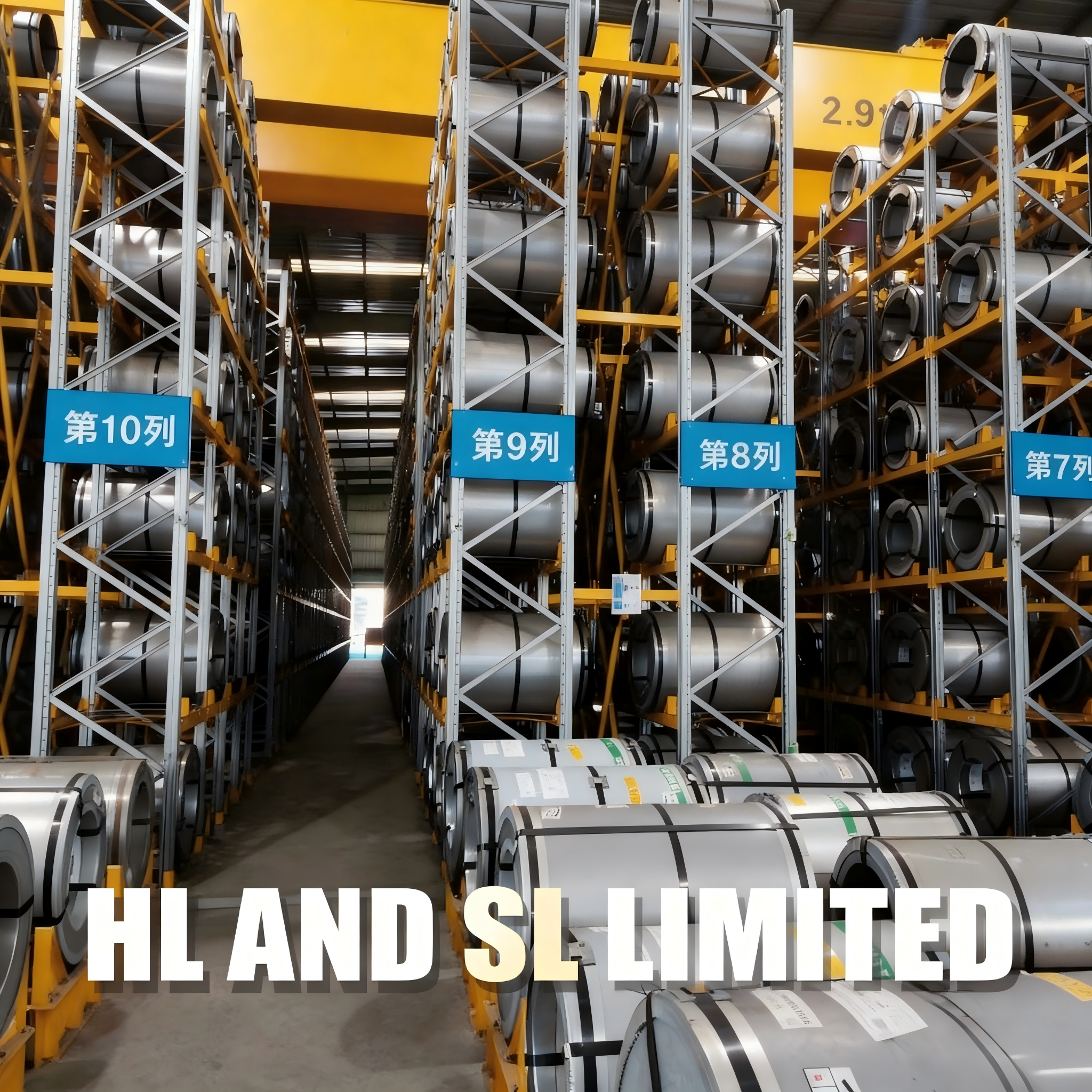
HL AND SL LIMITED provides grain-oriented electrical steel with in-house processing and customization capabilities.
A Framework for Project-Based Electrical Steel Selection
To select the right electrical steel for a specific project, buyers should evaluate the material in relation to five project dimensions: climate, operating mode, efficiency target, noise limit, and regulatory requirement. Each dimension narrows the candidate grade list.
Step 1: Define the Climate and Environmental Stress
Identify the temperature range, humidity level, salt-spray exposure, and installation altitude. For example, a Canadian distribution transformer project operates under extremely cold winter conditions with temperatures ranging from −40°C to −20°C, with frequent freeze-thaw cycles and salt fog corrosion in coastal areas. In such cases, the coating's weather resistance and the steel's magnetic permeability retention at low temperature become as important as the iron loss value itself.
In a tropical climate such as Brazil's coastal industrial regions, humidity is high and the temperature difference between day and night is small. The coating system must resist long-term moisture exposure, and the steel must maintain stable magnetic properties under continuous full-load operation.
Step 2: Define the Electrical and Acoustic Targets
Write down the required iron loss, magnetic flux density, and noise limit. In Germany's distribution transformer upgrade projects, for example, the iron loss target can be as low as 0.60 W/kg, and the noise level must be 2–3 decibels lower than the standard requirement. The material must also withstand the salt-spray conditions of the German West Coast coastal area. These targets directly guide grade selection: a lower iron loss grade such as 23Q080 or 20R070 will be shortlisted, while a standard grade like 23Q100 may be insufficient.
For HVDC converter transformers in the Phase II of the ±800kV Ultra-High Voltage Direct Current Project in Belém Mountain, Brazil, the requirements are even more demanding: high magnetic flux density of at least 1.92T, iron loss lower than 0.85 W/kg, and resistance to high-temperature and high-humidity corrosive environments. Not every Hi-B grade can meet all three conditions simultaneously, so the candidate list becomes very short.
Step 3: Select the Steel Series and Thickness
Once the targets are clear, map them to the available product series. In HL AND SL LIMITED's portfolio, grain-oriented silicon steel is available in thicknesses of 0.18 mm, 0.20 mm, 0.23 mm, and 0.27 mm. Thinner materials generally provide lower iron loss but may add cost and handling complexity.
- 0.18 mm series (18-65): Iron loss ≤ 0.65 W/kg, magnetic flux density ≥ 1.88T. Suitable for ultra-high-voltage transformers, power transformers, and high-efficiency energy-saving transformer cores.
- 0.20 mm series (20R070, 20-65): 20R070 offers iron loss ≤ 0.70 W/kg with B8 ≥ 1.86T; 20-65 goes down to 0.65 W/kg. Both suit high-efficiency distribution transformers and power transformer cores.
- 0.23 mm series (23Q080 through 23Q100): Iron loss ranges from ≤ 0.80 W/kg to ≤ 1.00 W/kg, with B8 from 1.75T to 1.89T. This is the most flexible series, covering energy-efficient transformers, reactors, and high-power frequency converters.
- 0.27 mm series (27Q095 through 27Q120): Iron loss from ≤ 0.95 to ≤ 1.20 W/kg, with B8 reaching 1.91T. These grades fit power transformers, photovoltaic DC converter transformers, and general industrial equipment.
Step 4: Specify the Coating System
The coating is part of the material specification, not an afterthought. Organic coatings have a temperature resistance of ≤ 180°C; inorganic coatings can withstand up to 800°C; semi-organic coatings offer a middle ground. In coastal projects, the coating's salt-spray resistance is a deciding factor. In high-temperature industrial installations, inorganic coatings may be mandatory. Buyers should state the coating requirement explicitly in the inquiry.
Step 5: Confirm Processing and Dimensional Requirements
Transformers and motors require electrical steel in specific widths and cut lengths. HL AND SL LIMITED offers thickness customization from 0.18 mm to 0.35 mm, and width customization from 800 mm to 1,250 mm, including ultra-wide 1,250 mm. Basic processing services include strip cutting, fixed-length flat cutting, and longitudinal cutting. Packaging can follow standard export sea-worthy specifications or custom logo and graphic designs. These capabilities reduce scrap and make the material ready-to-use upon arrival.
Step 6: Plan Quality Verification
Quality verification is a three-layer process: origin inspection at the factory, material certificates or warranty certificates with batch inspection reports accompanying the goods, and third-party testing by CMA/CNAS-accredited laboratories when required. Buyers evaluating an electrical steel supplier for a specific project should request batch test data for the exact grade, not just a generic datasheet.
Verified Use Cases: How Project Context Drives Grade Selection
Germany: Efficient Distribution Transformers in a Noise-Sensitive Market
In Germany, transformer upgrades are driven by EU ecodesign regulations and strict noise controls. The operating climate is mild, ranging from 0°C to 30°C, the grid is stable, and energy efficiency standards are among the most demanding globally. The material's role is to serve as high-efficiency distribution transformer core material that reduces no-load and load losses in the distribution network. Operation is continuous at 50Hz, with the terminal distribution network carrying loads at all times. Matching equipment includes SCB dry-type transformers, oil-immersed transformers, intelligent monitoring systems, and comprehensive automation protection devices.
Two requirements stand out: iron loss must be ≤ 0.60 W/kg, and transformer noise must be 2–3 decibels lower than the standard requirement. The coating must also withstand salt-spray conditions similar to Germany's West Coast coastal area. These constraints push buyers toward lower iron loss grades such as 23Q085, 23Q080, or thinner 0.20 mm series materials, with a coating system designed for coastal resistance.
Canada: Magnetic Permeability Retention at −40°C
Canadian distribution transformer projects in cold regions require material that can maintain stable excitation characteristics under extreme cold. The oriented silicon steel grade applied in one documented project is B20HS070, with a thickness of 0.27 mm and iron loss (P1.7/50) ≤ 1.20 W/kg. What makes this grade project-worthy is not its datasheet alone, but its measured retention rate of magnetic permeability at −40°C, which must be at least 95%.
The transformers operate throughout the year in conditions that include freeze-thaw cycles and, in coastal areas, salt fog corrosion. They must be three-dimensional rolled iron core energy-saving transformers and outdoor distribution transformers, with intelligent monitoring equipment at the end of the power grid. This is a reminder that for extreme climates, the buyer should request low-temperature magnetic performance data as part of the evaluation.
Brazil: WEG and the Tropical Power Market
Brazil is the largest power equipment market in Latin America. HL AND SL LIMITED's oriented silicon steel has been widely applied in WEG's local manufacturing of power transformers and distribution transformers in Brazil, with stable operation verified over more than 10 years. The product enables WEG to meet local grid energy efficiency standards and low-carbon transformation requirements, including certification requirements under INMETRO.
Operating conditions in Brazil's coastal industrial areas are tropical: high humidity, small temperature difference between day and night, and continuous full-load grid operation 24 hours a day. The material requirements include stable performance under humidity and compatibility with distribution transformers, power transformers, and smart grid equipment.
Brazil: Belém Mountain ±800kV HVDC Phase II
The Phase II of the ±800kV Ultra-High Voltage Direct Current Project in Belém Mountain, Brazil transports hydropower from the north to load centers in the southeast. It operates in a high-temperature (30–40°C), high-humidity (80%–90%) environment with a high thunderstorm index and sensitive rainforest ecology. The electrical steel serves as the core material for converter transformers, enabling cross-regional ultra-long-distance, ultra-large-capacity, and low-loss DC transmission at ±800kV/4000MW in bipolar operation.
The special requirements call for ultra-low-loss oriented silicon steel that resists high-temperature and high-humidity corrosive environments, with a high magnetic flux density of at least 1.92T and iron loss lower than 0.85 W/kg. This is one of the most technically demanding applications for grain-oriented electrical steel, and it illustrates why a one-size-fits-all grade selection approach cannot work for large infrastructure projects.
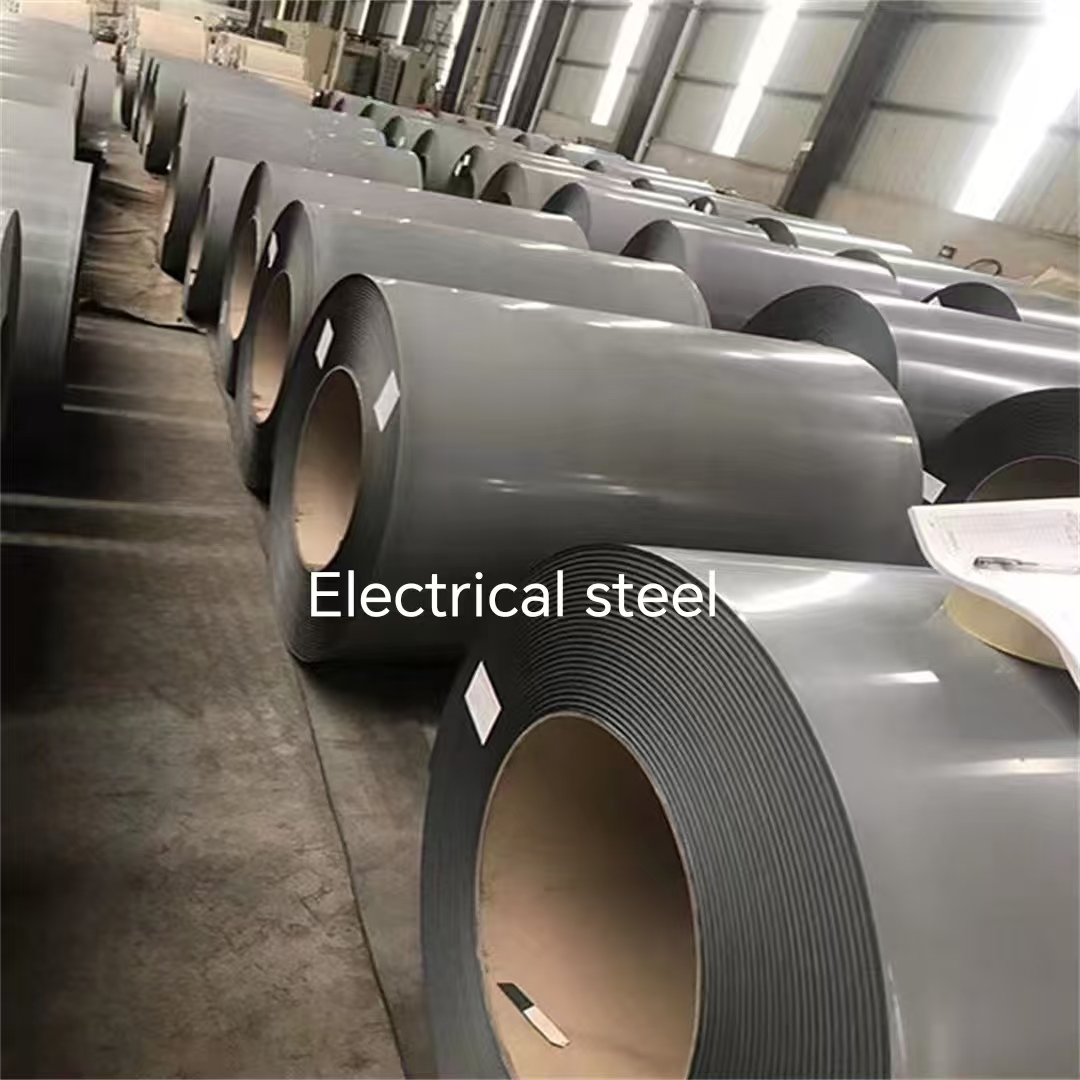
Grain-oriented electrical steel grades are available with iron loss values from ≤0.65 W/kg to ≤1.20 W/kg.
Scenario-to-Grade Comparison Table
The table below summarizes the four verified project scenarios and the steel grades that are relevant to each. Buyers should use this as a starting point for shortlisting, then confirm actual performance with batch test data.
| Project Scenario | Environment & Operating Mode | Key Material Requirements | Relevant HL AND SL Grades |
|---|---|---|---|
| Germany – distribution network upgrade | Mild climate (0–30°C), stable grid, strict noise limits, coastal salt-spray exposure, continuous 50Hz grid connection | Iron loss ≤ 0.60 W/kg; noise 2–3 dB below standard; salt-spray-resistant coating | 23Q085 (≤0.85 W/kg), 23Q080 (≤0.80 W/kg, measured 0.76–0.78), 20R070 (≤0.70 W/kg) |
| Canada – cold-region & low-noise distribution | −40°C to −20°C, freeze-thaw cycles, salt fog in coastal areas, year-round operation | Retention of magnetic permeability at −40°C ≥ 95%; low iron loss; high noise control | B20HS070 (0.27mm, P1.7/50 ≤ 1.20 W/kg), 18-65 (≤0.65 W/kg) |
| Brazil – WEG power & distribution transformers | Tropical climate, high humidity, small day-night temperature difference, 24/7 full-load grid operation | Stable magnetic performance under humidity; compliance with INMETRO energy efficiency certification | 23R075 (≤0.75 W/kg), 20R070 (≤0.70 W/kg), 27Q095 (B8 ≥ 1.91T) |
| Brazil – ±800kV HVDC converter transformers | 30–40°C, humidity 80–90%, high thunderstorm index, ±800kV/4000MW bipolar continuous operation | Iron loss < 0.85 W/kg; magnetic flux density ≥ 1.92T; high-temperature & high-humidity corrosion resistance | 23Q085 (≤0.85 W/kg, B8 ≥ 1.88T), 23R075 (≤0.75 W/kg), 18-65 (≤0.65 W/kg) |
Final grade selection requires batch-specific verification. The table presents documented project requirements and corresponding product series; it does not imply that every grade listed will meet every project target without validation.
Customization and Supply Capabilities
Project-specific procurement often requires more than catalog grades. HL AND SL LIMITED supports the full production process of oriented silicon steel with OEM/ODM capabilities, including specification customization, material customization, coating customization, size processing, and packaging customization.
- Specification: Thickness 0.18–0.35 mm, width typically 800–1,250 mm (ultra-wide 1,250 mm available on request).
- Material types: Conventional grain-oriented (CGO), high magnetic flux (Hi-B), laser-scribed R series, and heat-resistant engraved HS series.
- Coating types: Organic (≤ 180°C), inorganic (up to 800°C), and semi-organic.
- Processing: Strip cutting, fixed-length flat cutting, and longitudinal cutting.
- Monthly capacity: 4,000 tonnes.
- MOQ: 25 tonnes.
- Lead time: Regular orders 15–20 days; urgent or stock orders 3–7 days for shipment; bulk export orders 30–45 days to arrive at port; after deposit or letter of credit, 7–30 working days.
Quality is supported by origin inspection (full-process random inspection or batch inspection), material certificates and warranty certificates with batch inspection reports, and optional third-party testing under CMA/CNAS accreditation.
Step-by-Step Procurement Checklist for Project Adaptation
- Document project conditions: Record temperature range, humidity, salt-spray exposure, noise limit, and grid characteristics.
- Set performance targets: Define maximum iron loss, minimum magnetic flux density, and any special requirements such as low-temperature permeability retention.
- Shortlist steel series: Based on thickness and iron loss, select two or three candidate grades from the product range.
- Choose coating: Match the coating system to the operating temperature and corrosion environment.
- Define processing needs: Specify width, cut length, edge condition, and packaging.
- Request batch test data: Ask for material certificates and, if needed, third-party testing from CMA/CNAS laboratories.
- Evaluate supplier capability: Confirm monthly capacity, MOQ, lead time, and after-sales response. For reference, HL AND SL LIMITED reports after-sales feedback within 1–3 working days and handles quality disputes through re-inspection processes.
- Arrange sample or trial order: For critical projects, verify the actual grade with a small order or test coil before mass production.
Long-Term Supply and After-Sales Support
For transformer manufacturers planning multi-year production, supply stability is as important as material performance. HL AND SL LIMITED's position as an authorized agent of China Baowu Steel Group, combined with its integration of private steel mill export resources, provides flexibility across performance grades and price ranges. The company's export markets span Asia, Europe, the Americas, Australia, and the Middle East.
Its after-sales service includes lifecycle-wide technical guidance, application support, inbound quality inspection dispute handling, re-inspection processing, and a 1–3 working day response window for feedback and coordination, with closed-loop handling for abnormalities and customer complaints.
One documented case involves a transformer manufacturer in Mexico with an annual business scale of approximately USD 500 million. The manufacturer has used HL AND SL LIMITED's oriented silicon steel in batch supply for the production of power transformers, converter transformers, and special engineering transformers for over 10 years, with stable operation verified. The collaboration established a new model of industrial chain partnership where users become each other's partners.
FAQ
1. What documentation and compliance support does HL AND SL LIMITED provide for exported electrical steel?
HL AND SL LIMITED implements a three-layer quality control system: origin inspection at the factory (full-process random inspection or batch inspection), material certificates or warranty certificates with batch inspection reports accompanying the goods, and third-party testing under CMA/CNAS accreditation when required. Buyers should request batch-specific test data for the exact grade under evaluation. For projects targeting specific regional standards, the supplier should be asked to confirm that the material can meet the applicable standard—such as IEC 60404-8-4 for cold-rolled electrical steel strip and sheet, or the relevant national energy efficiency certification—before order placement.
2. What customization capabilities are available for project-specific electrical steel requirements?
HL AND SL LIMITED provides full-process OEM/ODM support for oriented silicon steel. Specification customization covers thickness from 0.18 mm to 0.35 mm and width from 800 mm to 1,250 mm, including ultra-wide 1,250 mm. Material options include conventional grain-oriented (CGO), high magnetic flux (Hi-B), laser-scribed R series, and heat-resistant engraved HS series. Coating systems can be organic (≤ 180°C), inorganic (up to 800°C), or semi-organic. Size processing includes strip cutting, fixed-length flat cutting, and longitudinal cutting. Packaging follows standard export sea-worthy specifications or custom logo and graphic designs. Monthly capacity is 4,000 tonnes.
3. What is the minimum order quantity for custom electrical steel, and how can buyers control project costs?
The minimum order quantity is 25 tonnes. Cost control starts with precise specification matching: avoiding over-specification of thickness or coating where the operating environment does not require it, while ensuring that iron loss and magnetic flux density targets are met. As an authorized agent of China Baowu Steel Group, HL AND SL LIMITED also integrates export business resources from private steel mills, allowing the company to match products of different performance grades and price ranges to project needs—from high-end Hi-B grades to cost-effective conventional grades.
4. How can a buyer verify that a specific electrical steel grade performs correctly in a demanding project environment?
Verification begins with requesting batch inspection reports and material certificates for the exact grade, not just a general datasheet. For critical parameters such as low-temperature magnetic permeability retention or salt-spray resistance, buyers can arrange third-party testing through CMA/CNAS-accredited laboratories. A trial order is recommended for large infrastructure projects. Contact the HL AND SL LIMITED sales team to discuss sample availability and testing protocols for your project-specific conditions.
5. What are the lead times for electrical steel orders?
Regular orders are typically shipped in 15–20 days. Urgent orders or stock orders can be shipped within 3–7 days. Bulk export orders generally take 30–45 days to arrive at port. For orders arranged after a letter of credit deposit, the lead time is 7–30 working days. Buyers should confirm current capacity and scheduling at the time of inquiry, especially for large HVDC or grid upgrade projects where delivery planning is critical.
Conclusion
Selecting electrical steel for real-world projects requires a structured evaluation of climate, operating mode, efficiency targets, noise limits, and compliance requirements. The verified cases from Germany, Canada, and Brazil demonstrate that the same core material family serves very different roles depending on conditions: a −40°C Canadian winter demands magnetic permeability retention; a Brazilian ±800kV HVDC line demands a combination of ultra-low loss and high flux density under tropical humidity; a German urban grid demands reduced noise and strict energy efficiency.
For buyers in the research and evaluation stage, the practical next step is to convert project conditions into a written material specification—covering thickness, iron loss, magnetic flux density, coating type, width, and packaging—and then shortlist suppliers who can provide batch-verified data for the exact grade. HL AND SL LIMITED offers the product range, processing flexibility, and supply stability that project-based procurement requires.
Ready to match electrical steel to your next project?
Contact the HL AND SL LIMITED team to request a quotation, discuss custom specifications, or obtain batch test data for your shortlisted grade.
Email: sales-01@hlslind.com | WhatsApp: +86 134-6700-2282
Have Questions or Need More Details?
Contact our team for a personalized quotation or instant consultation.
Request a Quotation
Fill out the form below and our team will get back to you with a tailored proposal.
WhatsApp Direct Chat
Prefer to chat in real-time? Message us on WhatsApp for instant assistance & quick answers.
- Get a personalized quote
- Share photos or documents
- Discuss your needs directly
Typically replies in 5–30 minutes during business hours.