
Silicon Steel Explained: A Full Industry Guide to Grain-Oriented Grades
Silicon Steel: Types, Grades, Applications, and How to Choose
A practical, evidence-based guide to grain-oriented and non-oriented silicon steel, covering product grades, transformer applications, processing, quality considerations, and global procurement principles.
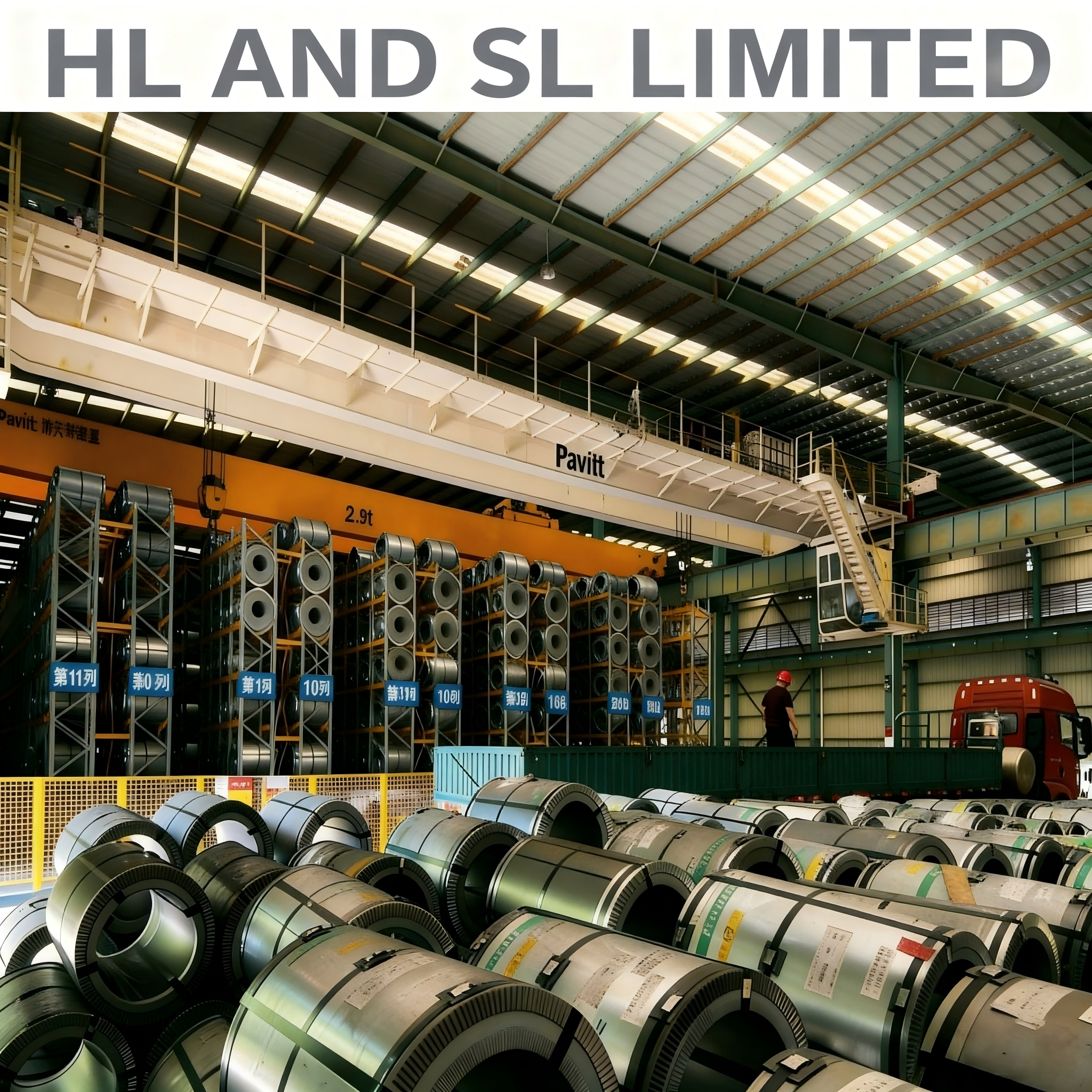
HL AND SL LIMITED focuses on electrical steel export and silicon steel processing services.
What Is Silicon Steel?
Silicon steel, also called electrical steel, is a specialized iron-silicon alloy used to make magnetic cores in transformers, motors, generators, reactors, and other electromagnetic equipment. Adding silicon to iron increases electrical resistivity, which reduces eddy-current losses, while a carefully controlled grain structure optimizes magnetic performance. In simple terms, silicon steel determines how efficiently electrical equipment converts and transmits power.
Grain-oriented silicon steel (GOES) is processed so that the magnetic domains align in the rolling direction, providing excellent permeability and low core loss along that direction. It is the standard choice for transformer cores where magnetic flux follows a controlled path. Non-oriented silicon steel (NOES) has a more uniform magnetic behavior in all directions and is typically used in rotating machines such as motors and generators.
Global Market Context: Why Silicon Steel Is Strategically Important
The global electrical steel market was valued at approximately USD 31.0 billion in 2025 and is projected to grow to around USD 47.0 billion by 2033, based on market research published by Grand View Research. A significant portion of this demand comes from grain-oriented grades used in power and distribution transformers, where energy-efficiency regulations are pushing manufacturers toward lower-loss materials.
Non-grain-oriented electrical steel held an estimated 69.7% share of the total electrical steel market in 2025, according to MarketsandMarkets. However, grain-oriented silicon steel continues to grow as a specialized segment because of its irreplaceable role in transformer cores. The grain-oriented silicon steel market was valued at approximately USD 13.55 billion in 2025 and is projected to reach around USD 23.57 billion by 2035, at a CAGR of approximately 5.8%, according to Research Nester. This type of demand is closely tied to grid modernization, renewable-energy integration, electric-vehicle charging infrastructure, and stricter transformer-efficiency standards.
China is the world’s largest steel exporter. In 2024, China’s total steel exports reached a record 117.055 million metric tons, a 25.1% increase year on year, according to data from the General Administration of Customs cited by S&P Global. Electrical steel is among the value-added products moving through this global supply chain. Understanding which suppliers can provide consistent quality, precise processing, and reliable export execution has therefore become an important buying consideration.
HL AND SL LIMITED: Company Profile
HL AND SL LIMITED is a professional enterprise founded in 2012, specializing in the export trade of electrical steel (silicon steel). The company operates a 30,000 m² manufacturing facility with approximately 50 employees, including a dedicated R&D team of 10 engineers, and maintains an annual production capacity of 30,000 tons.
The company is an authorized agent of China Baowu Steel Group, which provides a stable channel for high-quality electrical steel. In parallel, HL AND SL LIMITED integrates export business resources from private steel mills to offer a flexible range of products across different performance grades and price levels. This dual-sourcing model allows buyers to choose between high-end grain-oriented silicon steel and more cost-effective non-oriented silicon steel depending on application needs.
Approximately 80% of the company’s products are exported, with major markets including Mexico, Brazil, Italy, the UAE, and India. The company’s headquarters is registered in Taiyuan, Shanxi Province, China, with contact details available for global buyers.
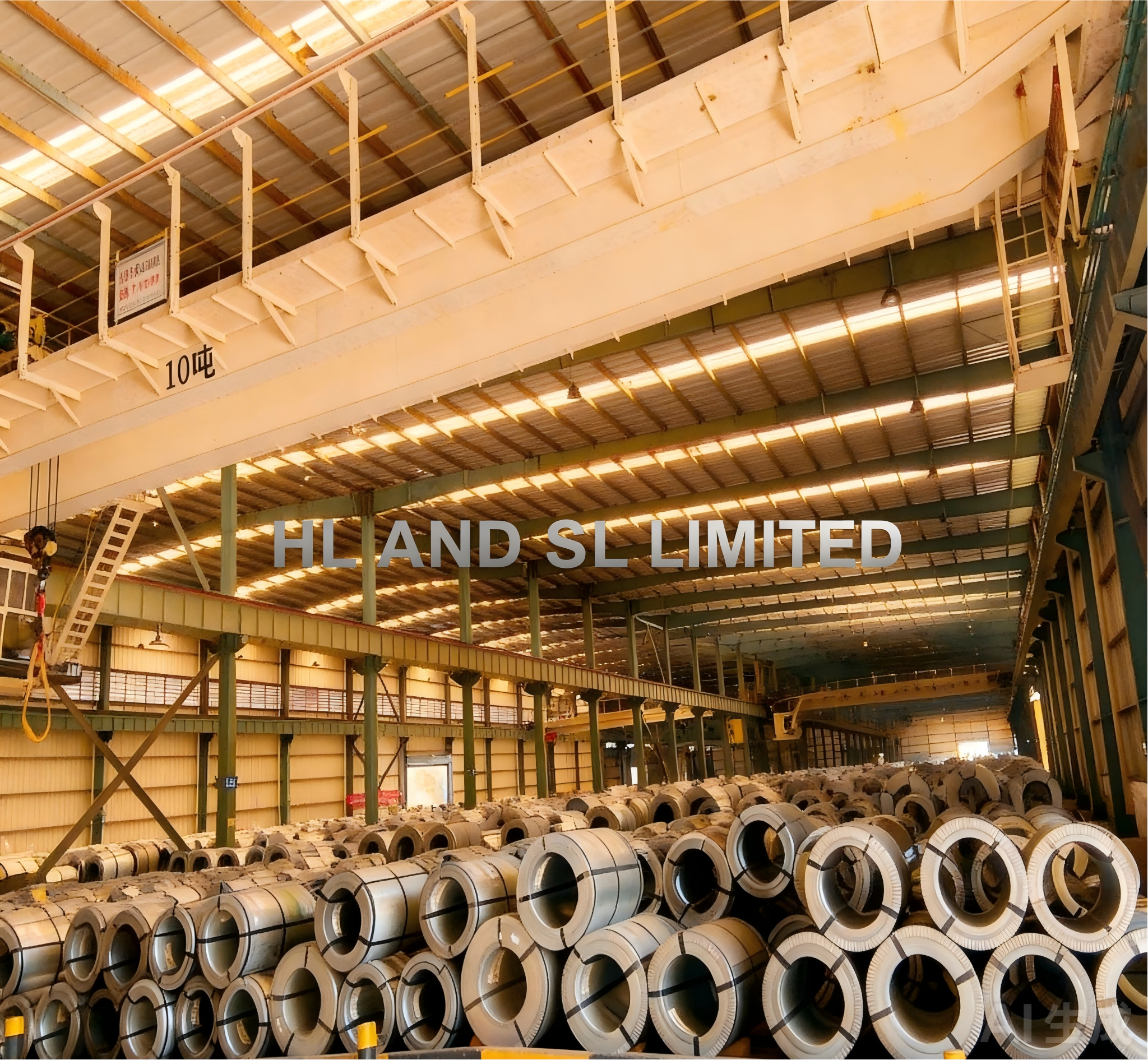
The company combines upstream supply integration with in-house secondary processing.
Core Products: Grain-Oriented Silicon Steel Grades
HL AND SL LIMITED supplies high magnetic induction grain-oriented silicon steel (Hi-B) in multiple thicknesses and loss classes. The product family includes common grades such as 27Q120, 27Q110, 27Q105, 27Q100, 27Q095, 23R075, and 20-65. These products are intended for transformer cores, including power transformers and high-efficiency distribution transformers.
The main component of these steels is iron, with silicon added at approximately 3.0% to 3.2%. Impurities such as carbon, sulfur, and nitrogen are strictly controlled, and inhibitors such as MnS and AlN are used to enhance magnetic properties. The combination of high magnetic induction and controlled grain orientation enables lower iron loss and higher permeability in transformer operation.
Key Electrical Steel Grades and Performance
| Model | Thickness | Iron Loss (P1.7/50) | Magnetic Flux Density (B8) | Typical Application |
|---|---|---|---|---|
| 20-65 | 0.20 mm | ≤ 0.65 W/kg | ≥ 1.88 T | Ultra-high voltage transformers, high-efficiency distribution transformers |
| 23R075 | 0.23 mm | ≤ 0.75 W/kg | ≥ 1.88 T | Energy-efficient distribution transformers, power transformer cores |
| 27Q095 | 0.27 mm | ≤ 0.95 W/kg | ≥ 1.91 T | High-efficiency power transformers, photovoltaic converter transformers |
| 27Q100 | 0.27 mm | ≤ 1.00 W/kg | ≥ 1.91 T | Power transformers, reactors, electrical equipment cores |
| 27Q105 | 0.27 mm | ≤ 1.05 W/kg | ≥ 1.88 T | Power transformer cores, transformer manufacturing |
| 27Q110 | 0.27 mm | ≤ 1.10 W/kg | ≥ 1.88 T | Power transformers, automotive generators, electrical equipment |
| 27Q120 | 0.27 mm | ≤ 1.20 W/kg | Not specified | Small and medium transformer cores, electrical equipment |
These grades are classified as high magnetic induction grain-oriented silicon steel (Hi-B). The numerical designation in each model refers to the maximum guaranteed iron loss at 1.7 T and 50 Hz. Lower iron loss values correspond to higher energy efficiency but also higher material cost. Selecting the right grade requires balancing transformer efficiency targets, allowable core loss budget, and total cost of ownership.
Manufacturing Capabilities and Secondary Processing
HL AND SL LIMITED owns a fully equipped material processing plant, which distinguishes it from many trading companies that simply resell mill coils. The company can provide precise secondary processing based on customer requirements for size, shape, and performance. This means materials can be customized on demand and delivered in a ready-to-use condition, reducing downstream processing time for transformer manufacturers.
The company’s manufacturing facility spans 30,000 m², with an annual production capacity of 30,000 tons. The R&D team of 10 engineers supports technical evaluation, material selection, and application support for customers. For buyers, in-house processing capacity reduces the need to source additional slitting, shearing, or cutting services separately, which can shorten lead times and simplify the supply chain.
Quality Control and Standards
Quality control for electrical steel is primarily evaluated through magnetic properties, geometric tolerances, coating integrity, and surface condition. Key parameters include iron loss (W/kg at 1.7 T/50 Hz), magnetic flux density (B8), and the consistency of thickness across the coil.
In international trade, buyers commonly reference standards such as ASTM A677/A683 for non-oriented electrical steel in the North American market and IEC 60404-8-4 for non-oriented fully processed electrical steel delivered in the final annealed state. For grain-oriented silicon steel, IEC 60404-8-7 is the relevant international specification. When sourcing from any supplier, ask for material certificates and test reports that align with the standard required for your market.
For the European market, EU environmental regulations and Ecodesign requirements increasingly influence material selection. For North American projects, ASTM-aligned documentation is frequently required. A supplier that can provide traceable material certification and respond to application-specific technical questions reduces procurement risk.
Applications Across the Electrical Value Chain
Grain-oriented silicon steel is used in several critical electrical applications. The following scenarios illustrate real-world performance requirements and why grade selection matters.
Distribution Transformer Upgrades in Germany
In Germany, distribution transformer upgrade projects are driven by EU ecodesign regulations and strict efficiency requirements. The operating environment is mild, with temperatures generally ranging from 0 to 30 degrees Celsius, and the power grid is stable. However, noise requirements for transformer operation are strict. For this type of project, the core material must reduce no-load and load losses in the distribution network while also meeting demanding acoustic and coating requirements. HL AND SL LIMITED’s product range, including grades such as 27Q120, 23Q090, and 23R075, is suitable for high-efficiency distribution transformer cores. Specific project requirements may include iron loss levels around 0.60 W/kg, noise performance 2–3 decibels lower than standard requirements, and coating weather resistance suitable for coastal conditions.
Grid Upgrade in Canada’s Cold Regions
Canada’s high-efficiency, low-noise distribution transformer projects face extreme cold winter conditions, with temperatures ranging from -40°C to -20°C, frequent freeze-thaw cycles, and salt-fog corrosion in some coastal areas. Transformers in this environment must maintain stable excitation characteristics throughout the year and meet high noise-control requirements. For this application, oriented silicon steel must exhibit extremely low iron loss and stable magnetic permeability at low temperatures. The magnetic permeability retention rate at -40°C is a critical requirement for Class 1 energy-efficient rolled iron core transformers.
Brazilian National Grid and HVDC Transmission
In Brazil, the largest power market in Latin America, oriented silicon steel is widely used in the local transformer production of WEG Brazil. The Brazilian national grid operates at high load continuously, and distribution transformers must meet INMETRO energy-efficiency certification requirements. HL AND SL LIMITED supplies materials for this segment, including grade 27Q120, which has a thickness of 0.27 mm and iron loss of ≤ 1.20 W/kg.
For ultra-high-voltage direct current (HVDC) transmission, the material requirements are even more demanding. The Phase II of the ±800 kV Ultra-High Voltage Direct Current Project in Belém Mountain, Brazil, requires core material for converter transformers that can operate in high-temperature, high-humidity conditions (30–40°C, 80–90% humidity) with a high thunderstorm index. The specified material must have magnetic flux density ≥ 1.92 T and iron loss lower than 0.85 W/kg, enabling cross-regional, ultra-long-distance, ultra-large-capacity, low-loss direct current transmission.
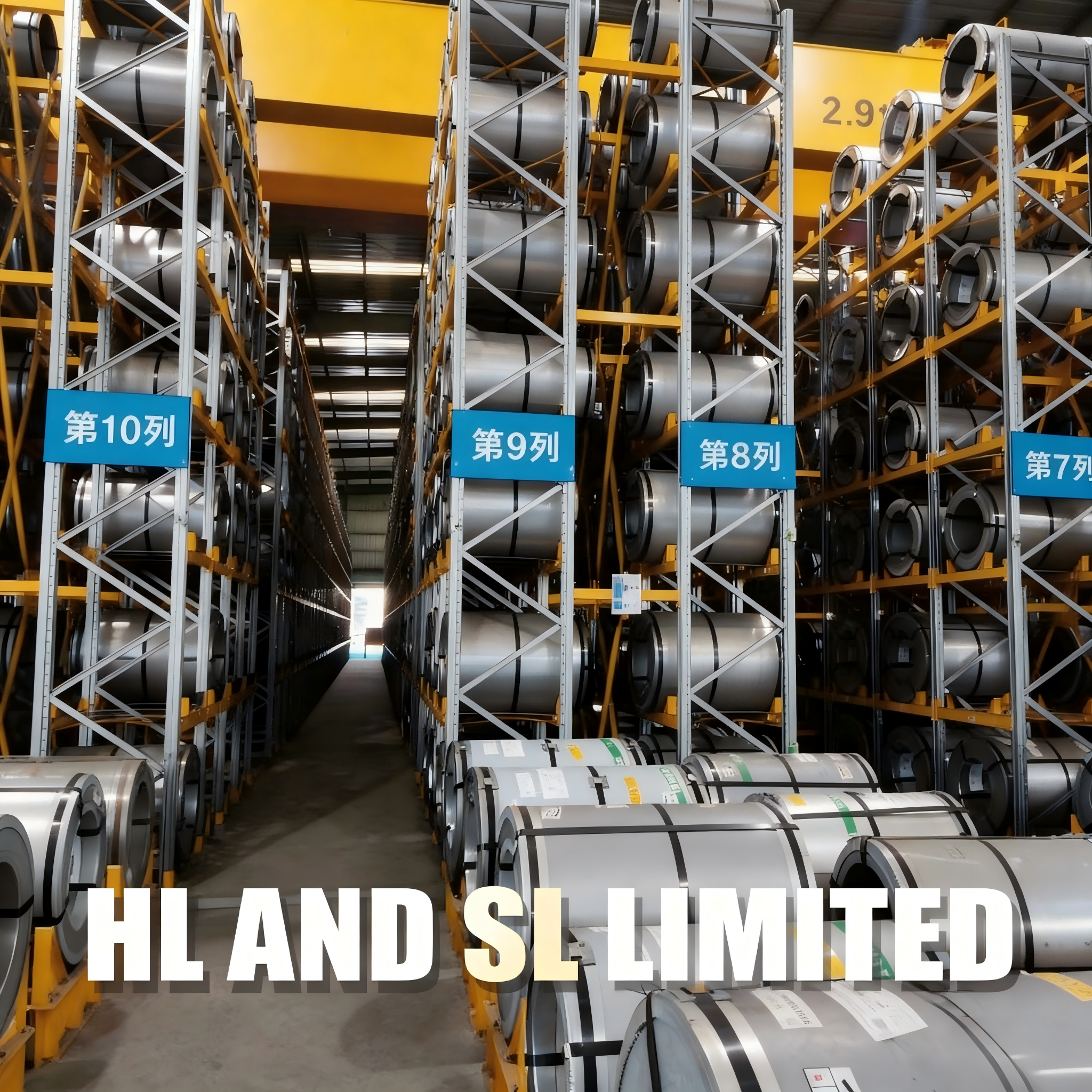
Grain-oriented silicon steel grades support power transmission, distribution, and renewable-energy infrastructure.
How to Select the Right Silicon Steel Grade
Selecting the right silicon steel grade is a technical and commercial decision. The following criteria are important when evaluating options:
- Iron loss requirement: Determine the maximum allowable core loss at the operating flux density and frequency. Lower iron loss reduces energy losses over the transformer’s lifetime but increases material cost.
- Magnetic flux density: Higher saturation flux density allows smaller core cross-sections for the same power level, reducing transformer size and material usage.
- Thickness: Ultra-thin gauge silicon steel (under 0.25 mm) is increasingly preferred for high-frequency applications, including new energy vehicle motors and high-efficiency power equipment, to maximize power density and reduce eddy-current losses.
- Coating and insulation: The insulation coating must be compatible with the lamination, annealing, and assembly processes used by the transformer manufacturer. It also affects stacking factor, corrosion resistance, and handling behavior.
- Standards and certification: Confirm which standards apply in your target market, such as IEC 60404, ASTM A677/A683, or regional energy-efficiency regulations.
- Supply chain reliability: Evaluate the supplier’s ability to provide consistent quality, processing support, export documentation, and responsive communication.
Grain-Oriented vs. Non-Oriented Silicon Steel: Comparison
| Characteristic | Grain-Oriented Silicon Steel | Non-Oriented Silicon Steel |
|---|---|---|
| Magnetic orientation | Optimized in one direction (rolling direction) | Nearly isotropic magnetic properties |
| Typical thickness | 0.18–0.35 mm, including ultra-thin grades | 0.35–0.65 mm commonly |
| Core loss performance | Very low iron loss along rolling direction | Higher losses in rotating field applications |
| Typical applications | Transformers, reactors, HVDC converter transformers | Motors, generators, alternators, small transformers |
| Best suited for | Static electromagnetic devices with directional flux | Rotating machines with multidirectional magnetic flux |
| Market share context | Specialized segment with strong growth | Largest segment, estimated 69.7% of market in 2025 |
This comparison is intended as a technical guide, not an absolute ranking. The correct choice depends entirely on the application, operating conditions, and performance targets.
Supply Chain and Procurement Considerations
Global buyers of silicon steel face several challenges: verifying material quality, managing long lead times, coordinating international logistics, and ensuring compliance with local regulations. Working with an export-focused supplier can reduce these risks if the supplier demonstrates the following capabilities:
- Stable access to primary mill material through authorized agency relationships;
- In-house processing to meet exact dimensional requirements;
- Documentation that supports customs clearance and end-user quality reviews;
- Responsive technical communication and sample support;
- Flexible sourcing across performance grades and price points.
HL AND SL LIMITED’s position as an authorized agent of China Baowu Steel Group is a relevant factor for buyers seeking traceable, high-quality electrical steel. Baowu is recognized as one of the major global electrical steel manufacturers, alongside producers such as POSCO, ArcelorMittal, Nippon Steel, and TISCO. In addition to its primary mill relationship, HL AND SL LIMITED integrates resources from private steel mills to serve procurement needs ranging from high-end to economy grades.
Why Choose HL AND SL LIMITED
The core value proposition of HL AND SL LIMITED can be summarized in four points:
- Specialization: The company focuses exclusively on electrical steel export, with an 80% export ratio and established markets in Mexico, Brazil, Italy, UAE, and India.
- Processing support: A fully equipped in-house processing plant provides customized secondary processing, reducing the burden on transformer manufacturers.
- Supply flexibility: A diversified upstream resource base allows the company to offer both premium Hi-B grain-oriented grades and cost-effective non-oriented options.
- Technical capacity: A 10-engineer R&D team supports material selection and application engineering, which is especially valuable for buyers navigating efficiency standards and specialized applications.
For procurement teams, the practical benefit is a single point of contact for material selection, processing, documentation, and order coordination.
Frequently Asked Questions
What is silicon steel used for?
Silicon steel, also known as electrical steel, is used primarily in the magnetic cores of transformers, motors, generators, reactors, and other electromagnetic equipment. Its purpose is to carry magnetic flux efficiently while minimizing energy losses. Grain-oriented silicon steel is preferred for transformer cores, while non-oriented silicon steel is commonly used in rotating machinery such as motors and generators.
What does the grade number in Hi-B silicon steel mean?
The grade number in a model such as 27Q100 indicates key parameters: “27” refers to a thickness of 0.27 mm, “Q” indicates a grain-oriented silicon steel grade, and “100” represents a maximum iron loss of 1.00 W/kg measured at 1.7 T and 50 Hz. A lower number means lower core loss and higher energy efficiency. For example, the 23R075 grade has a thickness of 0.23 mm and iron loss ≤ 0.75 W/kg. The material composition typically includes iron with approximately 3.0% to 3.2% silicon, with strict control of impurities and the addition of inhibitors such as MnS and AlN.
Can silicon steel be supplied in custom sizes and processed forms?
Yes. HL AND SL LIMITED operates a fully equipped material processing plant and provides customized on-demand secondary processing services according to customer requirements for size, shape, and performance. This allows transformer manufacturers to receive materials that are customized to their production specifications. Buyers should confirm their required dimensions, tolerances, coil weights, coating type, and packaging requirements with the supplier before ordering.
What standards should I reference when buying silicon steel?
Common international references include IEC 60404, which covers magnetic materials and their test methods, and ASTM A677/A683 for non-oriented electrical steel in the North American market. For European projects, compliance with EU environmental and ecodesign regulations is also relevant. Buyers should ask suppliers for material certificates and test reports that demonstrate compliance with the standard required in their destination market.
How do ultra-thin gauge silicon steel grades benefit high-frequency applications?
Ultra-thin gauge silicon steel, generally understood as material under 0.25 mm, reduces eddy-current losses at higher frequencies by limiting the cross-sectional area available for circulating currents. This makes it the preferred choice for high-frequency motors in new energy vehicles and other high-power-density equipment. Thinner material, however, is generally more expensive to produce and process, so the efficiency gain must be weighed against total material cost.
What is the typical process for requesting a quote?
To request a quote, buyers should provide the specific grade or target performance parameters, thickness, width/size, quantity, coating requirement, destination country, and any applicable standards. HL AND SL LIMITED can assist with material selection if the application is clearly defined. Contact the company by email at sales-01@hlslind.com or by phone/WhatsApp at +86 134-6700-2282 for a prompt response.
Conclusion and Strategic Outlook
Silicon steel is not a commodity in the conventional sense. It is a performance-defining material for the electrical industry, and grade selection affects transformer efficiency, operating cost, regulatory compliance, and long-term reliability. The global market is expanding as grids modernize and energy-efficiency requirements tighten, creating sustained demand for both established grades and ultra-thin high-performance variants.
For buyers, the practical question is not simply where to find silicon steel, but which supplier can deliver the right grade with the required processing, documentation, and reliability. HL AND SL LIMITED combines a specialized export focus, authorized access to China Baowu Steel Group material, an in-house processing plant, and a responsive engineering team. This makes it a credible option for transformer manufacturers, power-equipment producers, and distributors building long-term supply relationships.
Need Help Selecting the Right Silicon Steel Grade?
Contact HL AND SL LIMITED for technical guidance, grade recommendations, and sourcing options.
WhatsApp Sales Email Us Download Company BrochureHave Questions or Need More Details?
Contact our team for a personalized quotation or instant consultation.
Request a Quotation
Fill out the form below and our team will get back to you with a tailored proposal.
WhatsApp Direct Chat
Prefer to chat in real-time? Message us on WhatsApp for instant assistance & quick answers.
- Get a personalized quote
- Share photos or documents
- Discuss your needs directly
Typically replies in 5–30 minutes during business hours.