
Silicon Steel Grades and Certifications: A Procurement Guide for Generator, Grid, and Charging Applications
Silicon Steel Grades and Certifications: A Procurement Guide for Generator, Grid, and Charging Applications
Silicon steel (electrical steel) is selected for generator, power grid, reactor, and charging-pile applications based on three controlled parameters: grade family (grain-oriented vs. non-oriented), thickness, and core-loss limits such as P1.7/50. Buyers evaluating material for transformers, reactors, converters, and EV charging infrastructure need a procurement framework that connects these measurable properties to application requirements and compliance documents.
This guide explains how silicon steel is classified, which grades apply to generators, power grids, reactors, and charging piles, and how to verify compliance with ASTM, IEC, VDA, and EU environmental requirements. It also outlines customization options and supply-chain considerations for companies buying from international suppliers.
What Is Silicon Steel and Why Grade Selection Matters
Silicon steel, also called electrical steel, is a ferrous material with silicon added to improve magnetic performance. It is used in transformer cores, motor cores, generator cores, reactors, and other electromagnetic equipment where minimizing energy loss is critical.
Grade selection matters because core loss directly affects operating efficiency. A transformer or generator core built with higher-loss material wastes energy as heat throughout its service life. For power grid operators, distribution companies, and equipment manufacturers, the difference between a 1.20 W/kg and a 0.65 W/kg grade can determine whether a project meets energy-efficiency regulations.
Two families dominate the market:
- Grain-oriented silicon steel (GO) — processed to orient grain structure in the rolling direction, providing low core loss and high permeability in transformer applications.
- Non-oriented silicon steel (NO) — magnetic properties are similar in all directions, making it suitable for rotating machines such as motors and generators.
Industry Context: Electrical Steel Demand and Standards
The global electrical steel market was valued at approximately USD 31.0 billion in 2025 and is projected to grow to USD 47.0 billion by 2033, according to Grand View Research. Grain-oriented silicon steel alone was estimated at USD 13.55 billion in 2025, with a projected CAGR of 5.8% through 2035, based on Research Nester data.
While non-oriented electrical steel held the largest market share in 2025 at roughly 69.7% according to MarketsandMarkets, grain-oriented grades remain essential for power transformers, converter transformers, reactors, and high-efficiency distribution equipment — the core components of grid modernization.
Several standards govern silicon steel specification and testing:
- ASTM A677 — fully processed non-oriented electrical steel, North American market.
- ASTM A683 — semi-processed non-oriented electrical steel, North American market.
- IEC 60404-8-4 — global specification for non-oriented fully processed electrical steel strip and sheet in the finally annealed state.
- VDA standards — automotive industry requirements relevant to generator and motor applications in vehicles.
- EU environmental regulations — including RoHS compliance for restricted substances and ecological design requirements for energy-using products.
For buyers, compliance with these standards is not optional. Grid operators, transformer manufacturers, and automotive OEMs increasingly require documented certification before accepting material.
Grain-Oriented Silicon Steel Grades: What the Designations Mean
Grain-oriented silicon steel grades are commonly identified by thickness and maximum core loss. For example, in the designation 27Q120, “27” indicates a thickness of 0.27 mm, and “120” indicates maximum core loss of 1.20 W/kg at 1.7 T and 50 Hz (P1.7/50).
HL AND SL LIMITED supplies a range of High Magnetic Induction Grain-Oriented Silicon Steel (Hi-B) grades. Representative examples include:
| Model | Thickness | Core Loss P1.7/50 | Magnetic Flux Density B8 | Typical Applications |
|---|---|---|---|---|
| 18-65 | 0.18 mm | ≤ 0.65 W/kg | ≥ 1.88 T | Ultra-high voltage transformers, power transformers, high-efficiency energy-saving cores |
| 20-65 | 0.20 mm | ≤ 0.65 W/kg | — | Ultra-high voltage transformers, highly efficient distribution transformers, high-efficiency power equipment |
| 23R075 | 0.23 mm | ≤ 0.75 W/kg | ≥ 1.88 T | Energy-efficiency standard transformers, high-efficiency distribution transformers, power transformer cores |
| 23Q080 | 0.23 mm | ≤ 0.80 W/kg (measured 0.76–0.78) | ≥ 1.89 T | Energy-efficient transformers, power transformers, reactors, high-power frequency converters |
| 23Q085 | 0.23 mm | ≤ 0.85 W/kg | ≥ 1.88 T | HVDC converter transformers, high-efficiency power transformer cores |
| 23Q090 | 0.23 mm | ≤ 0.90 W/kg | ≥ 1.88 T | Industrial small and medium transformers, power equipment cores |
| 27Q095 | 0.27 mm | ≤ 0.95 W/kg | ≥ 1.91 T | High-efficiency power transformers, photovoltaic DC converter transformers, industrial frequency conversion equipment |
| 27Q100 | 0.27 mm | ≤ 1.00 W/kg | ≥ 1.91 T | Power transformers, reactors, electrical equipment cores |
| 27Q105 | 0.27 mm | ≤ 1.05 W/kg | ≥ 1.88 T | Power transformer cores, transformer manufacturing |
| 27Q110 | 0.27 mm | ≤ 1.10 W/kg | ≥ 1.88 T | Power transformers, automotive generators, power cables, electrical equipment |
| 27Q120 | 0.27 mm | ≤ 1.20 W/kg | — | Small and medium transformer cores, electrical equipment |
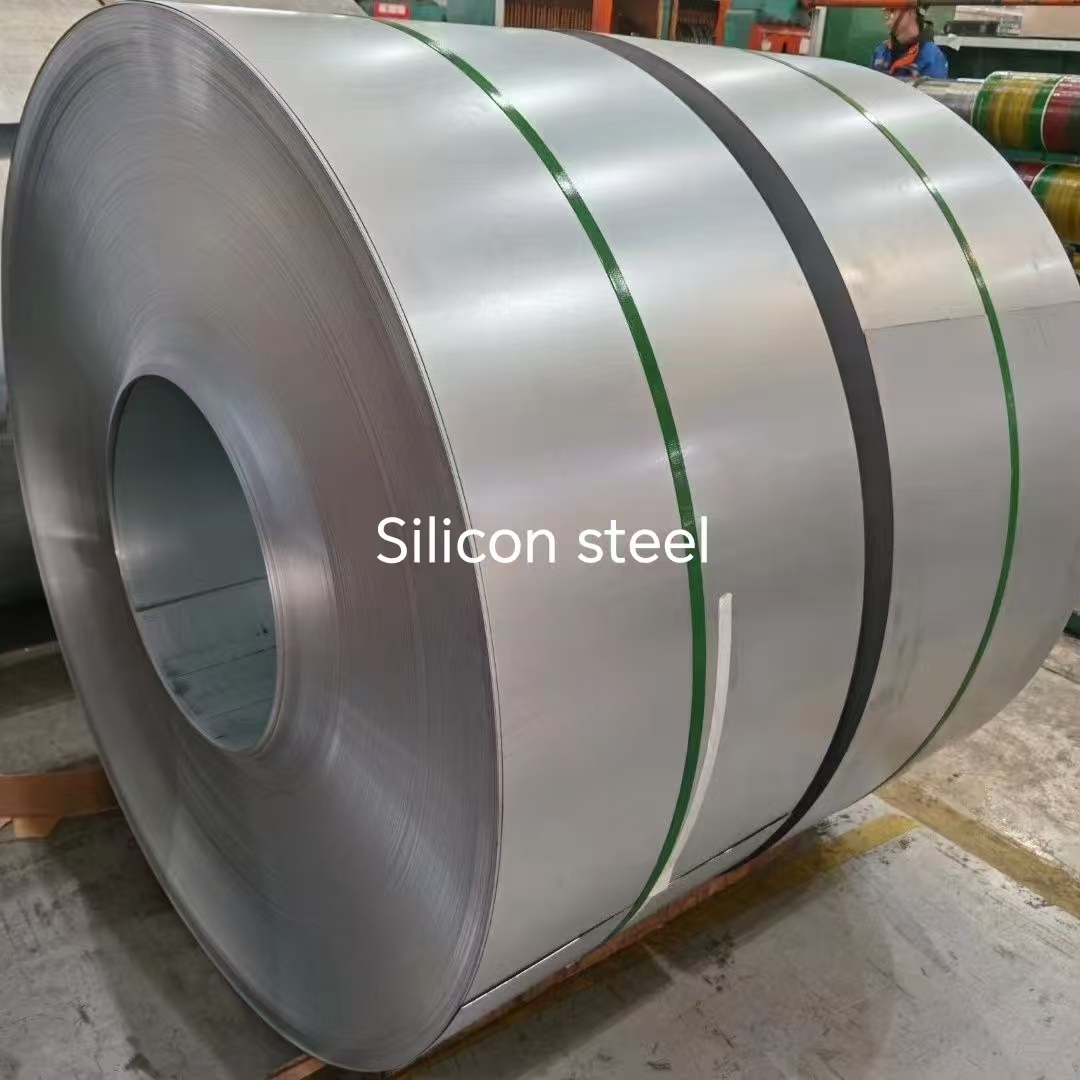
The material composition for these Hi-B grades typically includes iron with approximately 3% silicon, supplemented by elements such as aluminum and manganese, with inhibitors such as MnS and AlN required for grain orientation control. For thinner 0.23 mm and 0.20 mm grades, silicon content is approximately 3.0%–3.2%, with carbon, sulfur, and nitrogen impurities strictly controlled.
How to Match Silicon Steel Grades to Applications
Application matching requires translating operating conditions into measurable grade requirements. The following sections cover generators, power grids, reactors, and charging piles.
Silicon Steel for Generators
Generators convert mechanical energy into electrical energy through rotating magnetic fields. The core material must provide consistent magnetic performance in multiple directions, which is why non-oriented silicon steel is the conventional choice for motor and generator laminations.
However, some generator-related applications use oriented grades. For example, 27Q110 is listed for power transformers, automotive generators, power cables, and electrical equipment. Automotive generator applications also fall under VDA-related requirements in the automotive supply chain, where documented material compliance is commonly requested.
For high-frequency generator and motor applications, ultra-thin gauge silicon steel below 0.25 mm is increasingly preferred to maximize power density, particularly in new energy vehicles.
Silicon Steel for Power Grids
Power grid transformer cores operate continuously at 50 Hz or 60 Hz and are evaluated primarily by core loss at operating flux density. Lower core loss directly reduces no-load losses in distribution and power transformers.
Grades such as 23R075 and 23Q080 are appropriate for high-efficiency distribution transformers. For HVDC converter transformers, grades such as 23Q085 support the high magnetic flux density and low-loss requirements of long-distance DC transmission. Ultra-high voltage applications may use thinner 0.20 mm and 0.18 mm grades such as 20-65 and 18-65.
A relevant real-world example is the ±800 kV Ultra-High Voltage Direct Current Project in Belém Mountain, Brazil, which transports hydropower from northern Brazil to southeastern load centers. The converter transformers required ultra-low-loss oriented silicon steel with high magnetic flux density of ≥ 1.92 T and core loss below 0.85 W/kg, in a high-temperature, high-humidity environment.
Silicon Steel for Reactors
Reactors are used in power systems for current limiting, filtering, reactive power compensation, and harmonic suppression. Their cores often use grain-oriented silicon steel grades that combine low loss with high permeability.
23Q080 and 27Q100 are explicitly listed for reactors and high-power frequency converters. When selecting reactor core material, verify both core loss and flux density at the operating frequency, as reactor designs vary widely between distribution and industrial applications.
Silicon Steel for Charging Piles
Charging piles (EV charging stations) contain power conversion equipment that depends on magnetic components such as transformers, inductors, and filters. The EV charging station and pile market was valued at approximately USD 3,927.96 million in 2024 and is expected to grow at a 32.1% CAGR, which increases demand for silicon steel components in power conversion systems.
For charging infrastructure, silicon steel must support stable operation under variable loads and frequent switching. Grain-oriented grades used in high-efficiency power transformers and industrial frequency conversion equipment — such as 27Q095 — are relevant to the power conversion stages of charging systems. RoHS compliance and EU environmental requirements are also important for equipment sold into regulated markets.
Coating Types and Environmental Compliance
Coating selection affects insulation performance, temperature resistance, and corrosion resistance. Common coating options for silicon steel include:
- Organic coating — temperature resistance up to approximately 180°C, commonly used for motor and generator laminations.
- Inorganic coating — temperature resistance up to approximately 800°C, suitable for applications requiring stress-relief annealing after stamping.
- Semi-organic coating — combines organic and inorganic properties for balanced performance.
- Nano coating — an advanced thin coating approach for improved surface characteristics in high-frequency applications.
- Uncoated silicon steel — available where insulation coating is not required or where downstream processing will add coating.
For environmental compliance, buyers should request RoHS declarations and confirm that restricted substances are controlled. EU environmental regulations also apply to transformers and electrical equipment sold in Europe under ecodesign requirements.
Silicon Steel Supply Chain and Customization
HL AND SL LIMITED is an export-focused supplier of electrical steel based in Taiyuan, Shanxi Province, China. The company operates a material processing plant capable of secondary processing based on customer specifications for size, shape, and performance, with the goal of delivering material that is “customized on demand and ready to use.”
Customization options include:
- Specification customization: thickness from 0.18 mm to 0.35 mm; width typically 800–1250 mm, with an ultra-wide option of 1250 mm.
- Material family: conventional grain-oriented CGO, high magnetic flux Hi-B, laser-engraved R series, and heat-resistant engraved HS series.
- Coating: organic, inorganic, semi-organic, and other options.
- Size processing: strip cutting, fixed-length flat cutting, longitudinal cutting, and other basic processing.
- Packaging: standard export sea-worthy packaging, logo and graphic customization.
As an authorized agent of China Baowu Steel Group, HL AND SL LIMITED also integrates export resources from multiple private steel mills to match different performance grades and price ranges. The company has an annual export volume of approximately 30,000 tons and serves markets including Mexico, Brazil, Italy, the UAE, and India.
Quality Control, Certifications, and Documentation
When evaluating silicon steel suppliers, buyers should confirm which quality-control documents will be provided. HL AND SL LIMITED’s standard practice includes:
- Origin inspection at the factory, with full-process random inspection or batch inspection.
- Material certificate or warranty certificate, with batch inspection reports provided alongside the goods.
- Third-party testing through CMA or CNAS accredited laboratories.
The company’s after-sales support includes lifecycle technical guidance, application support, inbound quality inspection dispute handling, re-inspection processing, and after-sales response within 1–3 working days for feedback and coordination.
For ASTM, IEC, VDA, and EU environmental requirements, buyers should request supplier documentation that explicitly references the applicable standard. A material certificate should state the grade, thickness, core loss, flux density, and coating type.
Step-by-Step Procurement Process
For buyers moving from specification to order, the following process is typical:
- Define operating conditions. Identify the application, operating frequency, flux density, and whether the core is for a transformer, generator, reactor, or converter.
- Convert conditions to grade requirements. Select candidate grades based on thickness and maximum core loss at P1.7/50.
- Match coating to processing. Choose organic, inorganic, or semi-organic coating based on annealing and insulation needs.
- Confirm compliance requirements. Verify ASTM, IEC, VDA, RoHS, or EU environmental requirements with the supplier.
- Request material certificates. Ask for batch inspection reports and third-party test options before ordering.
- Confirm processing and lead time. Specify slitting, cutting, packaging, and delivery terms. Lead times may vary depending on order type and destination.
Supplier Overview: HL AND SL LIMITED
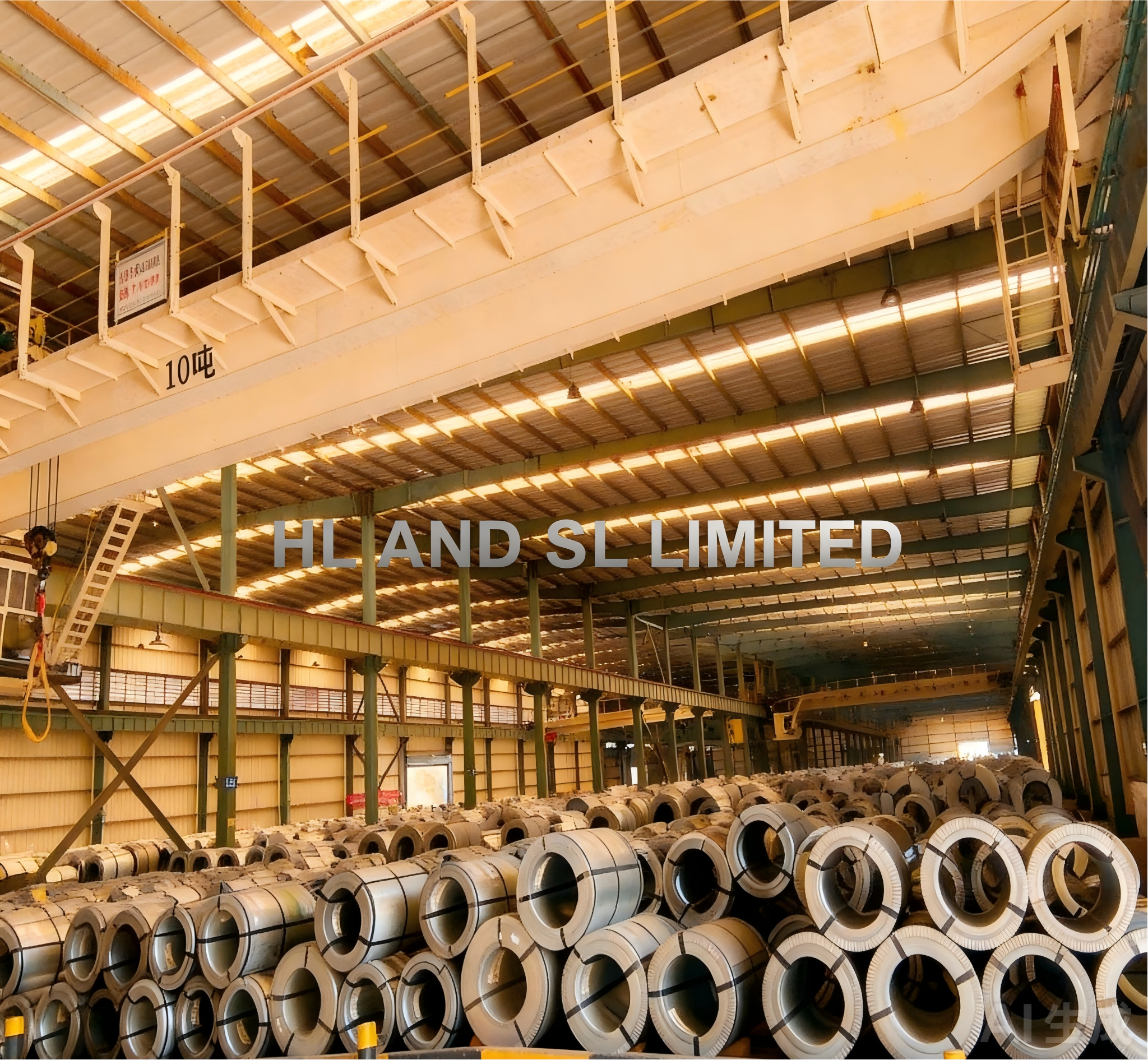
HL AND SL LIMITED is a specialized exporter of electrical steel, also known as silicon steel. Established in 2012, the company operates a 30,000 m² processing facility with a team of 50 employees and 10 R&D engineers. Its annual output is approximately 30,000 tons, with about 80% exported.
The company’s stated service principles are “comprehensive material selection, competitive pricing, and rapid response,” supported by upstream resource integration and processing services for one-stop electrical steel procurement.
Application Evidence from the Field
Several documented application cases show how oriented silicon steel performs in real grid and industrial environments.
Case: Brazilian Grid and HVDC Transmission
WEG, a major electrical equipment manufacturer in Brazil, has applied HL AND SL LIMITED’s oriented silicon steel in the local production of power transformers and distribution transformers for more than ten years. The material has helped WEG meet local grid energy efficiency standards and support Brazil’s low-carbon transition.
In addition, the ±800 kV Belém Mountain HVDC Phase II project in Brazil uses converter transformers with ultra-low-loss oriented silicon steel. The operating conditions are demanding: temperatures of 30–40°C, humidity of 80–90%, high thunderstorm activity, and sensitive rainforest ecology. The material requirement included magnetic flux density ≥ 1.92 T and core loss below 0.85 W/kg.
Case: Canadian High-Efficiency Distribution Transformers
In Canada, a high-efficiency and low-noise distribution transformer project uses oriented silicon steel for national Class 1 energy-efficient wound-core transformers. The operating environment includes winter temperatures from −40°C to −20°C with frequent freeze-thaw cycles and salt fog corrosion in some coastal areas. The project required extremely low core loss and retention of magnetic permeability at −40°C of at least 95%.
Case: German Distribution Network Upgrade
In Germany, a distribution transformer upgrade project replacing old, energy-consuming transformers in line with EU ecodesign regulations required core material with iron loss ≤ 0.60 W/kg, noise levels 2–3 decibels lower than standard requirements, and coating weather resistance suitable for North Sea coastal salt spray conditions.
Comparison: Grain-Oriented vs. Non-Oriented Silicon Steel
| Property | Grain-Oriented (GO) | Non-Oriented (NO) |
|---|---|---|
| Magnetic direction | Optimized in rolling direction | Similar in all directions |
| Typical core loss | Very low in rolling direction | Higher than GO for transformer use |
| Primary applications | Transformers, reactors, converter transformers | Motors, generators, rotating machines |
| Common standards | IEC 60404-8-7, customer specifications | ASTM A677, ASTM A683, IEC 60404-8-4 |
| Coating importance | Insulation and anneal resistance | Insulation and punchability |
Frequently Asked Questions
Does HL AND SL LIMITED provide RoHS-compliant silicon steel?
RoHS compliance depends on controlling restricted substances in the material and coating. Buyers should request a RoHS declaration and supporting test documentation for the specific grade and coating family. HL AND SL LIMITED supports EU environmental documentation requirements and provides material certificates and batch inspection reports with goods.
Can HL AND SL LIMITED supply silicon steel to ASTM and VDA standards?
For North American projects, non-oriented electrical steel is commonly specified under ASTM A677 (fully processed) or ASTM A683 (semi-processed), and IEC 60404-8-4 covers non-oriented fully processed strip globally. VDA standards are relevant for automotive supply chains, including generator applications. Buyers should confirm the exact standard and edition with the supplier before ordering, and request the material certificate explicitly referencing the standard.
What customization options are available for silicon steel thickness and width?
HL AND SL LIMITED offers thickness from 0.18 mm to 0.35 mm and width typically from 800 mm to 1250 mm, with an ultra-wide option of 1250 mm. Processing services include strip cutting, fixed-length flat cutting, and longitudinal cutting. Custom packaging with standard export sea-worthy specifications and logo/graphic customization is also available.
Can I request a sample before placing a bulk order?
Sample requests are a normal part of qualifying a new material supplier. Given that the company’s standard MOQ is 25 tons and monthly capacity is approximately 4,000 tons, a sample or small order allows buyers to verify grade performance, coating quality, and documentation before committing to volume. Contact the sales team to discuss sample availability, testing requirements, and lead times.
What are typical lead times for silicon steel orders?
Regular orders typically require 15–20 days. Urgent orders or stock orders can ship within 3–7 days. Bulk export orders generally take 30–45 days to reach the destination port, and after confirmation of letter of credit terms, shipment may occur within 7–30 working days. Lead times depend on grade availability, processing requirements, and destination.
Conclusion
Selecting silicon steel for generators, power grids, reactors, and charging piles requires a clear link between application conditions, grade properties, coating, and documented compliance. Core loss at P1.7/50, thickness, flux density, coating temperature resistance, and applicable standards such as ASTM, IEC, VDA, and EU environmental rules form the basis of a defensible procurement decision.
For buyers evaluating suppliers, the practical shortlist is: confirm the grade range covers your required thickness and loss class, verify coating and processing capabilities, request material certificates and third-party test options, and check lead time and export experience. HL AND SL LIMITED combines in-house processing, multi-mill supply integration, and documented cases across Mexico, Brazil, Canada, and Germany.
Download the HL AND SL LIMITED company brochure (PDF) for the full product range and export capability overview.
Have Questions or Need More Details?
Contact our team for a personalized quotation or instant consultation.
Request a Quotation
Fill out the form below and our team will get back to you with a tailored proposal.
WhatsApp Direct Chat
Prefer to chat in real-time? Message us on WhatsApp for instant assistance & quick answers.
- Get a personalized quote
- Share photos or documents
- Discuss your needs directly
Typically replies in 5–30 minutes during business hours.