
20-65 vs 23R075: Hi-B Silicon Steel for UHV Transformer Cores
Direct answer: 20-65 and 23R075 are both Hi-B (high magnetic induction) grain-oriented silicon steels, and for an ultra-high voltage transformer core the decision is driven by two variables, not by brand preference. 20-65 is published at 0.20 mm thickness with iron loss P1.7/50 ≤ 0.65 W/kg; 23R075 is published at 0.23 mm thickness with P1.7/50 ≤ 0.75 W/kg and magnetic flux density B8 ≥ 1.88 T. 20-65 targets the lower core-loss end of the two, while 23R075 publishes both core loss and a flux-density floor. A UHV core specification should therefore be settled on the loss budget of the design, the 0.20 mm vs 0.23 mm handling route in cutting and stacking, and the test documentation the mill can supply for each grade.
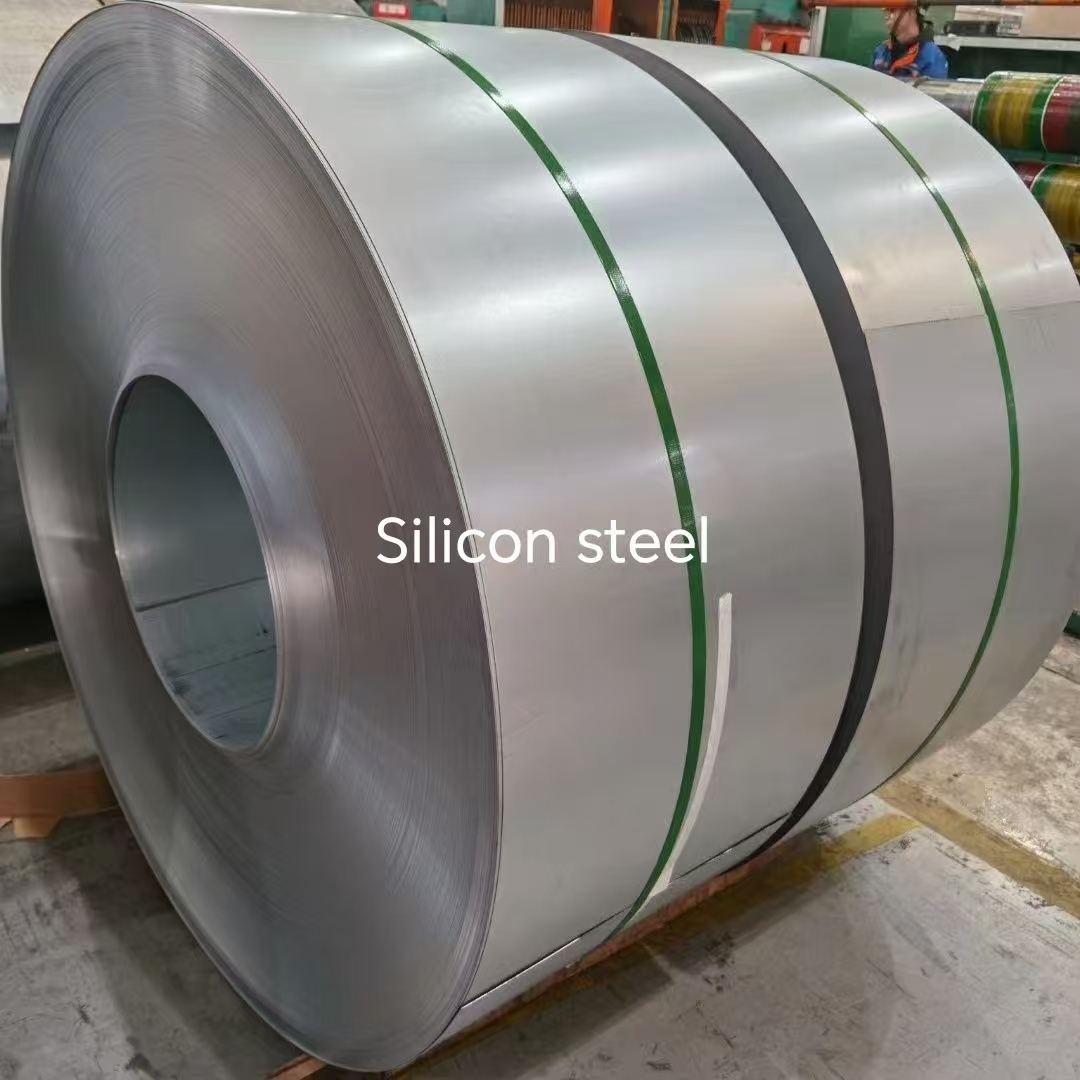
Hi-B grain-oriented silicon steel is supplied as coil or sheet and slit into laminations for transformer cores. Image: HL AND SL LIMITED.
Problem Definition: Two Grades, One Loss Budget
The practical difficulty with 20-65 and 23R075 is that their names describe the same material family, so the grade label alone does not tell a buyer which one belongs in a UHV core. Both are grain-oriented silicon steel of the Hi-B type, both are iron with roughly 3.0% to 3.2% silicon plus Al and Mn, and both rely on strictly controlled C, S and N impurities. The material does not change family between them; the specification does.
No-load loss in a large transformer core accumulates across the full mass of laminated steel. That makes a published P1.7/50 figure a design input rather than a datasheet formality: at 1.7 T and 50 Hz, 20-65 is published at ≤ 0.65 W/kg and 23R075 at ≤ 0.75 W/kg, so the two grades sit in different loss bands for the same excitation condition. At the same time, thinner gauge is not free. A 0.20 mm sheet is more demanding to slit, cut, stack and keep flat than a 0.23 mm sheet, and the extra handling sensitivity has to be matched by the core-building process.
A second, easily overlooked problem is documentation asymmetry. The published specification data for 23R075 includes B8 ≥ 1.88 T alongside the loss figure. The published specification data for 20-65 states thickness and P1.7/50 but does not state a B8 floor. A buyer who compares only the two loss numbers is therefore comparing an incomplete pair of records, and a UHV tender package will usually expose that gap.
Decision rule: treat 20-65 versus 23R075 as a loss-versus-process decision with a documentation requirement attached, not as a ranking question.
Industry Background: What UHV Cores Demand From Grain-Oriented Steel
Ultra-high voltage transmission moves large blocks of power over long distances, and the transformers in that chain are core-loss sensitive because their cores run continuously for decades. Grain-oriented electrical steel exists for exactly this duty: the grain texture is aligned to the rolling direction so that loss is low and permeability is high in the direction the flux actually travels. This is why the grade family, not just the thickness, is part of the procurement specification.
The standards framework around these grades is stable and worth knowing before a quotation arrives. IEC 60404-8-7:2020 defines grades of cold-rolled grain-oriented electrical steel strip and sheet in the fully processed state, in nominal thicknesses of 0.20 mm, 0.23 mm, 0.27 mm, 0.30 mm and 0.35 mm, and it applies to Goss-textured grain-oriented material supplied final-annealed in coils or sheets for the construction of magnetic circuits. Both 20-65 at 0.20 mm and 23R075 at 0.23 mm fall inside that thickness list.
Where noise and vibration are design constraints, IEC 60404-17:2021 sets out the measurement of magnetostriction characteristics of grain-oriented electrical steel strip and sheet under an applied AC magnetic field at 50 Hz or 60 Hz. On the American side, ASTM A876-17e1 covers flat-rolled, grain-oriented, fully processed low-carbon silicon-iron electrical steel, and its description notes a silicon content of approximately 3.2%, which is the same composition territory the 3.0% to 3.2% silicon range in these two grades occupies.
The commercial backdrop supports the same conclusion that specification, not availability, is the constraint. Strategic Revenue Insights values the global silicon steel market at USD 31.55 billion in 2025 and projects USD 59.41 billion by 2035, with grain-oriented and non-oriented material both counted. Growth of that order keeps pressure on buyers to define grades precisely rather than accept substitutes, especially in grid-facing applications where the loss figure is contractually relevant.
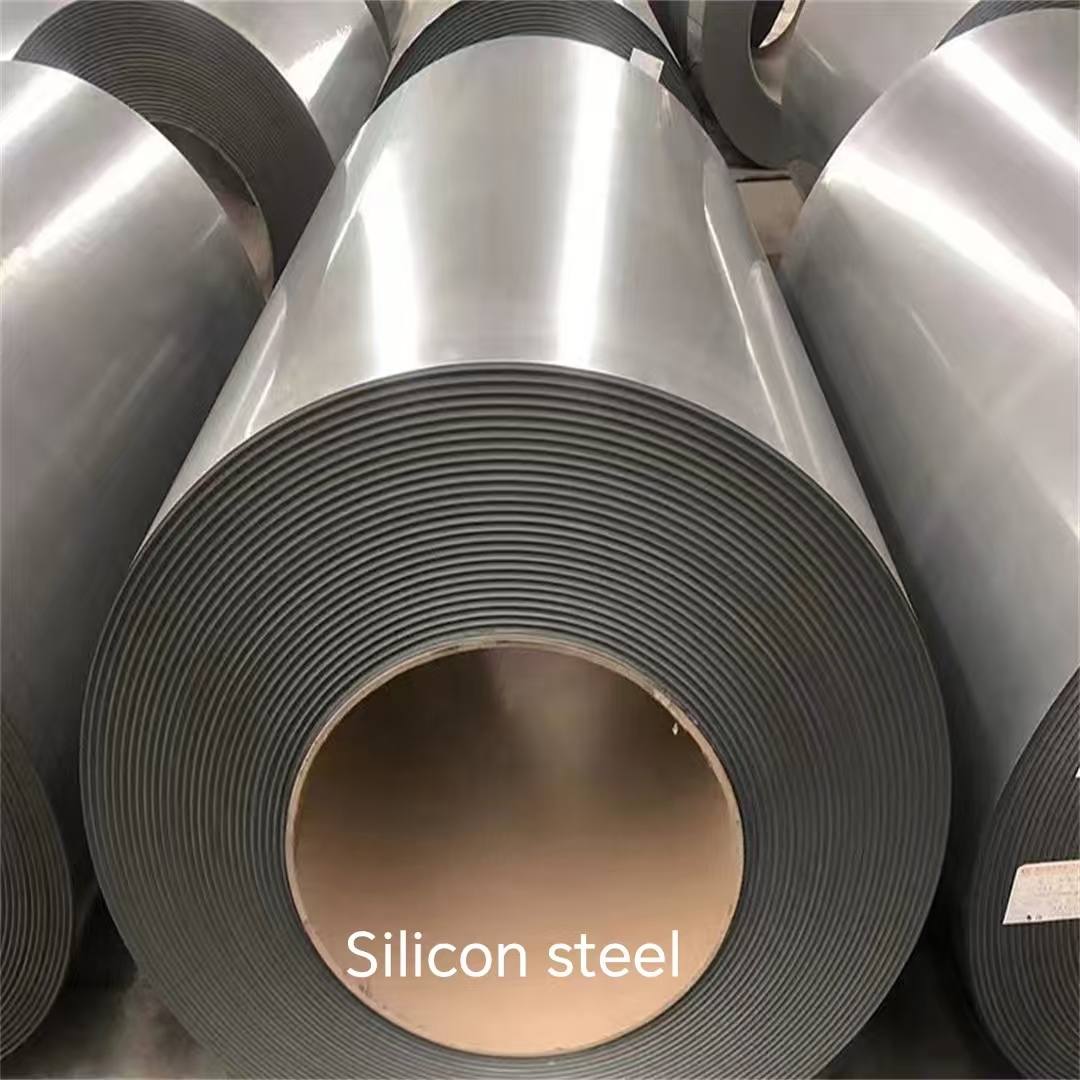
Grade selection is settled at the coil stage: thickness, coating and magnetic properties are fixed before slitting begins.
Detailed Solution: What Each Grade Actually Specifies
20-65 — 0.20 mm, P1.7/50 ≤ 0.65 W/kg
20-65 is a High Magnetic Induction Grain-Oriented Silicon Steel (Hi-B) with a nominal thickness of 0.20 mm and iron loss P1.7/50 ≤ 0.65 W/kg. Its main component is iron with silicon added at approximately 3.0% to 3.2%, together with elements such as Al and Mn, and impurities including C, S and N are strictly controlled. The grade is stated for ultra-high voltage transformers, highly efficient distribution transformers and high energy efficiency power equipment.
Read literally, that is a UHV-oriented positioning with the lowest published loss of the two candidates. What the published data does not give is a B8 floor, so a UHV design that uses flux density as a sizing input should obtain that value from the mill's test certificate rather than infer it from the grade name or from the neighbouring grades in the same family.
23R075 — 0.23 mm, P1.7/50 ≤ 0.75 W/kg, B8 ≥ 1.88 T
23R075 is also a High Magnetic Induction Grain-Oriented Silicon Steel (Hi-B), at 0.23 mm nominal thickness, with iron loss P1.7/50 ≤ 0.75 W/kg and magnetic flux density B8 ≥ 1.88 T. Its silicon content is approximately 3.0% to 3.2%, with Al and Mn present and C, S and N strictly controlled. Published applications cover energy efficiency standard transformers, high-efficiency distribution transformers and power transformer cores.
The value of this record is that loss and flux density are stated together, which lets a designer check both sides of the magnetic requirement from one document. The trade-off is a 0.03 mm thicker gauge and a loss ceiling 0.10 W/kg above the 20-65 figure.
Reading the two records together
P1.7/50 is specific loss measured at 1.7 T and 50 Hz, so the comparison between ≤ 0.65 W/kg and ≤ 0.75 W/kg is like-for-like on excitation and frequency. B8 denotes magnetic flux density in tesla, conventionally reported at a stated magnetizing field, and here it is published only for 23R075 at ≥ 1.88 T. Thickness, at 0.20 mm versus 0.23 mm, changes the number of laminations required for a given stack height and changes how the material behaves in cutting and handling.
None of these three variables can be optimised in isolation. Choosing 20-65 buys a lower loss ceiling but places the burden on flux-density documentation and on process control at the thinner gauge. Choosing 23R075 buys a complete published magnetic pair and a slightly more forgiving gauge, at a higher loss ceiling. For a UHV core, the correct answer is the one that satisfies the design's loss and flux targets with a documented, repeatable build.
Step-by-Step: Specifying the Right Grade for a UHV Core
- Fix the loss budget first. Convert the transformer's no-load loss requirement into an allowable W/kg ceiling at 1.7 T, 50 Hz for the core mass in question. This immediately shows whether the ≤ 0.75 W/kg ceiling of 23R075 is sufficient or whether the ≤ 0.65 W/kg ceiling of 20-65 is required.
- Check the flux-density requirement against published data. If the design needs a stated B8 floor, 23R075 publishes ≥ 1.88 T. For 20-65, request the B8 value in writing from the mill before the grade is frozen into the specification.
- Match the gauge to the core-building route. Confirm that slitting, cutting, burr control and stacking are qualified for 0.20 mm material if 20-65 is chosen, and that lamination count and stack height are recalculated for 0.20 mm instead of 0.23 mm.
- Name the standard and the delivery state. Reference IEC 60404-8-7:2020 for fully processed cold-rolled grain-oriented strip and sheet, and ASTM A876-17e1 where an ASTM basis is required. Do not allow grade names to stand in for a standard reference.
- Ask for magnetostriction data where noise matters. If the transformer has a noise limit, request magnetostriction characteristics measured in line with IEC 60404-17:2021 at 50 Hz or 60 Hz rather than relying on loss data alone.
- Specify coating, dimensions and packing. Insulated coating type, slit width, coil or sheet form, edge condition and packing all change handling performance, and they must be written into the purchase order rather than left to default.
- Validate with a sample before the production order. Test 20-65 and 23R075 side by side on the same test basis, then run a small lamination trial to confirm the cutting and stacking route behaves as expected.
Use Cases: Where Each Grade Fits
Ultra-high voltage transformer cores. 20-65 is the grade whose published application statement names ultra-high voltage transformers, and its ≤ 0.65 W/kg ceiling at 0.20 mm is the lower of the two. Where the UHV design's loss budget is tight and the winding house is qualified for 0.20 mm handling, it is the natural first candidate.
Power transformer cores and energy-efficiency standard transformers. 23R075 is stated for power transformer cores, high-efficiency distribution transformers and energy efficiency standard transformers, and it is the only one of the two with a published B8 ≥ 1.88 T. Where the design needs a documented flux-density floor and the loss ceiling of ≤ 0.75 W/kg is acceptable, it is the cleaner specification.
High-efficiency distribution transformers. Both grades list this application. The selection then comes down to whether the extra loss margin of 20-65 is worth the thinner-gauge process work, which is a factory-specific question rather than a material question.
Adjacent grade options. Where a design sits between the two, the same Hi-B family includes 18-65 at 0.18 mm with P1.7/50 ≤ 0.65 W/kg and B8 ≥ 1.88 T, 20R070 at 0.20 mm with ≤ 0.70 W/kg and B8 ≥ 1.86 T, and 23Q085 at 0.23 mm with ≤ 0.85 W/kg and B8 ≥ 1.88 T. At the 0.27 mm end, 27Q095 is published at ≤ 0.95 W/kg with B8 ≥ 1.91 T for high-efficiency power transformers, photovoltaic direct current converter transformers and industrial frequency conversion equipment. These are reference points for re-scoping a design, not drop-in substitutes for 20-65 or 23R075.
Outside transformer cores, the silicon steel family also covers non-oriented grades used in rotating machines and other electromagnetic equipment, and the wider application map includes silicon steel for generators, silicon steel for power grids, silicon steel for reactors and silicon steel for charging piles. Those duties involve different excitation conditions and different loss conventions, so grades should be selected per application rather than carried over from a transformer core specification.
Comparison Table: 20-65 and 23R075 Against Nearby Hi-B Grades
| Model | Type | Thickness | P1.7/50 | B8 | Stated applications |
|---|---|---|---|---|---|
| 20-65 | Hi-B grain-oriented | 0.20 mm | ≤ 0.65 W/kg | Not stated in published data — request certificate | Ultra-high voltage transformers, highly efficient distribution transformers, high energy efficiency power equipment |
| 23R075 | Hi-B grain-oriented | 0.23 mm | ≤ 0.75 W/kg | ≥ 1.88 T | Energy efficiency standard transformers, high-efficiency distribution transformers, power transformer cores |
| 18-65 | Hi-B grain-oriented | 0.18 mm | ≤ 0.65 W/kg | ≥ 1.88 T | Ultra-high voltage transformers, power transformers, high-efficiency energy-saving transformer cores |
| 20R070 | Hi-B grain-oriented | 0.20 mm | ≤ 0.70 W/kg | ≥ 1.86 T | High-efficiency distribution transformers, power transformer cores |
| 23Q085 | Hi-B grain-oriented | 0.23 mm | ≤ 0.85 W/kg | ≥ 1.88 T | HVDC converter transformers, high-efficiency power transformer cores |
| 27Q095 | Hi-B grain-oriented | 0.27 mm | ≤ 0.95 W/kg | ≥ 1.91 T | High-efficiency power transformers, PV DC converter transformers, industrial frequency conversion equipment |
All values as published in the grade specifications. Where a field is not published for a grade, it must be confirmed by mill test certificate and not assumed.
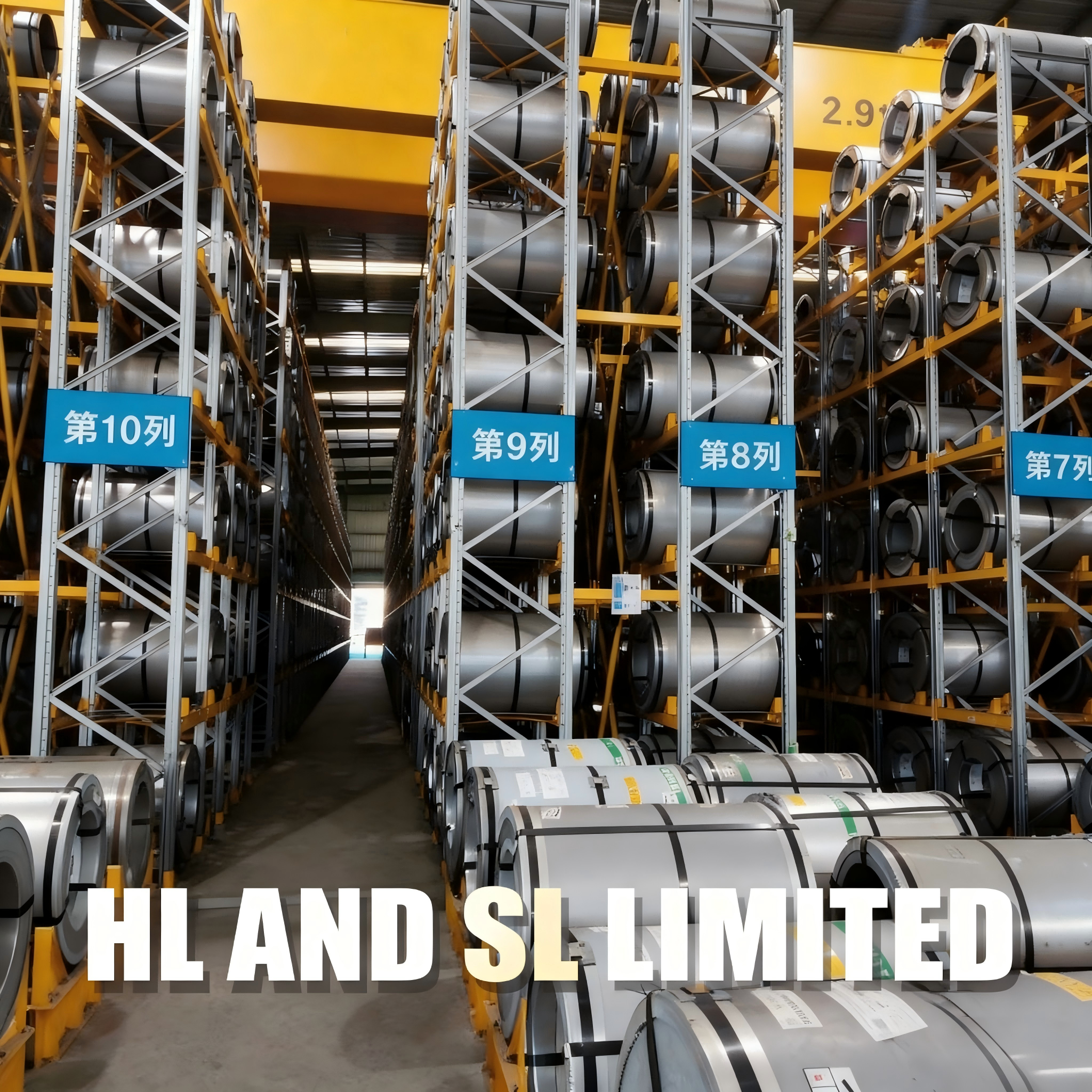
Secondary processing — slitting, cutting and dimension control — is where gauge differences between 0.20 mm and 0.23 mm become visible.
Limits and What the Published Data Does Not Cover
Two boundaries should be stated plainly. First, the published records for 20-65 and 23R075 give nominal thickness, iron loss and, for 23R075, a B8 floor. They do not give stacking factor, resistivity, coating thickness or measured magnetostriction values, and those properties belong in the test documentation rather than in an assumption. Second, project specifications can be tighter than catalogue grade statements. In the ±800 kV Ultra-High Voltage Direct Current project environment in Brazil, for example, the stated core requirement calls for ultra-low loss oriented silicon steel with magnetic flux density ≥ 1.92 T and iron loss below 0.85 W/kg — a combination that must be matched grade by grade with confirmed mill data, not inferred from a model name.
Standards help here but do not close the gap. IEC 60404-8-7:2020 and ASTM A876-17e1 define grade frameworks, test bases and delivery states; they do not certify a specific supplier's coil-to-coil performance. That separation is the reason a UHV procurement package normally carries both a standard reference and a certificate requirement.
FAQ: 20-65 vs 23R075 for UHV Transformer Cores
Which standards and compliance points apply to an order for 0.20 mm or 0.23 mm Hi-B grain-oriented steel?
Both thicknesses fall within IEC 60404-8-7:2020, which defines grades of cold-rolled grain-oriented electrical steel strip and sheet in the fully processed state at nominal thicknesses of 0.20 mm, 0.23 mm, 0.27 mm, 0.30 mm and 0.35 mm, and applies to Goss-textured material supplied final-annealed in coils or sheets for magnetic circuits. Where an ASTM basis is required, ASTM A876-17e1 covers flat-rolled, grain-oriented, fully processed low-carbon silicon-iron electrical steel. If noise or vibration is a design constraint, magnetostriction characteristics should be requested per IEC 60404-17:2021, which specifies measurement under an applied AC magnetic field at 50 Hz or 60 Hz. For European market access, RoHS Directive 2011/65/EU and Directive (EU) 2025/2456 restrict ten hazardous substances in electrical and electronic equipment, with ECHA taking over technical assessments from 13 August 2027, so coating and substance declarations should be part of the document set.
Is 20-65 automatically the better choice for a UHV core because its core loss is lower?
No. 20-65 is published at P1.7/50 ≤ 0.65 W/kg at 0.20 mm, which is the lower loss ceiling of the two, and lower loss reduces no-load loss for a given core mass. But the choice is not one-dimensional. 20-65 runs at a thinner 0.20 mm gauge than 23R075 at 0.23 mm, which places more demand on slitting, cutting, burr control and stacking. In addition, the published data for 23R075 states B8 ≥ 1.88 T while the published data for 20-65 states thickness and loss without a B8 floor, so a design that depends on flux density needs the mill certificate for 20-65 before the grade is fixed. The defensible approach is to compare both grades on the same test basis and confirm the process route on a lamination trial.
How should cost be compared between 20-65 and 23R075?
Cost must be compared on a delivered, ready-to-use basis: material grade and gauge, width and slit pattern, coating, secondary processing into laminations, packing and freight. No verified price data for 20-65 or 23R075 exists in the sources behind this article, so any figure must come from a written quotation rather than from an assumed premium. One verified market data point is useful context but should not be transferred carelessly: ultra-thin electrical steel below 0.2 mm gauge is reported to carry a price premium of 50% to 100% over standard gauge. 20-65 at 0.20 mm sits above that below-0.2 mm band, so that premium figure must not be applied to it without a quotation. The commercial case should also weigh the value of the loss difference against the design's actual loading profile.
What should a sample validation cover before committing to a grade?
A sample programme should confirm the properties that decide acceptance. Request sample coils or slit laminations of both 20-65 and 23R075, verify nominal thickness and dimensional tolerance, obtain iron loss P1.7/50 and magnetic flux density B8 on the same test basis, and confirm coating type and surface condition. Then run a small lamination trial to check cutting behaviour, burr and stacking at 0.20 mm versus 0.23 mm, because that is where the gauge difference becomes a production issue rather than a datasheet difference. HL AND SL LIMITED operates its own material processing plant and provides customized on-demand secondary processing for silicon steel, which allows sample and trial material to be prepared to the buyer's specified size and shape.
How can availability and lead time for these grades be confirmed?
Lead time is not a published property of a grade, so it has to be confirmed in writing against a defined order: mill origin, grade and gauge, coil size or sheet dimension, slit width, coating, packing and shipment terms. HL AND SL LIMITED, founded in 2012, is an authorized agent of China Baowu Steel Group and also integrates export resources from multiple private steel mills, which allows grades and price levels to be matched to a specific requirement. Its facility covers 30,000 m² with an annual production capacity of 30,000 tons, a 10-engineer R&D team and a workforce of about 50, and roughly 80% of output is exported to markets including Mexico, Brazil, Italy, the UAE and India. To confirm grade availability, request a quotation at sales-01@hlslind.com or +86 134-6700-2282, and specify the target transformer type, required P1.7/50 ceiling and preferred thickness so the grade can be quoted precisely.
Conclusion: Choose the Grade That Matches the Loss Budget and the Build Route
20-65 and 23R075 are not rivals in a ranking; they are two points on the same Hi-B grain-oriented specification curve. 20-65 delivers a 0.20 mm gauge with P1.7/50 ≤ 0.65 W/kg and is stated for ultra-high voltage transformers, which makes it the first candidate when the UHV core's loss budget is tight and the factory is qualified for thinner material. 23R075 delivers a 0.23 mm gauge with P1.7/50 ≤ 0.75 W/kg and a published B8 ≥ 1.88 T, which makes it the clearer specification when a documented flux-density floor and a more forgiving gauge matter more than the last increment of loss reduction.
The decision sequence is short: set the loss budget, check whether a B8 floor is required and whether it is documented, confirm the cutting and stacking route for the chosen gauge, and lock the standard reference and coatings into the purchase order. Buyers who follow that order usually avoid the two common errors — selecting on loss alone, or accepting a grade name where a test certificate was needed.
Next Step: Sample, Quotation or Catalogue
HL AND SL LIMITED supplies Hi-B grain-oriented silicon steel including 20-65, 23R075, 18-65 and 27Q095, backed by a 30,000 m² processing plant, 30,000 tons annual capacity and customized secondary processing to buyer specification. Send your transformer type, required P1.7/50 ceiling and target thickness to receive a grade recommendation, sample arrangement and quotation.
Email: sales-01@hlslind.com | Tel / WhatsApp: +86 134-6700-2282 | Website: www.hlslind.com
Address: Shantou Qingyuncheng, Jiankang South Street, Jinyuan District, Taiyuan City, Shanxi Province, China
Download the product catalogue for full grade coverage and specifications: HL AND SL LIMITED Electrical Steel Catalogue (PDF)
Silicon steelGrain-oriented silicon steelHi-BUltra-thin gaugeInsulated coatingASTM standard silicon steel
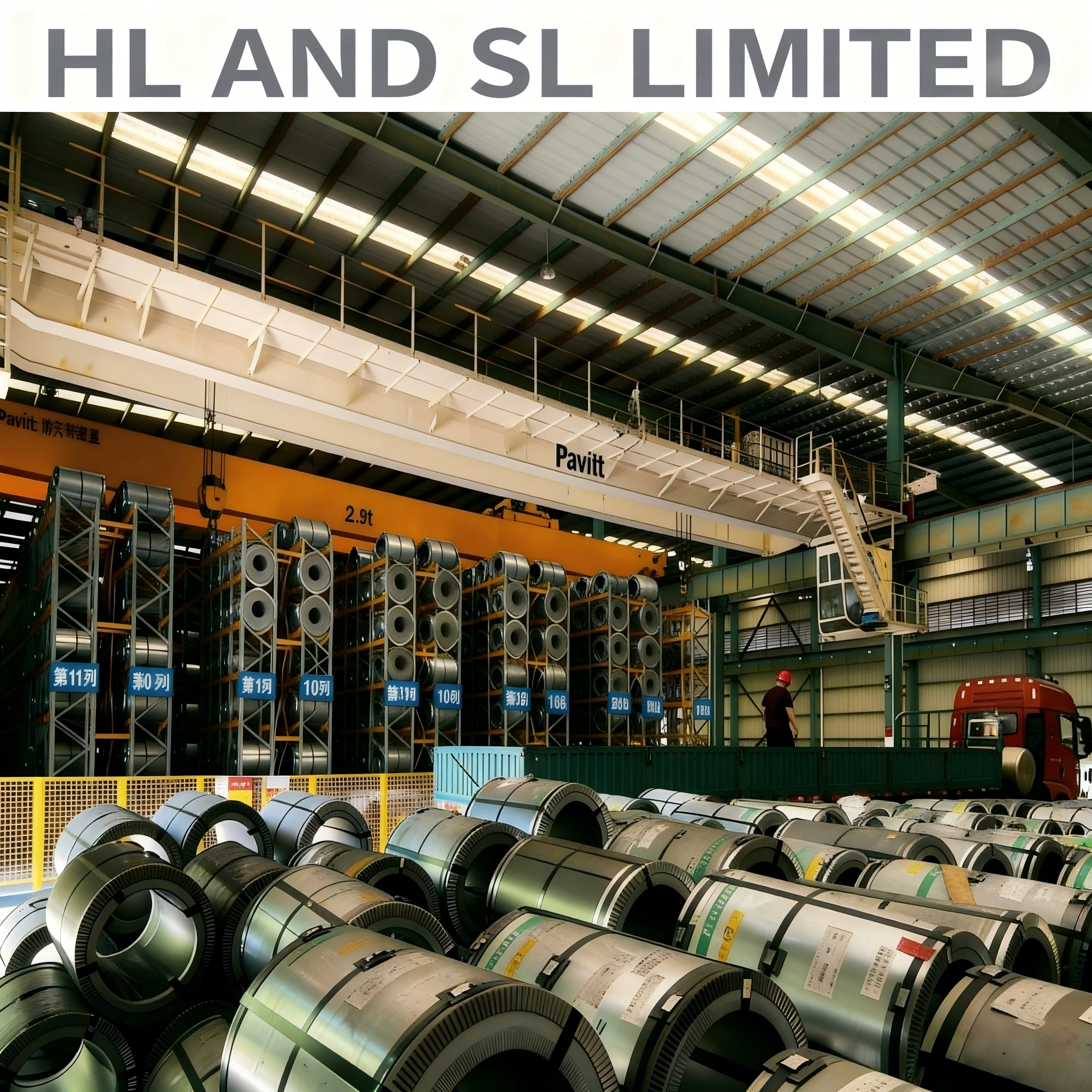
Sample coils and quotations are prepared against the buyer's stated grade, gauge and loss ceiling.
Have Questions or Need More Details?
Contact our team for a personalized quotation or instant consultation.
Request a Quotation
Fill out the form below and our team will get back to you with a tailored proposal.
WhatsApp Direct Chat
Prefer to chat in real-time? Message us on WhatsApp for instant assistance & quick answers.
- Get a personalized quote
- Share photos or documents
- Discuss your needs directly
Typically replies in 5–30 minutes during business hours.