
Hi-B Electrical Steel Compliance Guide: Mapping 18-65 and 23Q Grades to Regional Requirements
Compliance for Hi-B grain-oriented electrical steel is not one certificate. It is a per-grade evidence set that has to line up with a standard system, a test condition and the market where the finished transformer or motor is sold. A dossier that presents 18-65, 20R070 and the 23Q080 to 23Q100 grades with their own declared thickness, iron-loss ceiling at P1.7/50, flux-density floor, silicon range, coating and inspection route can be reviewed line by line. A dossier that carries a single blanket claim across the whole series cannot.
This guide is written for transformer and motor buyers who are past shortlisting and now have to hand a technical file to an engineering reviewer, an incoming-inspection team or a customer audit. It maps the verified parameters of the Hi-B range supplied by HL AND SL LIMITED to the documentation checks that regional requirement categories usually trigger, and it separates what the material data can prove from what it cannot.
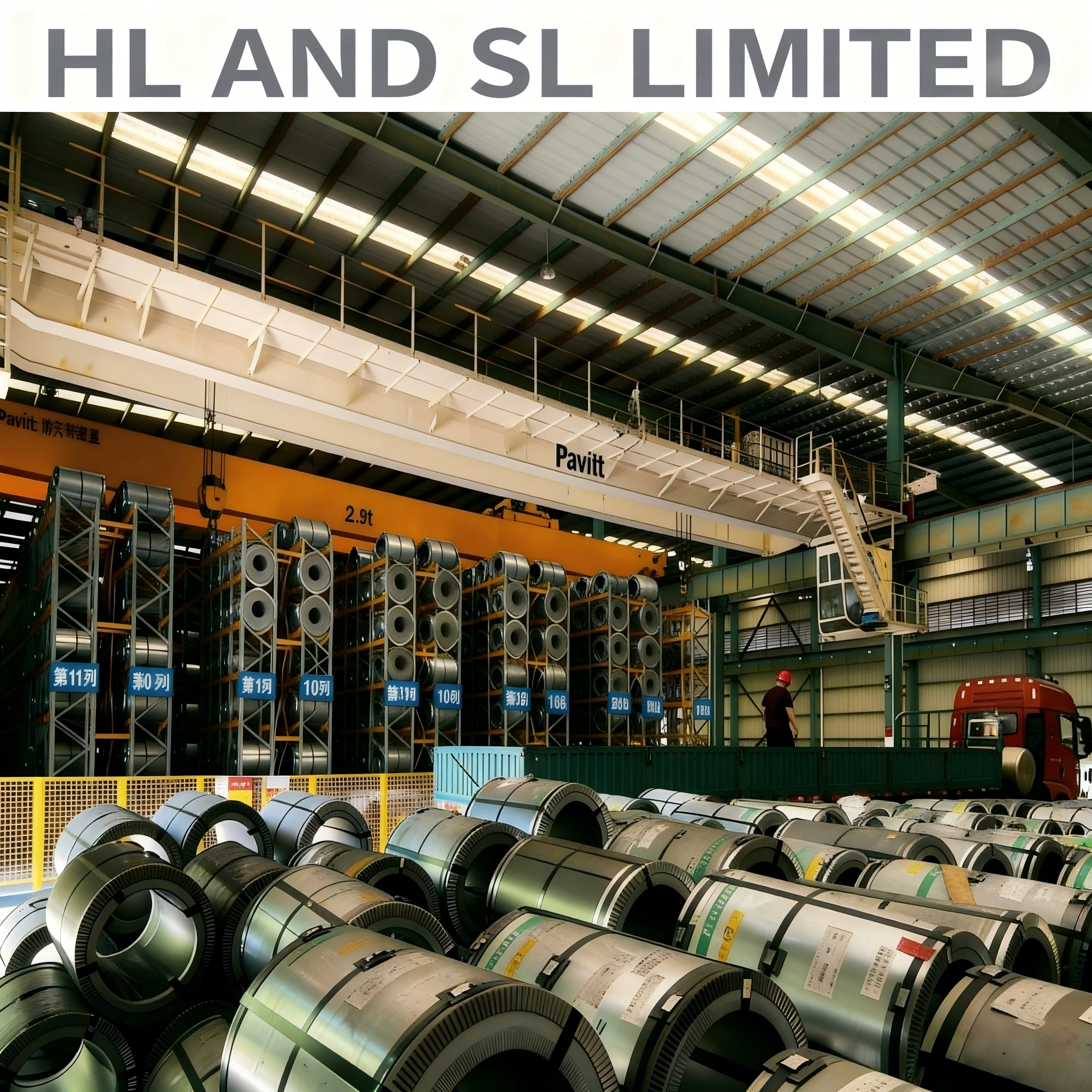
Cover: Hi-B grain-oriented electrical steel supplied for transformer core compliance files. Grade codes must be presented with declared properties, not as standard designations.
Why a grade label is not compliance evidence
A grade code such as 18-65 or 23Q080 is a supplier designation for a commercial product. It is not, by itself, a statement of conformity with any regional rule, and it does not transfer into a customer dossier as proof of anything. What transfers is the property set behind the code.
In the data used for this guide, the numeric part of each designation aligns with the declared thickness in millimetres and the iron-loss ceiling in W/kg: 18-65 is 0.18 mm with iron loss at or below 0.65 W/kg; 20R070 is 0.20 mm at or below 0.70 W/kg; 23Q080 is 0.23 mm at or below 0.80 W/kg. That alignment is useful for reading a quotation quickly, but it also creates the most common documentation error: reviewers assume the naming pattern means the properties are interchangeable across the series. They are not.
Four mapping failures account for most rejected or delayed submittals:
- Blanket flux-density claims. Within the 23Q series, 23Q080 reaches B8 of at least 1.89 T and 23Q085, 23Q090 and 23Q095 reach at least 1.88 T, but 23Q100 is declared at 1.75 T. A file that repeats one permeability figure across all five grades contradicts its own datasheet.
- Measured values written as guarantees. 23Q080 carries a maximum iron loss of 0.80 W/kg and a measured band of 0.76 to 0.78 W/kg. Both are legitimate statements, but only the ceiling is a contractual limit.
- Marking assumptions. CE and UL questions are frequently raised for electrical steel, yet the evidence available for this guide does not establish that either mark applies to flat-rolled grain-oriented steel as a material.
- Missing test conditions. An iron-loss figure without the P1.7/50 condition, the test standard and the certificate basis cannot be compared with another supplier figure.
Each of these is fixable at the dossier stage, before a purchase order is issued, which is why the mapping work belongs in evaluation and execution rather than in the post-delivery dispute file.
What the standards describe, and what they leave to the contract
Grain-oriented electrical steel is defined in U.S. trade documentation as a flat-rolled alloy steel product with the metallic grains elongated lengthwise. That grain orientation is why the material family is associated with transformer cores, where magnetisation runs mainly in one direction.
ASTM A876 is the standard specification most often cited for fully processed grain-oriented silicon-iron electrical steel. Its scope covers flat-rolled, fully processed low-carbon silicon-iron electrical steel used primarily in transformer cores operating at moderate to high magnetic flux densities at commercial power frequencies. The specification identifies three grade categories: conventional grain-oriented, high-permeability grain-oriented and laser-scribed high-permeability grain-oriented. It also groups the properties that a compliant file has to address: core loss, permeability and magnetic aging among the magnetic properties, physical dimensions, and mechanical properties such as lamination factor and ductility.
Two practical points follow. First, high-permeability grain-oriented steel is the category that Hi-B products sit in, and laser-scribed grades form a distinct category with their own identification, so a dossier should say which category is being offered rather than only quoting a code. Second, the standard sets out property groups and test expectations, not a single number that a buyer can copy into a purchase order. Grade, thickness, test method and acceptance limits still have to be agreed commercially.
Nomenclature is not globally uniform either. Manufacturer product literature for grain-oriented ranges identifies IEC 60404-8-7 and ASTM A976 as comparison points, which is a reminder that a buyer receiving a Chinese mill code, a European range name and an ASTM grade in the same tender pack is looking at three labelling systems for overlapping property classes. The dossier should state which system the declared values are being offered under.
How verified Hi-B parameters should be presented in a compliance dossier
The workable structure is six blocks, each answering one reviewer question and each traceable to a document. The blocks below are built only from the verified parameters of the HL AND SL LIMITED Hi-B range, which covers 18-65, 20-65, 20R070, 23R075 and 23Q080 through 23Q100, with thickness customisation from 0.18 mm to 0.35 mm and width up to 1250 mm.
| Dossier block | What the reviewer needs to see | Verified example from the Hi-B range |
|---|---|---|
| 1. Grade identity | Product name, grade code, grade family and orientation category | Oriented silicon steel, grade 23Q085, High Magnetic Induction Grain-Oriented Silicon Steel (Hi-B) |
| 2. Magnetic properties | Iron loss ceiling with the P1.7/50 condition and flux-density floor stated separately per grade | 23Q085: iron loss at or below 0.85 W/kg; B8 at or above 1.88 T |
| 3. Chemistry | Silicon range and controlled impurities, as declared for that grade | 23Q080: silicon about 3.0 to 3.2 percent, with carbon, sulphur and nitrogen strictly controlled |
| 4. Coating and dimensions | Coating class and temperature capability, thickness, width and cut format | Organic coating rated to 180 degrees C, inorganic coating up to 800 degrees C, semi-organic options |
| 5. Inspection and traceability | Origin inspection route, batch inspection report issued with the goods, third-party testing route | Batch inspection report with shipment; third-party testing through CMA or CNAS laboratories |
| 6. Claims not being made | Explicit statement of what the file does not assert | No CE or UL material marking claimed for the flat-rolled steel; equipment-level conformity handled separately |
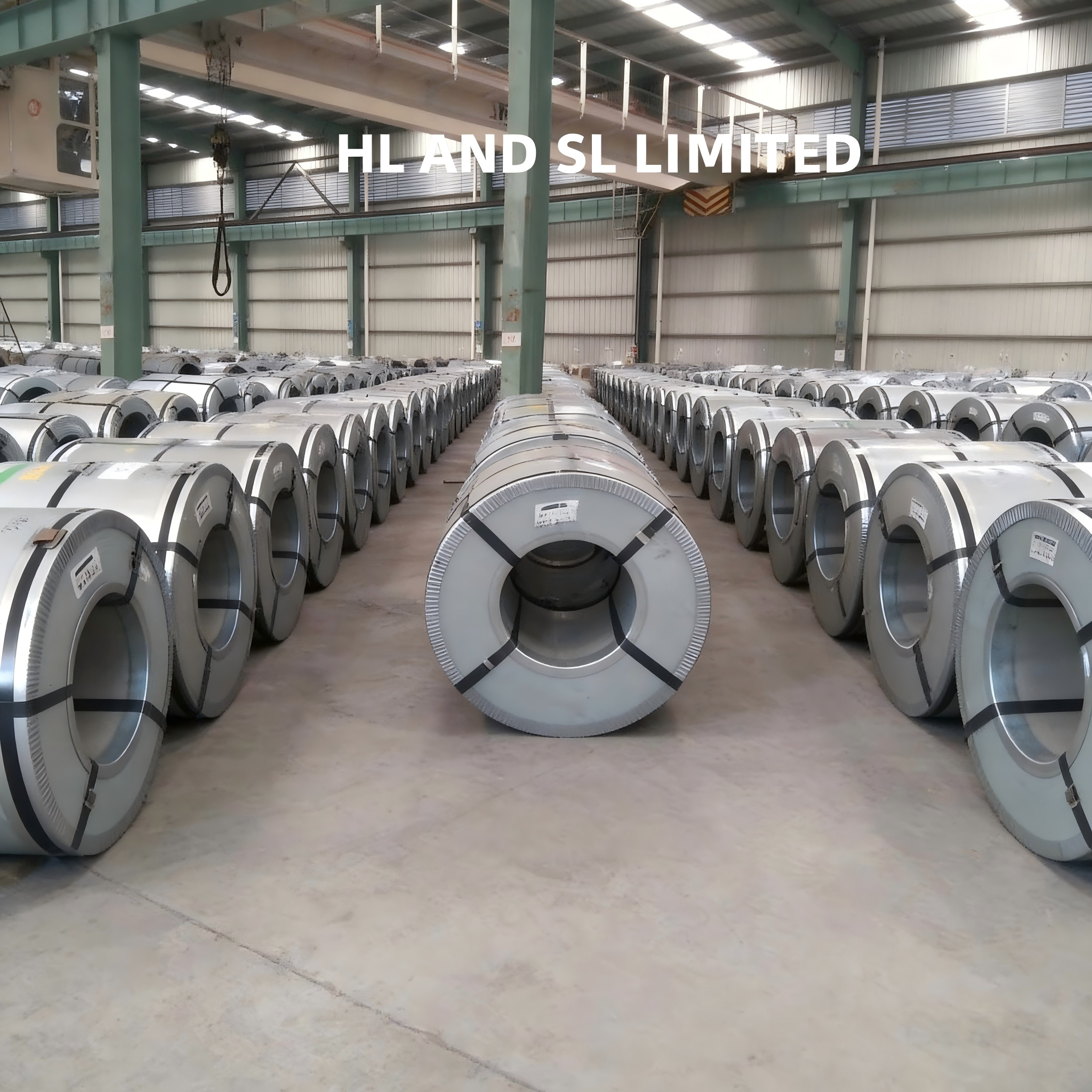
Supporting: grade data, processing records and batch documentation are assembled per order so the dossier blocks can be matched to a shipment.
Block 1 to 3: identity, magnetics and chemistry
The identity block prevents the most expensive error in the file, which is a certificate for the wrong grade. Because the 23Q series shares thickness and a naming pattern, a quotation line can migrate into a dossier as 23Q080 when the core design was calculated on 23Q090, or the reverse. Stating product name, code, family and orientation category on every page of the technical annex removes that ambiguity.
The magnetics block must present iron loss and flux density as separate declarations with their conditions. The P1.7/50 notation identifies the specific total loss measured at 1.7 T and 50 Hz, and it should appear in the dossier exactly as it appears in the mill data, together with the standard the test was performed to. Flux density is declared at B8 and must be copied grade by grade: 18-65 at 1.88 T or above, 20R070 at 1.86 T or above, 23R075 at 1.88 T or above, 23Q080 at 1.89 T or above, 23Q085, 23Q090 and 23Q095 at 1.88 T or above, and 23Q100 at 1.75 T or above.
The chemistry block is where buyers should resist copying a single composition statement across the range. Most grades in the range are declared with silicon at about 3.0 to 3.2 percent, while 23Q095 and 23Q100 are declared in the 2.5 to 3.5 percent band with aluminium and manganese additions. A reviewer comparing an incoming certificate against an approved specification will flag a composition statement that does not match the grade actually shipped.
Block 4 to 6: coating, inspection and honest limits
Coating choice changes what happens to the steel after delivery, so it belongs in the compliance file rather than only in the commercial annex. The available options are organic coating with temperature resistance up to 180 degrees C, inorganic coating with temperature resistance up to 800 degrees C, and semi-organic coating. A core that will be stress-relief annealed at high temperature and a core that will be used as coated need different declarations, and the dossier should state which coating the tested properties were measured on.
Inspection and traceability is the block that most often turns a conditional approval into a full approval. The available route is origin inspection at the plant through full-process random inspection and batch inspection, a material certificate or warranty certificate issued with the goods, and third-party testing through CMA or CNAS laboratories when the buyer requires an independent report. Buyers who need an independent report should name that requirement before shipment, because it is a test route, not a certificate that can be added retroactively to a closed batch.
The final block is the one suppliers rarely write and reviewers appreciate: a short statement of what the file does not claim. For this material family, that statement covers CE and UL marking of the flat-rolled steel, and any assumption that a grade code equals a standard designation.
Step-by-step: assembling the mapping file
The sequence below keeps the dossier aligned with the purchase decision, so that the technical file and the acceptance criteria are fixed at the same time rather than in separate review rounds.
- Fix the destination requirement first. Establish whether the reviewer is qualifying the steel as a material, the lamination as a component, or the finished transformer or motor as equipment. The three levels use different documents and should not be merged in one annex.
- Convert every grade code into a declared property set. One line per grade: thickness, iron-loss ceiling with condition, flux-density floor, silicon range, coating class, declared application.
- Name the standard system and the edition. State whether the properties are offered under an ASTM grain-oriented specification, an IEC convention or a buyer specification, and confirm which edition is current before the file is signed off. Edition status of voluntary standards changes, and a superseded reference weakens an otherwise sound file.
- State the test method and the certificate basis. Declare whether values come from the mill heat and batch test, from origin inspection, or from CMA or CNAS third-party testing.
- Separate guaranteed limits from typical values. Put ceilings and floors in the specification table and measured or typical data in a clearly labelled reference table.
- Declare coating, dimensions and processing. Include thickness, width up to 1250 mm, slit or cut-to-length format, edge condition and packaging, since these determine whether the tested properties survive into the core.
- Write the acceptance and commercial terms into the same file. Minimum order quantity of 25 t, delivery on EXW, FOB or CIF terms, pre-shipment testing plus third-party testing as acceptance criteria, and 30/70 payment terms.
- Add the next-step contact and revision control. Record who issues the file, which revision the buyer approved, and which order numbers the approved revision applies to.
Where the mapping decisions show up in practice
Ultra-high-voltage and power transformer cores
18-65 is declared for ultra-high-voltage transformers, power transformers and high-efficiency energy-saving transformer cores, at 0.18 mm with iron loss at or below 0.65 W/kg and B8 at 1.88 T or above. In a dossier, the thin gauge is the point that needs defending: reviewers will ask which test method was used and whether the thickness tolerance and lamination factor were agreed, because those are contract items rather than values implied by the grade.
Distribution transformers and energy-efficiency programmes
20-65 is declared for ultra-high-voltage transformers, high-efficiency distribution transformers and high-energy-efficiency power equipment at 0.20 mm and 0.65 W/kg or below. 20R070 sits at 0.20 mm with 0.70 W/kg or below and B8 at 1.86 T or above, positioned for high-efficiency distribution transformers and power transformer cores. When a distribution transformer has to meet a local efficiency threshold, the material section should show the loss figure the core design was calculated on, not only the grade that was ordered.
HVDC converter transformers and reactors
23Q085 is declared for high-voltage direct current converter transformer cores and high-efficiency power transformer cores at 0.85 W/kg or below. 23Q080, at 0.80 W/kg or below with B8 at 1.89 T or above, is declared for energy-efficient transformers, power transformers, reactors and high-power frequency converters. Converter and reactor projects usually attract additional documentation requests, so the grade-level data should be issued together with the batch inspection report rather than in two rounds.
Industrial and general-purpose cores
23Q090, at 0.90 W/kg or below with B8 at 1.88 T or above, is declared for industrial small and medium-sized transformers and power equipment cores. 23Q100, at 1.00 W/kg or below with B8 at 1.75 T or above, is declared for common distribution transformers, general industrial transformers and electromagnetic equipment. Because 23Q100 has the lowest flux-density floor in the series, a dossier that lists it beside the other 23Q grades must show the 1.75 T figure explicitly.
Motor and generator laminations
23Q095, at 0.95 W/kg or below, is declared for high-efficiency transformers, power equipment cores and motors, with silicon in the 2.5 to 3.5 percent band. Buyers developing volume motor programmes should note that non-oriented grades remain the conventional route for variable-magnetisation applications, so a grain-oriented grade used in a motor file needs its application rationale written down rather than assumed.

Proof: HL AND SL LIMITED is an electrical steel export trading enterprise based in Taiyuan, Shanxi, China, founded in 2012, and an authorized agent of China Baowu Steel Group.
Two long-running supply relationships illustrate why the dossier has to travel with the material rather than sit in a tender folder. A transformer manufacturer client in Mexico has used these grades for iron cores in power transformers, converter transformers and special engineering transformers worldwide, in batch supply covering complete transmission and distribution transformer manufacturing, for more than ten years with stable operation verified. In Brazil, WEG has used the material for local manufacturing of power and distribution transformers for over ten years, with the product meeting local grid energy-efficiency standards and low-carbon requirements, supported by localised technical service and supply-chain support through a representative office.
Grade-by-grade property table for dossier use
The table below is the comparison set that should appear in the technical annex. Values are the declared properties of each grade; they are not interchangeable between rows, and the application column is the declared application for that grade rather than a general recommendation.
| Grade | Thickness | Iron loss P1.7/50 | Flux density B8 | Silicon | Declared application |
|---|---|---|---|---|---|
| 18-65 | 0.18 mm | at or below 0.65 W/kg | at or above 1.88 T | about 3.0 to 3.2 percent | UHV transformers, power transformers, high-efficiency energy-saving cores |
| 20-65 | 0.20 mm | at or below 0.65 W/kg | declared in grade data | about 3.0 to 3.2 percent | UHV transformers, high-efficiency distribution transformers |
| 20R070 | 0.20 mm | at or below 0.70 W/kg | at or above 1.86 T | about 3.0 to 3.2 percent | High-efficiency distribution transformers, power transformer cores |
| 23R075 | 0.23 mm | at or below 0.75 W/kg | at or above 1.88 T | about 3.0 to 3.2 percent | Energy-efficiency standard transformers, power transformer cores |
| 23Q080 | 0.23 mm | at or below 0.80 W/kg (measured 0.76 to 0.78) | at or above 1.89 T | about 3.0 to 3.2 percent | Energy-efficient transformers, reactors, high-power frequency converters |
| 23Q085 | 0.23 mm | at or below 0.85 W/kg | at or above 1.88 T | about 3.0 to 3.2 percent | HVDC converter transformers, high-efficiency power transformer cores |
| 23Q090 | 0.23 mm | at or below 0.90 W/kg | at or above 1.88 T | about 3.0 to 3.2 percent | Industrial small and medium-sized transformers, power equipment cores |
| 23Q095 | 0.23 mm | at or below 0.95 W/kg | at or above 1.88 T | 2.5 to 3.5 percent | High-efficiency transformers, power equipment cores, motors |
| 23Q100 | 0.23 mm | at or below 1.00 W/kg | at or above 1.75 T | 2.5 to 3.5 percent | Common distribution transformers, general industrial transformers |
Mapping grades to regional requirement categories
Regional rules are not written about steel. They are written about equipment, installations and market access, and they reference material properties through standards and test methods. That is why the practical mapping exercise is not a translation of a grade into a local regulation, but a set of questions the dossier has to answer before the finished unit can be placed on a market.
| Market | Requirement category to resolve before submission | Document the dossier should carry |
|---|---|---|
| European Union | Which equipment-level efficiency rule applies to the finished transformer or motor; whether the buyer specification references an IEC material convention in addition to the supplier grade code | Grade property table with test condition, batch inspection report, coating declaration, third-party report where specified |
| North America and Mexico | Whether the buyer specification references an ASTM grain-oriented or non-oriented specification, and which edition is current; whether the laminating or transformer partner requires incoming inspection data | Grade data sheet, batch inspection report, dimensional and lamination factor declaration, origin inspection record |
| Brazil and Latin America | Which local grid energy-efficiency requirement the finished transformer is assessed against; whether local technical service is required during qualification | Grade data sheet, batch report, evidence of prior supply into local transformer manufacturing, technical support contact |
| Middle East, India and Asia-Pacific | Whether the tender references a buyer specification, an international standard or a national deviation; language and unit conventions required in the file | Grade data sheet in the required units, batch inspection report, certificate of origin, third-party CMA or CNAS report if requested |
| All markets | Whether any marking claim is being made for the material rather than the equipment | Explicit statement of the claims not being made, plus the equipment-level conformity route owned by the transformer or motor manufacturer |
The marking question deserves a separate sentence because it is the most frequent source of overstatement. The evidence available for this guide does not establish that CE or UL marking applies to grain-oriented electrical steel as a flat-rolled material. Those marks attach to finished equipment, while the steel is qualified through declared magnetic properties, dimensions and batch test documents. Buyers should keep material conformity and equipment conformity in two separate sections of the file and confirm the applicable route with their own market-access or notified-body contact.
Where regional requirements bite hardest is in the review of declared values. A reviewer checking a 23Q080 core against a distribution transformer efficiency threshold needs the 0.80 W/kg ceiling as a contractual limit and the 0.76 to 0.78 W/kg measured band as supporting evidence, and needs to know that both refer to the same test condition. If the file shows only one figure, the reviewer cannot tell whether the core design has margin or not.
Frequently asked questions
Does CE or UL certification apply to Hi-B electrical steel itself?
No. The evidence available for this guide does not establish that CE or UL marking applies to grain-oriented electrical steel as a flat-rolled material. Those marks are normally attached to finished equipment such as a transformer, motor or control assembly, while the steel is qualified through declared magnetic properties, dimensions and batch test documentation. A compliance dossier should therefore separate material conformity, evidenced by grade data and batch inspection reports, from equipment conformity, which the transformer or motor manufacturer owns.
Can one certificate cover both 18-65 and the 23Q grades in a single project?
No. Each grade carries its own declared property set, and a batch inspection report refers to a specific batch rather than to a product family. 18-65 is declared at 0.18 mm with iron loss at or below 0.65 W/kg and B8 at 1.88 T or above, while 23Q100 is declared at 0.23 mm with iron loss at or below 1.00 W/kg and B8 at 1.75 T or above. A project using more than one grade should carry one property row per grade and one inspection report per shipped batch, plus a summary sheet that maps each row to the core or component it was approved for.
What can be customised, and within which limits?
HL AND SL LIMITED provides OEM and ODM services plus full-process oriented silicon steel production, with customisation of thickness from 0.18 mm to 0.35 mm, width up to 1250 mm, material grade and coating type. Material options span general oriented CGO, high magnetic flux Hi-B, laser-engraved R series and heat-resistant HS series, and coating options are organic with temperature resistance up to 180 degrees C, inorganic up to 800 degrees C, and semi-organic. Processing covers strip cutting, fixed-length flat cutting and longitudinal slitting, with export sea-worthy packaging and logo or graphic customisation available on request.
What are the commercial terms a buyer should write into the dossier?
The minimum order quantity is 25 t, with delivery on EXW, FOB or CIF terms. Acceptance criteria are pre-shipment testing and third-party testing, and payment terms are 30/70. Monthly production capacity is 4,000 t, with annual output of 30,000 t from a 30,000 sqm processing plant. Buyers should copy these terms into the same document as the grade property table so that the acceptance route and the technical declaration cannot drift apart during review.
Can a buyer validate the material before committing to a batch?
Validation is defined in the supply terms through pre-shipment testing, origin inspection at the plant by full-process random inspection and batch inspection, and third-party testing through CMA or CNAS laboratories where required. A separate sample programme is not documented in the material available for this guide, so any sample arrangement, sample quantity or sample grade should be agreed in writing with the supplier before the order and recorded against the approved grade revision. Buyers who need an independent report should specify it at the quotation stage, because third-party testing has to be scheduled before shipment.
What are the lead times, and how do they affect a compliance schedule?
Regular orders typically take 15 to 20 days in production, urgent or stock orders can be shipped within 3 to 7 days, and bulk export orders take 30 to 45 days to arrive at port. After a letter of credit deposit, the working period is 7 to 30 working days. Because third-party CMA or CNAS testing must be completed before shipment, buyers working to a submission deadline should allow for that testing window in addition to production, and should confirm the report requirements at the same time as the grade approval.
Conclusion: build the file around grades, not around claims
A Hi-B compliance file that maps 18-65 and the 23Q080 to 23Q100 grades to regional requirement categories is, in the end, a discipline of restraint. It states one property set per grade, one test condition per figure, one inspection route per batch, and one clear boundary around what the material data does not prove. The verified range makes that achievable: thickness from 0.18 mm to 0.35 mm, iron-loss ceilings from 0.65 W/kg at 18-65 to 1.00 W/kg at 23Q100, flux-density floors from 1.86 T at 20R070 to 1.89 T at 23Q080, silicon declarations that differ between the 23Q080 to 23Q090 group and the 23Q095 to 23Q100 group, and three coating classes with different temperature capability.
Buyers who present those facts grade by grade, with the acceptance criteria and commercial terms attached, give their reviewers something checkable. That is what turns a supplier quotation into an approved material file, and it is the difference between a dossier that survives an audit and one that is reopened after delivery.
Next step: request the grade file for your project
HL AND SL LIMITED supplies oriented silicon steel across the 18-65, 20-65, 20R070, 23R075 and 23Q080 to 23Q100 grades, with OEM thickness and width customisation, coating options and batch inspection documentation issued with the goods.
Download the product catalogue: HL AND SL LIMITED electrical steel brochure (PDF)
Request a grade data sheet or quotation: www.hlslind.com | Email: sales-01@hlslind.com | Tel and WhatsApp: +86 134-6700-2282
Address: Shantou Qingyuncheng, Jiankang South Street, Jinyuan District, Taiyuan City, Shanxi Province, China
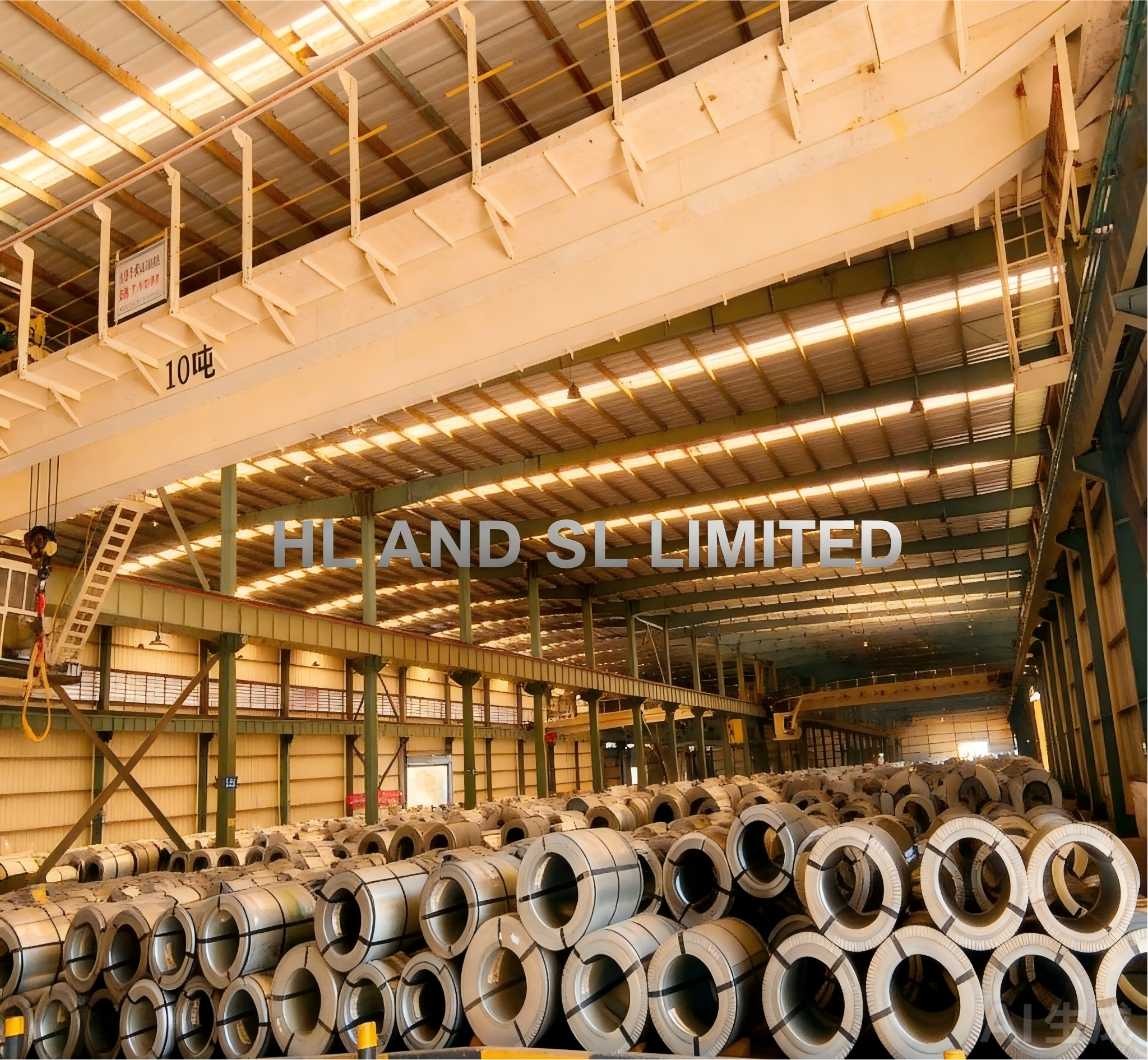
Contact: request the grade property table, batch inspection route and quotation for 18-65, 20R070 or any 23Q grade.
Have Questions or Need More Details?
Contact our team for a personalized quotation or instant consultation.
Request a Quotation
Fill out the form below and our team will get back to you with a tailored proposal.
WhatsApp Direct Chat
Prefer to chat in real-time? Message us on WhatsApp for instant assistance & quick answers.
- Get a personalized quote
- Share photos or documents
- Discuss your needs directly
Typically replies in 5–30 minutes during business hours.