
23R075 and 27Q095: Verifying Hi-B Silicon Steel Suppliers
Verify a Hi-B oriented silicon steel supplier on three things before you release a transformer-core order: grade-specific magnetic evidence for the exact model you specified, a batch heat analysis showing carbon, sulfur and nitrogen held inside agreed maxima with silicon near 3.0%–3.2%, and a delivery chain that states clearly which clock it is quoting. The grade designations carry the acceptance data. 23R075 is a 0.23 mm grade with a maximum specific total loss P1.7/50 of 0.75 W/kg and a minimum flux density B8 of 1.88 T; 27Q095 is a 0.27 mm grade with a P1.7/50 ceiling of 0.95 W/kg. A family-level Hi-B label, a reference customer or a generic grade table verifies neither one.
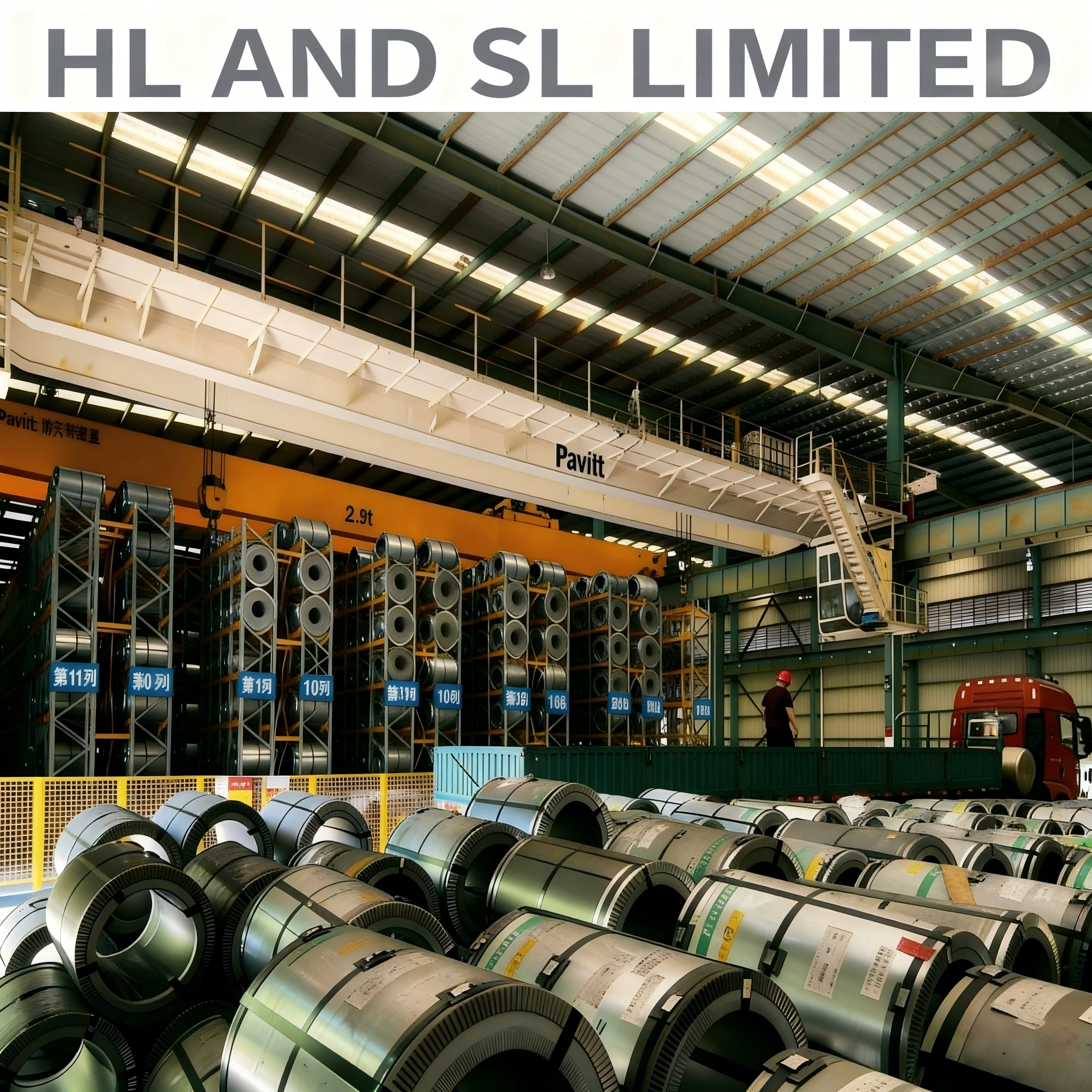
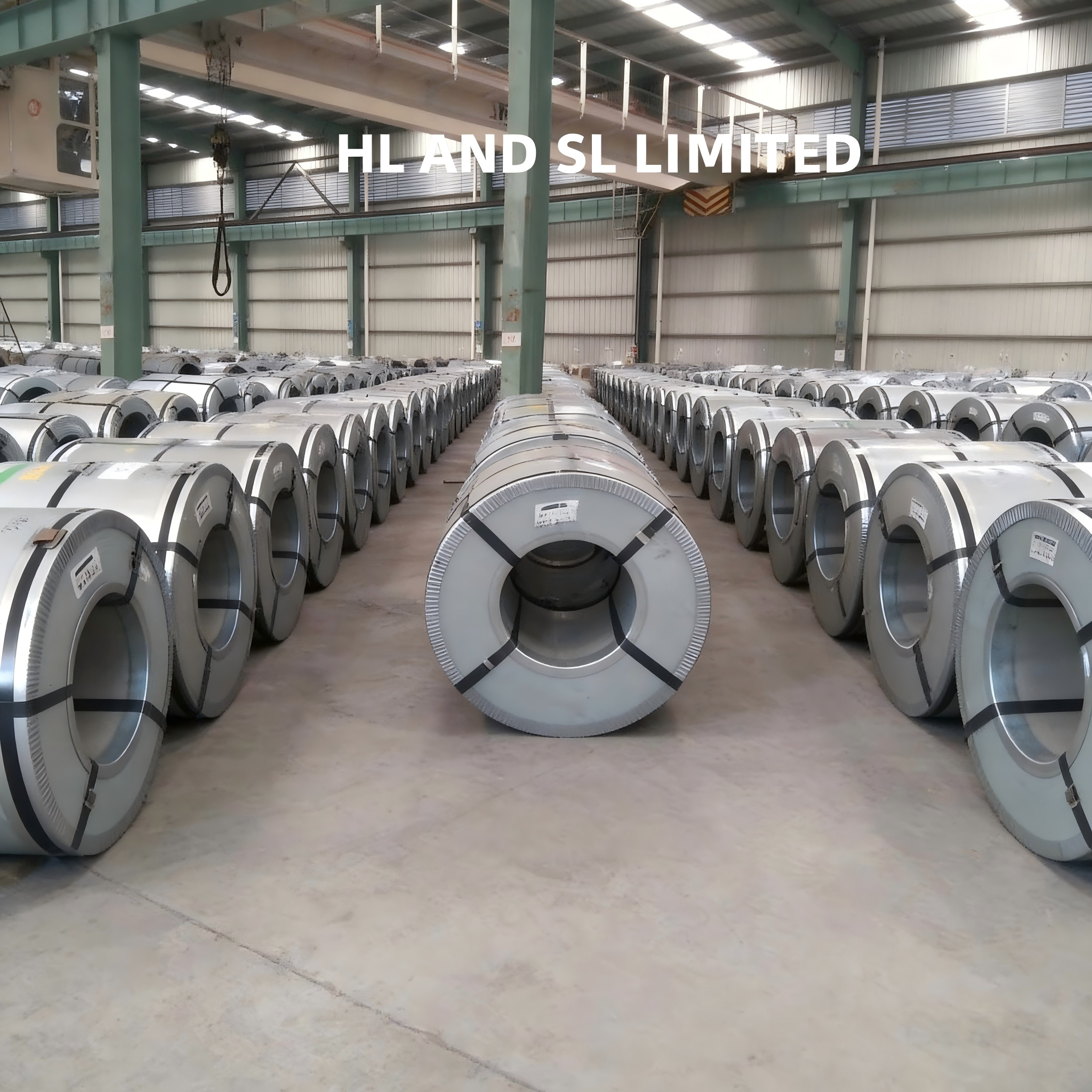
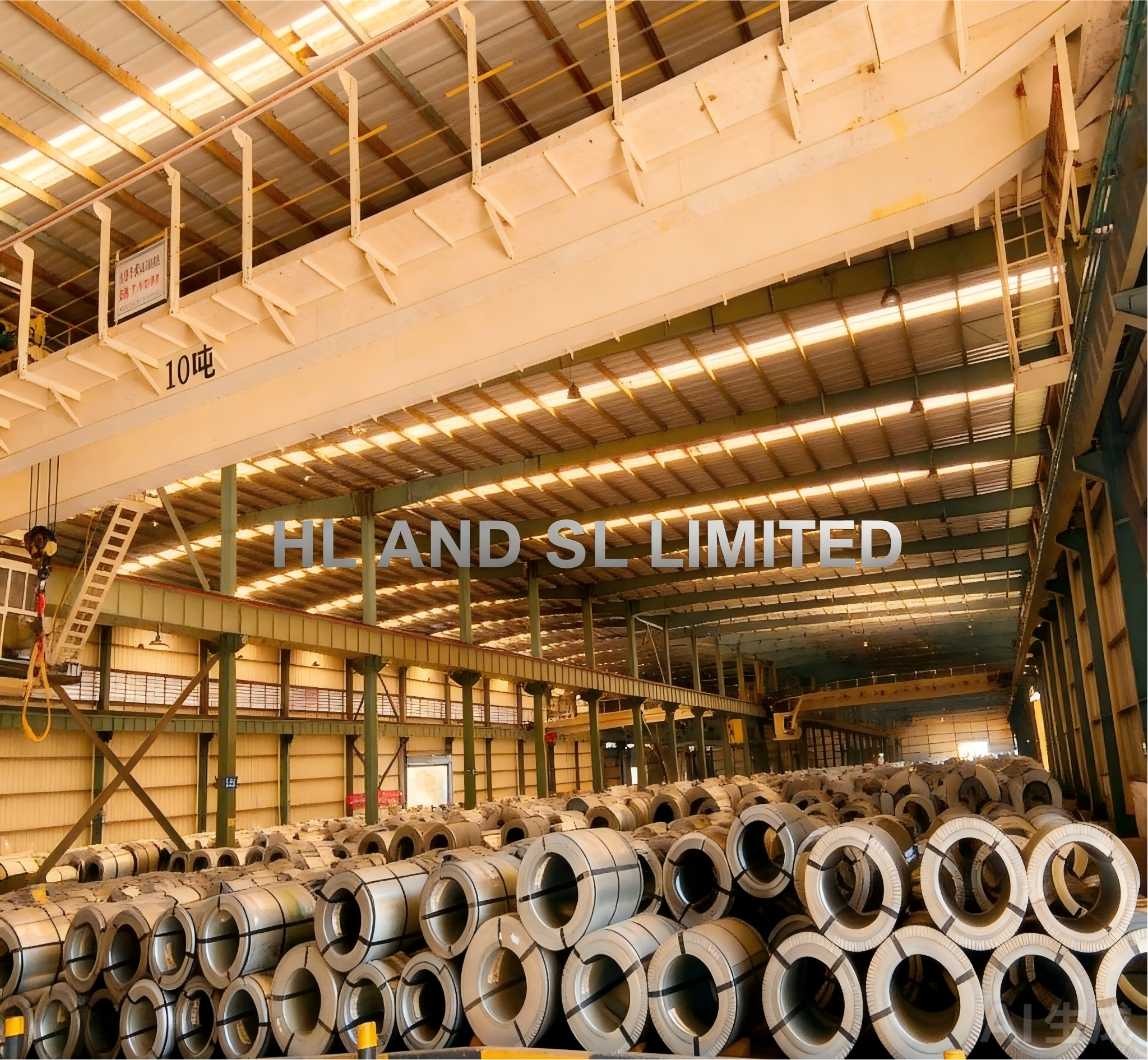
HL AND SL LIMITED is used here as a worked reference for how that evidence package should be assembled. The company is an electrical steel export enterprise founded in 2012 that operates a 30,000 m² processing facility, reports an export share of roughly 80% across markets including Mexico, Brazil, Italy, the UAE and India, and states a monthly capacity of 4,000 t with OEM and ODM production services. The verification sequence below is written so it can be applied to any shortlisted supplier, not only to the reference.
Why a Hi-B label cannot carry an acceptance decision
Hi-B identifies a high-permeability grain-oriented family. It does not fix a grade, a surface treatment or a test basis. An order that says only "Hi-B, 0.23 mm" leaves three variables open, and each one changes what arrives at the loading dock.
23R075 narrows that gap: 0.23 mm nominal thickness, a 0.75 W/kg maximum specific total loss at 1.7 T and 50 Hz, and a 1.88 T minimum flux density at 800 A/m. 27Q095 fixes 0.27 mm and a 0.95 W/kg loss ceiling. Everything else still has to be written into the order — thickness tolerance, coil width, coating type and temperature class, packing, and the inspection procedure used to produce the magnetic numbers. Whatever the order leaves unsaid defaults to what the supplier normally ships.
The gap between supplier documentation and delivered steel is a batch. A grade table describes a product family; a batch report describes the coils in the crate. Verification is the discipline of forcing the second to speak about the first, in writing, before the core-cutting schedule starts.
Impurity control is the least visible part of that discipline and the part that decides whether the magnetic values survive processing. Silicon content in the 3.0%–3.2% range and controlled carbon, sulfur and nitrogen are what allow grain-oriented steel to reach and hold low loss with high permeability; ASTM A876-17e1 describes the grain-oriented electrical steels within its scope as low-carbon silicon-iron alloys with approximately 3.2% silicon. A supplier that can quote a loss figure but cannot produce a heat analysis against agreed maxima for C, S and N is quoting a different coil.
Supplier identity is the fourth variable. HL AND SL LIMITED documents itself as an electrical steel export enterprise with an in-house material processing plant rather than a steel mill — a common and legitimate structure in this trade, but one that changes what "origin" means in your file. Whether you buy from a mill or from a processor and exporter, the mill that produced the heat should be named on the certificate, and the processing steps carried out afterwards (slitting, cut-to-length, coating) should be identified. That distinction is also where pricing transparency is won or lost, because processing and trading margin sit on top of mill cost.
What the standards framework actually fixes
IEC 60404-8-7:2020 is the reference document for cold-rolled grain-oriented electrical steel strip and sheet delivered in the fully processed state. It defines grades at nominal thicknesses of 0.20, 0.23, 0.27, 0.30 and 0.35 mm, and sets out general requirements, magnetic properties, geometric characteristics, tolerances, technological characteristics and inspection procedures. It applies to Goss-textured material supplied in the final-annealed condition in coils or sheets for the construction of magnetic circuits. Both 23R075 and 27Q095 sit inside that 0.20–0.35 mm framework, which is why the standard's inspection procedures, not only its grade table, belong in the purchase specification.
ASTM A876-17e1 covers flat-rolled, grain-oriented, fully processed low-carbon silicon-iron electrical steel whose low core loss and high permeability in the rolling direction are achieved by metallurgical processing. A tender that cites ASTM instead of IEC is not automatically satisfied by an IEC-tested coil: the two frameworks must be compared grade by grade, and that comparison should be recorded in the order file rather than assumed.
Thickness category matters when alternatives appear. IEC 60404-8-8:2017 defines thin non-oriented grades at 0.05, 0.10, 0.15, 0.20, 0.25, 0.30 and 0.35 mm, and thin grain-oriented grades at 0.05, 0.10, 0.15 and 0.18 mm. An ultra-thin offer against a 0.23 mm core is a different product category under a different standard; substituting it is an engineering decision with its own design and handling consequences, not a procurement shortcut.
Where core noise or vibration is a design constraint, IEC 60404-17:2021 provides the measurement route: it applies to the measurement of magnetostriction characteristics of grain-oriented strip and sheet under an applied AC magnetic field at 50 Hz or 60 Hz. It defines a test, not a result — a supplier's magnetostriction data still has to be requested and reviewed per order.
Coating compliance is usually a documentation question rather than a magnetic one. RoHS Directive 2011/65/EU and Directive (EU) 2025/2456 restrict ten hazardous substances in electrical and electronic equipment, with ECHA taking over technical assessments from 13 August 2027. Where a transformer or component enters a supply chain that requires RoHS documentation, the buyer should state which part of the product the declaration covers — coating system or base steel — and have the supplier confirm that scope in writing.
The five evidence pillars to score a supplier against
1. Grade identity and grade-specific magnetic evidence
Ask for a test report that names the grade, the nominal thickness, the heat or batch number and the inspection procedure, and that reports both P1.7/50 and B8. The notation is not decoration: P1.7/50 is specific total loss at 1.7 T and 50 Hz, and B8 is flux density at 800 A/m. A loss value without those anchors cannot be compared with a 0.75 W/kg or 0.95 W/kg limit, and a report that gives only one of the two figures answers only half of the specification.
Decide in advance how reported values are compared with the limit — whether the supplier's reported value governs or a re-test on arrival governs — and write that rule into the order. A result of 0.76 W/kg against a 0.75 W/kg ceiling is a failed acceptance criterion; it is not a rounding difference, and the clause set should not leave room for that discussion at goods-in.
2. Chemistry: C, S, N and silicon content
The 3.0%–3.2% silicon window and controlled carbon, sulfur and nitrogen are the metallurgical basis of the magnetic values, and they should be evidenced by a certified heat analysis rather than by a statement that impurities are controlled. This specification does not fix numerical maxima for C, S and N; those limits belong in the purchase order, set against the supplier's certified analysis and the grade being bought, with the test method named. Tie the analysis to the heat number shown on the packing list so it can be matched coil by coil on receipt.
3. Form, dimension and coating capability
Capability has to cover the order, not just the grade. HL AND SL LIMITED's documented customization range is 0.18–0.35 mm in thickness, which contains both 0.23 mm and 0.27 mm, with coil width typically 800–1,250 mm and 1,250 mm listed as the widest specification. Processing covers strip cutting, fixed-length flat cutting and slitting. Material options span general-orientation CGO, high-flux Hi-B, laser-engraved R series and heat-resistant engraved HS series, while coating options include an organic coating rated to ≤180 °C, an inorganic coating rated up to 800 °C and semi-organic systems.
Two of those details decide whether a good coil becomes a good core. Width and slitting tolerance determine how much edge trim is lost, and coating temperature class has to match the downstream stress-relief and coating process. Specify both in writing; do not accept a default coating simply because it was the only one quoted.
4. The documentation chain
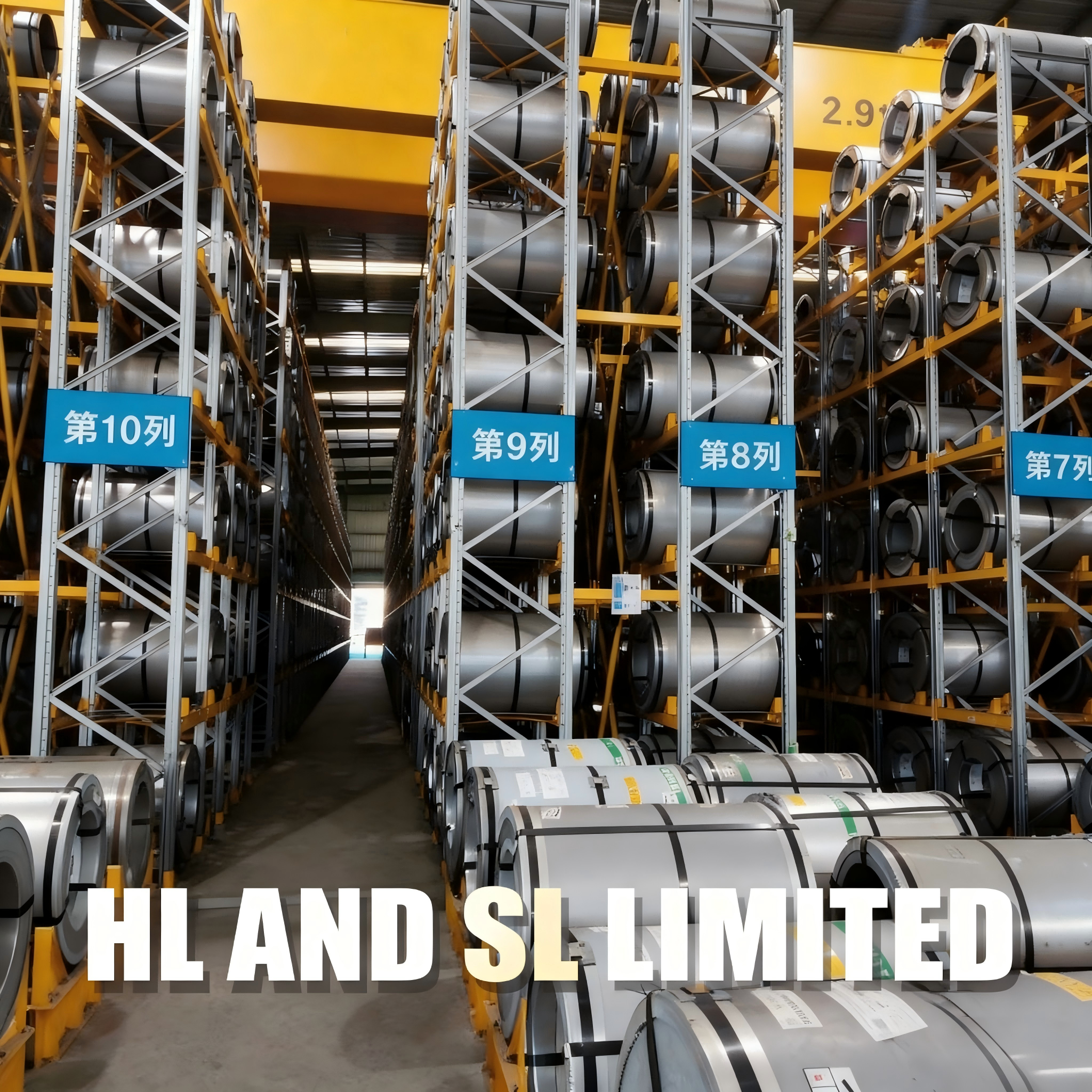
The file you want before release contains five items: mill origin on the certificate of analysis, the batch inspection report, the heat analysis, any third-party report, and a packing list carrying heat numbers. HL AND SL LIMITED's documented quality control covers origin inspection with full-process random and batch inspection, batch inspection reports supplied with the goods, and submission for third-party testing at CMA/CNAS laboratories. That is a verification route, not a substitute for the grade-specific numbers — the report still has to state 23R075 or 27Q095 with the corresponding loss and permeability results.
5. Delivery assurance and commercial terms
Delivery assurance starts with knowing which clock a supplier is quoting. The documented terms distinguish four: 3–7 days for urgent or stock orders to shipment, 15–20 days typical production lead time for regular orders, 7–30 working days after the deposit or letter of credit, and 30–45 days for bulk export orders to arrive at port. Those numbers measure different things — production, release, shipment and port arrival — so a 15–20 day production quote is not comparable with a 30–45 day port-arrival quote. Comparing them is one of the easiest ways to build an impossible core schedule.
The rest of the commercial frame should be fixed at the same time: a minimum order quantity of 25 t, delivery terms of EXW, FOB or CIF, payment terms of 30/70, and acceptance built on pre-shipment testing plus third-party testing. Packaging should be standard export sea-worthy packing, with logo and graphic customization where the consignment needs it. After-sales commitments are worth pinning down as well: HL AND SL LIMITED documents lifecycle technical guidance, feedback and coordination within 1–3 working days, and handling of quality disputes through re-inspection.
Step-by-step: from shortlist to released coil
- Write a grade-specific acceptance specification. Put 23R075 or 27Q095 on the line item with nominal thickness, maximum P1.7/50, minimum B8, agreed C/S/N maxima, the silicon window, thickness tolerance, width, coating type and temperature class, and the inspection procedure. For 27Q095, set the B8 minimum explicitly, because this evaluation brief fixes only its loss ceiling. Anything not written here becomes a supplier default.
- Request the evidence pack before negotiating price. Grade-specific test reports, a sample heat analysis, the coating data sheet and a statement of mill origin. A supplier that cannot produce these at quotation stage is unlikely to produce them at shipment stage, and the resulting delay costs more than the price difference under discussion.
- Qualify the test basis. Confirm that the report identifies the inspection procedure behind the numbers, that P1.7/50 is stated at 1.7 T and 50 Hz, that B8 is stated at 800 A/m, and that the report is tied to a heat number. Where core noise matters, add a magnetostriction request aligned with IEC 60404-17:2021.
- Fix the inspection route in the order. Pre-shipment test, batch inspection report travelling with the goods, and the option of third-party CMA/CNAS testing. Decide who pays, which laboratory is used, and what happens if the third-party result and the supplier report disagree. A re-inspection clause is cheaper than a rejected core lot.
- Lock the commercial clause set. A 25 t MOQ, the agreed Incoterm, 30/70 payment, acceptance criteria, re-inspection route and packaging specification. Check that the certificate names the mill and that the supplying entity appears as processor, so the traceability chain is complete rather than implied.
- Schedule against the right clock and verify on arrival. Map production, release, shipment and port arrival separately. On receipt, match heat numbers to the analysis and the batch report, confirm coating and dimensions, and record the results. The second order is easier when the first order's evidence file is complete.
How reference cases should be read
In Mexico, a transformer manufacturer has used this supply route for iron cores in power transformers, converter transformers and special engineering transformers for more than 10 years, with stable operation verified. The material is supplied in batches, and the supplier describes the relationship as supporting an annual business scale of approximately USD 500 million — a measure of the customer's business, not of a grade result for 23R075 or 27Q095.
In Brazil, WEG, a major power equipment manufacturer, has used the material for local manufacturing of power transformers and distribution transformers for over 10 years, with stable operation verified, supporting compliance with local grid energy-efficiency requirements and the low-carbon transition. A representative office in Brazil provides localized technical services and supply-chain support for Latin America.
What these cases establish is continuity of supply in transformer-core applications over a long period. What they do not establish is a grade-specific result for the coil being quoted: acceptance for 23R075 and 27Q095 still runs on the batch report and, where required, on third-party testing. Read reference cases as evidence about a supplier's operating history, and batch documents as evidence about your own order. Keeping those two kinds of evidence separate is what prevents a familiar name from standing in for a specification.
Grade and evidence comparison
| Criterion | 23R075 | 27Q095 | Where it must appear |
|---|---|---|---|
| Nominal thickness | 0.23 mm | 0.27 mm | Order line and test report |
| Maximum P1.7/50 (1.7 T, 50 Hz) | 0.75 W/kg | 0.95 W/kg | Order line and test report |
| Minimum B8 (800 A/m) | 1.88 T | Set explicitly in the purchase specification | Order line and test report |
| Silicon content | Approximately 3.0%–3.2% | Approximately 3.0%–3.2% | Certified heat analysis |
| Carbon, sulfur, nitrogen | Agreed maxima | Agreed maxima | Certified heat analysis |
| Inspection route | Pre-shipment test, third-party option | Pre-shipment test, third-party option | Order clause |
Commercial and inspection terms at a glance
| Item | Documented term |
|---|---|
| Minimum order quantity | 25 t |
| Delivery terms | EXW / FOB / CIF |
| Payment terms | 30/70 |
| Acceptance basis | Pre-shipment test; third-party testing |
| Regular order production lead time | 15–20 days |
| Urgent or stock order to shipment | 3–7 days |
| After deposit or letter of credit | 7–30 working days |
| Bulk export order to port arrival | 30–45 days |
| Quality control route | Origin inspection with full-process random and batch inspection; batch report with goods; third-party CMA/CNAS testing |
| After-sales | Lifecycle technical guidance; 1–3 working day feedback; quality dispute handling through re-inspection |
What the evidence package does not settle
The standards framework and the documented capability set do not contain supplier-specific magnetostriction, stacking-factor or frequency-dependent performance data for these grades, and they do not price the coil. If a design depends on a property outside P1.7/50, B8, chemistry and dimensions, that property has to be requested per order. A laboratory-confirmed grade also does not by itself predict core loss after cutting, stacking and annealing, because that outcome depends on your own process as much as on the delivered strip.
Stated capacity is a capability statement, not a reservation. A monthly capacity of 4,000 t describes the scale of an operation; it does not guarantee that a 25 t slot is protected in a tight month. Where the schedule is critical, agree a written delivery commitment and confirm which of the four clocks it refers to in the same conversation.
Frequently asked questions
Which standard should the acceptance criteria cite for 23R075 and 27Q095?
IEC 60404-8-7:2020 covers cold-rolled grain-oriented electrical steel in the fully processed state and defines grades at 0.20, 0.23, 0.27, 0.30 and 0.35 mm, including magnetic properties, tolerances and inspection procedures; both grades fall inside that framework. If the tender cites ASTM A876-17e1 instead, compare the two specifications grade by grade rather than assuming equivalence. Where EU RoHS documentation is required for a coating system, name the directive scope covered by the declaration in the same order document.
Can a supplier prove P1.7/50 ≤ 0.75 W/kg and B8 ≥ 1.88 T for 23R075 before shipment?
Only with a grade-specific report tied to a heat or batch number that states loss at 1.7 T and 50 Hz together with flux density at 800 A/m. HL AND SL LIMITED's documented route is origin inspection with batch inspection reports travelling with the goods, plus submission for third-party CMA/CNAS testing, so grade numbers can be confirmed at origin and re-checked independently where the order requires it. Loss and permeability should appear in the same document; if only one appears, acceptance is incomplete.
What commercial terms should the evaluation compare?
Compare a 25 t MOQ, delivery terms of EXW, FOB or CIF, 30/70 payment, and acceptance based on pre-shipment testing plus third-party testing. Price per tonne is quotation-specific and is not part of the documented terms, so build comparisons on the same Incoterm, the same grade, the same coating and the same inspection route. Without that alignment the lowest quote usually reflects a narrower scope rather than a lower cost.
How should pre-order validation work when the documented MOQ is 25 t?
Validation then runs on documents and tests rather than on a single coil bought over the counter: grade-specific test reports, a sample heat analysis, coating data and, for critical cores, third-party testing. Any trial quantity or sample arrangement is a separate commercial decision to be agreed with the supplier and confirmed in writing, not something to infer from the MOQ.
Which lead time applies to my order?
It depends which clock is being measured. The documented terms are 15–20 days typical production lead time for regular orders, 3–7 days for urgent or stock orders to shipment, 7–30 working days after deposit or letter of credit, and 30–45 days for bulk export orders to arrive at port. Plan core cutting against the clock that matches your Incoterm and order type, and place the agreed date in the contract. For a specific core programme, the grade, quantity and inspection requirements can be mapped against those terms before the schedule is fixed.
Conclusion
Supplier evaluation for 23R075 and 27Q095 is not a judgement about reputation; it is a document test. Match the grade to its acceptance numbers, confirm that a certified heat analysis supports the 3.0%–3.2% silicon window and the agreed C, S and N maxima, verify that coil width, coating temperature class and processing capability cover the core you are building, and then read the delivery terms clock by clock. A supplier passes when each of those four answers exists in writing and agrees with the others.
The failure modes are predictable: a family-level Hi-B claim standing in for a grade result, a magnetic figure quoted without its test basis, an impurity statement without an analysis, and a schedule built by comparing a production lead time with a port-arrival lead time. Each is avoidable with a clause written before the order rather than a discussion held after the coils arrive.
HL AND SL LIMITED documents the capability side of that file — OEM and ODM production, a 0.18–0.35 mm thickness range covering both grades, coating and slitting options, a 25 t MOQ, a 4,000 t monthly capacity and a pre-shipment and third-party inspection route. The grade-specific numbers for your own order still have to come from its batch reports, which is exactly the point of the evaluation.
Reviewing a transformer-core programme against these criteria? The full product and capability summary is available in the HL AND SL LIMITED brochure (PDF), and grade, quantity and inspection requirements can be discussed against the terms above.
Have Questions or Need More Details?
Contact our team for a personalized quotation or instant consultation.
Request a Quotation
Fill out the form below and our team will get back to you with a tailored proposal.
WhatsApp Direct Chat
Prefer to chat in real-time? Message us on WhatsApp for instant assistance & quick answers.
- Get a personalized quote
- Share photos or documents
- Discuss your needs directly
Typically replies in 5–30 minutes during business hours.