Hi-B Core Steel: 0.18 mm, 0.20 mm, 0.23 mm Compared
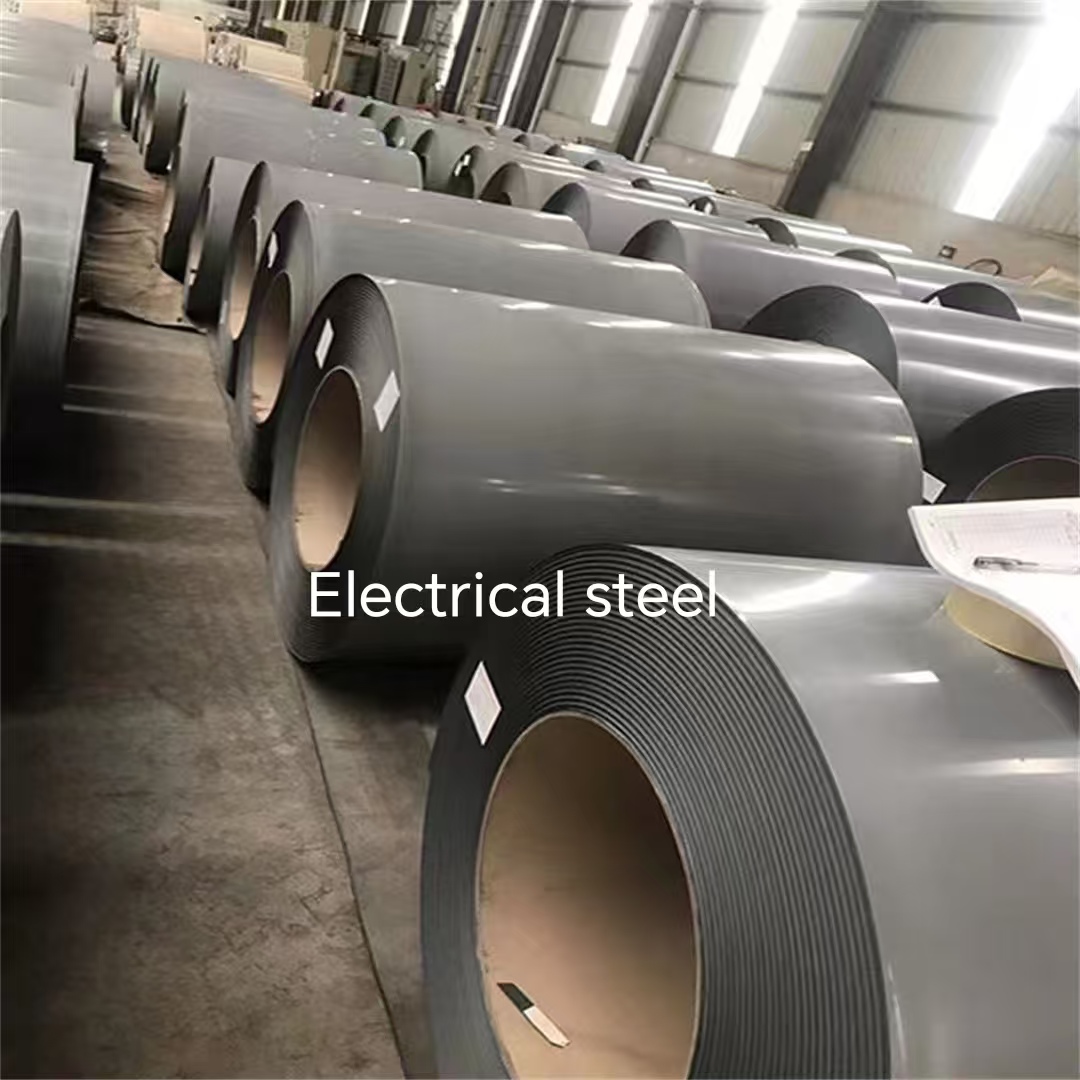
The direct answer is that 18-65, 20R070, and the 0.23 mm 23Q series are not interchangeable. Grade choice should follow the transformer or reactor specification, not thickness alone. In the supplied Hi-B data, 18-65 is the lowest-loss option at 0.18 mm, 20R070 is a 0.20 mm grade, and the 0.23 mm family spans five grades with different iron loss, B8 flux density, and application fit.
For transformer core buyers, the decision usually starts with thickness: 0.18 mm, 0.20 mm, or 0.23 mm. The supplied Hi-B data shows why thickness is only the first filter. 18-65 is 0.18 mm with iron loss P1.7/50 ≤0.65 W/kg and B8 ≥1.88 T. 20R070 is 0.20 mm with ≤0.70 W/kg and B8 ≥1.86 T. The 0.23 mm family covers five grades, from 23Q080 at ≤0.80 W/kg and B8 ≥1.89 T to 23Q100 at ≤1.00 W/kg and B8 ≥1.75 T.
This guide compares the grades in the supplied HL AND SL LIMITED product data and matches them to common transformer-core applications. It also shows where project specifications can be stricter than a standard grade label.
Problem Definition: Why a Thickness-Only Choice Fails
The practical problem is that a buyer can see three thicknesses but face seven grade choices. The 0.23 mm family alone includes 23Q080, 23Q085, 23Q090, 23Q095, and 23Q100. Each suffix changes the iron-loss value and, in most cases, the B8 flux-density value. A buyer who selects only by thickness can over-specify a core or under-specify it.
Iron loss and flux density are different decision variables. Lower iron loss is generally preferred for no-load loss control. Higher B8 supports flux-carrying capability, but it must match the core design and the project specification. A grade with a low loss value can still be the wrong choice if its B8 value or application scope does not fit the transformer class.
The commercial risk is equally practical. A 0.18 mm low-loss grade may be unnecessary when a 0.23 mm grade already meets the project’s loss and flux-density limits. Conversely, a common distribution transformer grade should not be assumed to satisfy a UHV or HVDC converter transformer specification. The safe approach is to compare grade, thickness, iron loss, B8, and listed application together.
Industry Background: What Hi-B Steel Is and Why Grade Data Matters
Hi-B steel in this article refers to high magnetic induction grain-oriented silicon steel. The U.S. International Trade Commission describes grain-oriented electrical steel as a flat-rolled alloy steel product with metallic grains elongated lengthwise. ASTM A876 covers fully processed grain-oriented silicon-iron electrical steel for transformer cores operating at commercial power frequencies, and it identifies conventional, high-permeability, and laser-scribed high-permeability categories.
ASTM A876 also references core loss, permeability, magnetic aging, dimensions, lamination factor, and ductility as properties to verify. That scope matters because a grade comparison based on one loss number is incomplete. Buyers should review the grade-specific certificate, the test basis, the dimensional requirements, and the mechanical properties that affect lamination and core building.
Market context explains why this comparison is commercially relevant. Grand View Research estimated the global electrical steel market at USD 54.02 billion in 2026, covering grain-oriented and non-oriented electrical steel. In transformer procurement, grain-oriented electrical steel is associated with cores where magnetization occurs mainly in a specific direction. Non-oriented electrical steel is associated with applications such as motors and generators. This article stays on Hi-B grain-oriented grades for transformer cores.
Detailed Solution: The Three Thickness Families and Their Grade Logic
0.18 mm: 18-65
18-65 is the thinnest and lowest-loss grade in the supplied set. It is 0.18 mm with iron loss P1.7/50 ≤0.65 W/kg and B8 ≥1.88 T. Its listed applications are ultra-high voltage transformers, power transformers, and high-efficiency energy-saving transformer cores. It should be evaluated when the project loss limit and transformer class justify the thinnest low-loss option, not simply because it is thinner.
0.20 mm: 20R070
20R070 is a 0.20 mm Hi-B grade with iron loss P1.7/50 ≤0.70 W/kg and B8 ≥1.86 T. It is listed for high-efficiency distribution transformers and power transformer cores. It sits between 18-65 and 23Q080 on iron loss, while its B8 value is lower than 18-65 and the 23Q080/085/090/095 group. That difference matters when the core design relies on high flux density as well as low loss.
0.23 mm: five 23Q grades, not one grade
The 0.23 mm family is where most specification errors occur. 23Q080 has iron loss ≤0.80 W/kg, with a measured value of 0.76-0.78 W/kg, and B8 ≥1.89 T. It is listed for energy-efficient transformers, power transformers, reactors, and high-power frequency converters. It has the highest B8 value in this comparison set.
23Q085 has iron loss ≤0.85 W/kg and B8 ≥1.88 T. It is listed for HVDC converter transformers and high-efficiency power transformer cores. 23Q090 has iron loss ≤0.90 W/kg and B8 ≥1.88 T, and is listed for industrial small and medium-sized transformers and power equipment cores. 23Q095 has iron loss ≤0.95 W/kg and B8 ≥1.88 T, and is listed for high-efficiency transformers, power equipment cores, and motors. 23Q100 has iron loss ≤1.00 W/kg and B8 ≥1.75 T, and is listed for common distribution transformers, general industrial transformers, and electromagnetic equipment.
The important pattern is that 23Q100 is not a lower-loss version of 23Q080. It has higher iron loss and lower B8. The suffix is a performance and application signal. A buyer should compare the exact suffix, not treat “0.23 mm” as a single material specification.
Comparison Table: 18-65 vs 20R070 vs the 23Q Series
Lower P1.7/50 iron loss is generally preferred. Higher B8 generally supports flux-carrying capability, but the selected value must meet the transformer design and project specification. The application column below repeats the supplied grade data and should be used as a first filter, not as a substitute for project approval.
| Grade | Thickness | Type | Iron loss P1.7/50 | B8 flux density | Listed applications in supplied data |
|---|---|---|---|---|---|
| 18-65 | 0.18 mm | Hi-B GOES | ≤0.65 W/kg | ≥1.88 T | UHV transformers, power transformers, high-efficiency energy-saving transformer cores |
| 20R070 | 0.20 mm | Hi-B GOES | ≤0.70 W/kg | ≥1.86 T | High-efficiency distribution transformers, power transformer cores |
| 23Q080 | 0.23 mm | Hi-B GOES | ≤0.80 W/kg (measured 0.76-0.78) | ≥1.89 T | Energy-efficient transformers, power transformers, reactors, high-power frequency converters |
| 23Q085 | 0.23 mm | Hi-B GOES | ≤0.85 W/kg | ≥1.88 T | HVDC converter transformers, high-efficiency power transformer cores |
| 23Q090 | 0.23 mm | Hi-B GOES | ≤0.90 W/kg | ≥1.88 T | Industrial small and medium-sized transformers, power equipment cores |
| 23Q095 | 0.23 mm | Hi-B GOES | ≤0.95 W/kg | ≥1.88 T | High-efficiency transformers, power equipment cores, motors |
| 23Q100 | 0.23 mm | Hi-B GOES | ≤1.00 W/kg | ≥1.75 T | Common distribution transformers, general industrial transformers, electromagnetic equipment |
Step-by-Step Breakdown: Matching a Grade to a Transformer-Core Project
Step 1: Fix the transformer class and project limits first
Start with the transformer or reactor class, then set the allowed iron loss and minimum B8. A UHV transformer, an HVDC converter transformer, a distribution transformer, and an industrial transformer do not share the same material envelope. The Brazil ±800 kV HVDC project example in the supplied application data calls for B8 ≥1.92 T and iron loss lower than 0.85 W/kg. That is a project-specific threshold; confirm exact certified values even when a grade is listed for HVDC converter transformers.
Step 2: Compare iron loss and B8 on the same basis
Use P1.7/50 values and B8 values from the same grade certificate. ASTM A876’s property scope includes core loss, permeability, dimensions, lamination factor, and ductility. A single loss number is not a full material approval. If two suppliers quote the same grade name but provide different test conditions or certificate scopes, the comparison is not complete.
Step 3: Choose the thickness family against the application
For UHV and high-efficiency power or energy-saving transformer cores, 18-65 is the first grade to evaluate when the lowest iron loss in this set is required. For high-efficiency distribution and power transformer cores where 0.20 mm fits, evaluate 20R070. For 0.23 mm transformer applications, compare 23Q080, 23Q085, and 23Q090 by loss and B8 rather than defaulting to one suffix. Use 23Q095 where the listed scope includes motors as well as transformer cores. Use 23Q100 for common distribution, general industrial, and electromagnetic equipment where its ≤1.00 W/kg and ≥1.75 T values meet the specification.
Step 4: Check processing fit and dimensional control
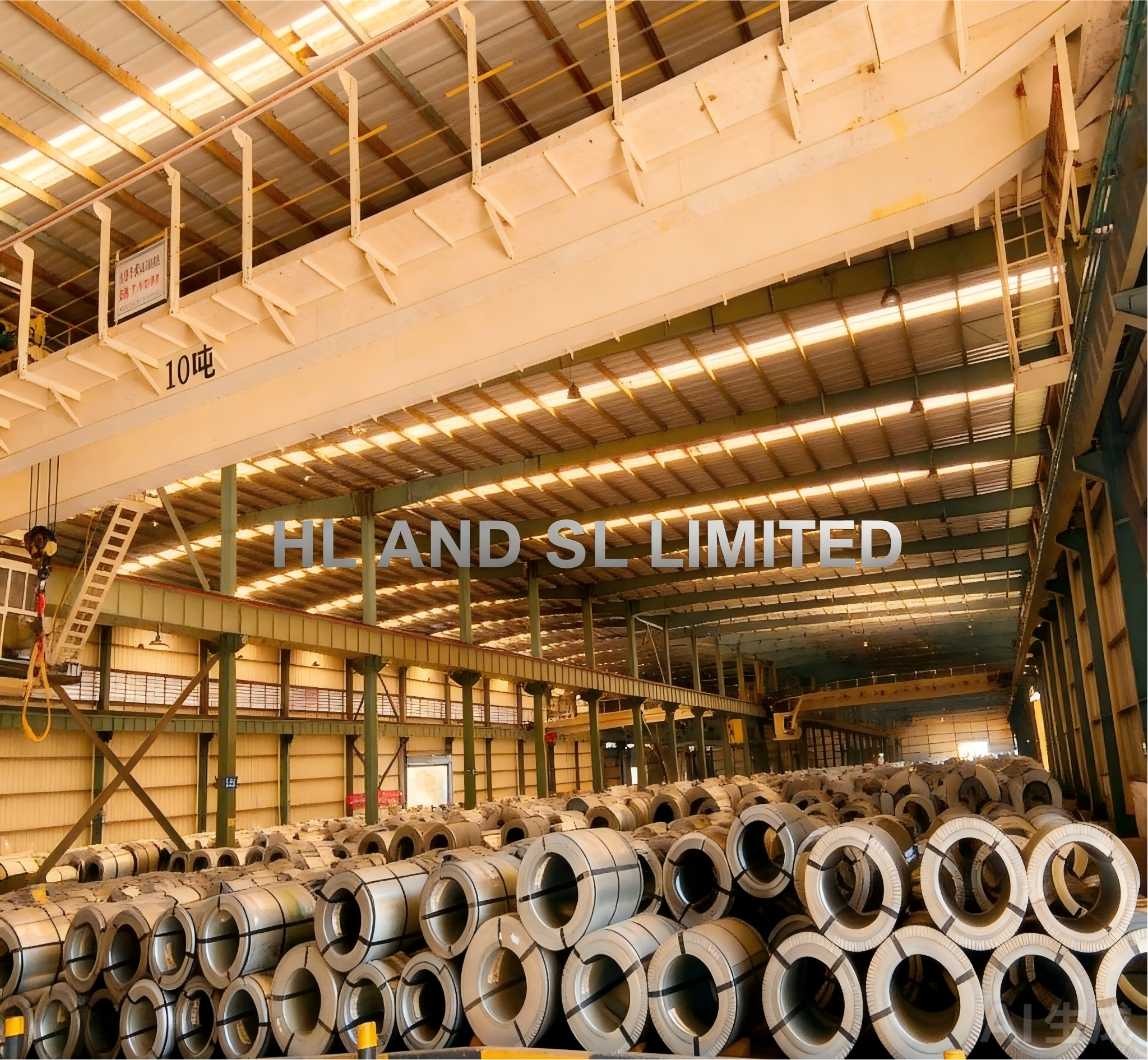
Grade and thickness must survive cutting, slitting, and lamination. HL AND SL LIMITED is an electrical steel export trading enterprise founded in 2012, with a 30,000 m² processing plant in Taiyuan, Shanxi, China, 50 employees, annual output of 30,000 t, and an export share of 80%. Its processing plant provides precise secondary processing based on size, shape, and performance, which is relevant to custom-cut and stamped core work.
Step 5: Verify documents and compliance scope
Ask for grade-specific certificates and test reports. Do not assume CE or UL applies directly to raw electrical steel; confirm whether the requirement applies to the material, the lamination, the core, or the finished equipment. This distinction protects the buyer from accepting unrelated certificates or from missing a finished-equipment requirement.
Step 6: Validate a sample and confirm lead time
Request a sample and quotation for the exact grade, thickness, quantity, and processing scope. Specific lead time should be confirmed in the quotation. The company profile describes rapid response, but no fixed lead time is stated in the supplied data. Sample validation should check the grade certificate, dimensions, surface condition, and processing fit before mass supply is locked.
Use Cases: Where Each Grade Fits
- UHV and high-efficiency power transformers: evaluate 18-65 when the project requires the lowest iron loss in this set and 0.18 mm is acceptable to the core design. Its listed scope includes UHV transformers, power transformers, and high-efficiency energy-saving transformer cores.
- High-efficiency distribution transformers: 20R070 and 23Q080 are listed for distribution or energy-efficient transformer applications. 20R070 is 0.20 mm with ≤0.70 W/kg; 23Q080 is 0.23 mm with ≤0.80 W/kg and B8 ≥1.89 T.
- HVDC converter transformers: 23Q085 is listed for HVDC converter transformers and high-efficiency power transformer cores. Project requirements may be stricter than the grade table, so confirm B8 and iron loss against the project specification.
- Industrial transformers, reactors, and converters: 23Q080 is listed for reactors and high-power frequency converters; 23Q090 is listed for industrial small and medium-sized transformers and power equipment cores.
- Common distribution and general industrial equipment: 23Q100 is the 0.23 mm grade listed for common distribution transformers, general industrial transformers, and electromagnetic equipment.
- Motor adjacency: 23Q095 is listed for high-efficiency transformers, power equipment cores, and motors. For e-motor cores, non-oriented electrical steel is typically associated with variable magnetization applications; this article’s comparison remains on Hi-B grain-oriented steel for transformer cores.
FAQ: Hi-B Electrical Steel Grade Selection
Which standard should buyers reference when comparing Hi-B electrical steel grades?
ASTM A876 covers fully processed grain-oriented silicon-iron electrical steel for transformer cores operating at commercial power frequencies. It identifies conventional, high-permeability, and laser-scribed high-permeability categories and references core loss, permeability, magnetic aging, dimensions, lamination factor, and ductility. Buyers should ask for grade-specific test data, not only a general electrical steel label.
Which grade fits UHV or HVDC converter transformer cores?
In the supplied data, 18-65 is listed for UHV transformers and power transformers. 23Q085 is listed for HVDC converter transformers and high-efficiency power transformer cores. HVDC projects can be stricter: the Brazil ±800 kV HVDC project example calls for B8 ≥1.92 T and iron loss lower than 0.85 W/kg, so verify the exact grade certificate against the project specification.
Is 0.18 mm always better than 0.23 mm because it has lower iron loss?
Not automatically. 18-65 has the lowest iron loss in this set at ≤0.65 W/kg, but 23Q080 has a higher B8 value at ≥1.89 T and is listed for energy-efficient transformers, power transformers, reactors, and high-power frequency converters. 23Q090, 23Q095, and 23Q100 have higher loss values and different application scopes. Select the grade that meets the transformer class, loss limit, flux-density requirement, and processing plan.
Can buyers request samples or processing support before choosing a grade?
Yes. HL AND SL LIMITED is an electrical steel export trading enterprise with a 30,000 m² processing plant that provides precise secondary processing according to size, shape, and performance. Buyers can request a sample or quotation for 18-65, 20R070, or the 23Q series by email at sales-01@hlslind.com or WhatsApp +86 134-6700-2282.
What should be confirmed about lead time and next steps before ordering?
Lead time depends on grade, thickness, quantity, and processing scope, so it should be confirmed in the quotation. The company profile describes rapid response, but no fixed lead time is stated in the supplied data. To move from comparison to validation, request a sample and quote for the exact grade from HL AND SL LIMITED at sales-01@hlslind.com or WhatsApp +86 134-6700-2282, and download the brochure.
Conclusion: Match the Grade, Not Just the Thickness
18-65 is the lowest-loss 0.18 mm option in this comparison. 20R070 is the 0.20 mm middle option. The 23Q series is a five-grade family with different iron loss, B8, and application scope. A buyer should use the comparison table as a first filter, then confirm the project specification, grade certificate, processing requirements, sample, and quotation before approval.
For transformer-core sourcing, the safest decision rule is simple: do not approve a grade because it is thinner or because it carries a familiar 23Q label. Approve it because the grade-specific iron loss, B8, thickness, application scope, and certificate match the transformer or reactor project.
Next Step: Validate the Exact Hi-B Grade
HL AND SL LIMITED supplies oriented silicon steel and provides processing support for specified size, shape, and performance. Contact Lucas at sales-01@hlslind.com or WhatsApp +86 134-6700-2282 to request a sample or quotation for 18-65, 20R070, 23Q080, 23Q085, 23Q090, 23Q095, or 23Q100.
Address: Shantou Qingyuncheng, Jiankang South Street, Jinyuan District, Taiyuan City, Shanxi Province, China.
Download the HL AND SL LIMITED brochure or visit www.hlslind.com.

Have Questions or Need More Details?
Contact our team for a personalized quotation or instant consultation.
Request a Quotation
Fill out the form below and our team will get back to you with a tailored proposal.
WhatsApp Direct Chat
Prefer to chat in real-time? Message us on WhatsApp for instant assistance & quick answers.
- Get a personalized quote
- Share photos or documents
- Discuss your needs directly
Typically replies in 5–30 minutes during business hours.