
Decoding Electrical Steel Datasheets: B8, P1.7/50 and Thickness in Hi-B Cores
Decoding Electrical Steel Datasheets: B8, P1.7/50 and Thickness in Hi-B Transformer Cores
A Hi-B oriented electrical steel datasheet row contains four decision fields that matter to a transformer core project: nominal thickness, iron loss P1.7/50, magnetic flux density B8, and the silicon content behind both numbers. Everything else on the line — the grade name, the coating callout, the width — exists to qualify those four.
Read in the wrong order, those fields produce a bad shortlist. A buyer who compares only iron loss ends up with a grade whose flux density forces a larger core cross-section. A buyer who compares only thickness pays for thinner strip without capturing the loss benefit in the finished core. The purpose of this guide is to show what each field is actually measuring, how the supplied grade set behaves across 0.18 mm, 0.20 mm and 0.23 mm, and how a single datasheet line maps to a power transformer, a distribution transformer, an industrial transformer or an HVDC converter transformer core.
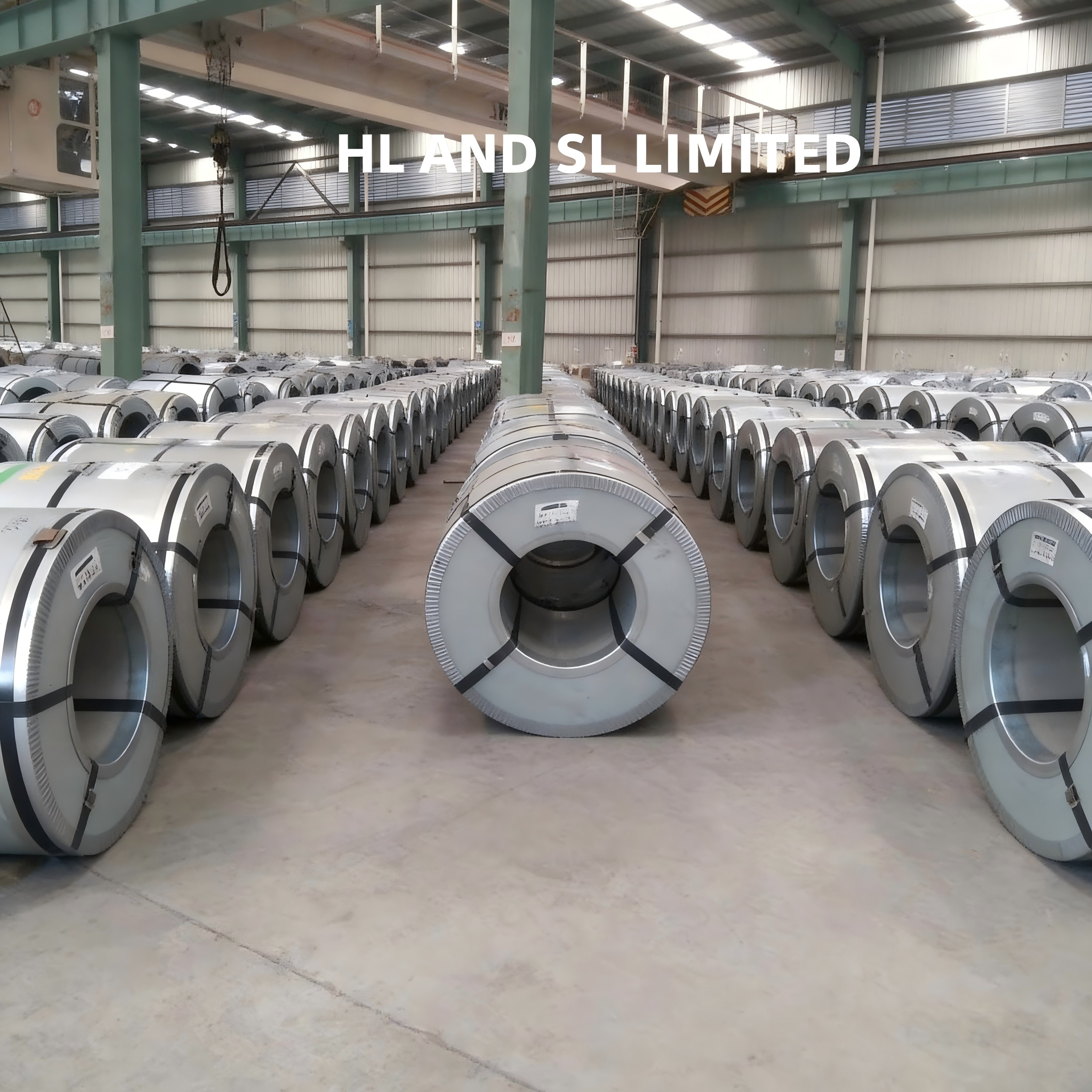
Hi-B oriented silicon steel supplied as coil and cut sheet — the format in which datasheet fields are actually specified and compared.
Why Datasheets Cause Misreading in the First Place
The problem is not that datasheets lack information. It is that the numbers on one line are not measured in the same way, and they do not carry the same consequences.
Iron loss P1.7/50 is quoted at a fixed magnetic condition — 1.70 T at 50 Hz — which makes it directly comparable between grades. Flux density B8 is quoted at a fixed excitation — 800 A/m — which makes it comparable too, but it is a design input rather than a loss figure. Nominal thickness is a physical dimension, and it drives lamination factor, cutting behaviour and stacking time as much as it drives eddy-current loss. Silicon content sits underneath all three and partly explains why one grade reaches a lower loss at the same thickness.
The common failure is to treat the whole row as one number. A grade quoted at ≤ 0.80 W/kg with 1.89 T of flux density and a grade quoted at ≤ 0.85 W/kg with 1.88 T are close on paper. Whether that gap matters depends on which transformer the core goes into, how the core will be cut, and whether the design is constrained by losses or by geometry.
Industry Background: Why GOES Is Specified Field by Field
Grain-oriented electrical steel is a flat-rolled alloy steel product in which the metallic grains are elongated lengthwise, as described by the U.S. International Trade Commission. That grain structure is the reason the material behaves directionally, and it is the reason a datasheet must state the magnetic test condition alongside the number — a loss figure without 1.7 T and 50 Hz would be meaningless.
The standard framework reflects the same logic. ASTM A876 covers flat-rolled, grain-oriented, fully processed low-carbon silicon-iron electrical steels used primarily in transformer cores operating at moderate to high magnetic flux densities at commercial power frequencies, and it distinguishes conventional grain-oriented, high-permeability grain-oriented and laser-scribed high-permeability grain-oriented categories. Within that scope, the specification identifies magnetic properties including core loss, permeability and magnetic aging, together with dimensional requirements and mechanical properties such as lamination factor and ductility.
Two practical consequences follow for anyone reading a Malaysian, Brazilian, European or North American data sheet. First, a single number never stands alone: grade category, test method and certificate travel with it. Second, "oriented electrical steel" is a category label, not a grade, so two suppliers quoting "Hi-B" are not necessarily quoting the same product.
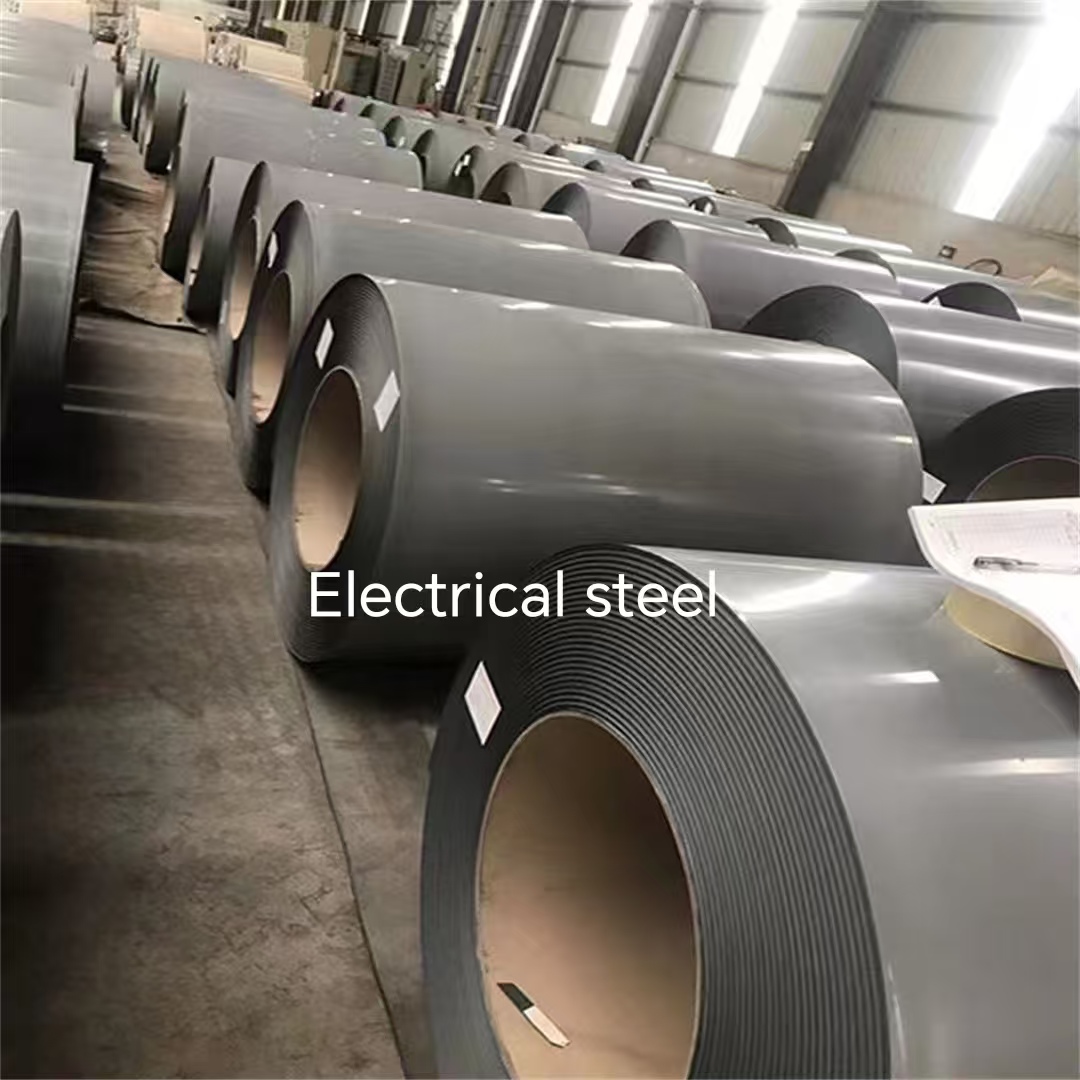
Oriented silicon steel prepared for slitting and lamination cutting — thickness, coating and cut quality are specified separately from the magnetic fields.
The Four Fields That Decide a Grade
B8: Magnetic Flux Density at 800 A/m
B8 is the flux density the material reaches when it is excited to 800 A/m, expressed in tesla. It describes how much magnetic flux the steel carries at a defined excitation, and it is the field that determines how much core cross-section and how many turns a design needs to reach a target flux.
Across the supplied Hi-B grade set, B8 ranges from ≥ 1.75 T on 23Q100 to ≥ 1.89 T on 23Q080. That spread sits in the same order of magnitude as the loss spread, which is exactly why the two fields have to be read together. A lower B8 grade is not a defective grade — it is a grade that requires the designer to accept a larger core section or additional turns to reach the same working flux. In a cost comparison, that shows up as material, not as a line-item in the steel price.
P1.7/50: Specific Iron Loss at 1.70 T and 50 Hz
P1.7/50 is the specific total loss in watts per kilogram measured at 1.70 T and 50 Hz. Because both the flux density and the frequency are fixed by the convention, the figure is directly comparable between grades and is the field most buyers use to rank options.
In the supplied set, the limit values run from ≤ 0.65 W/kg on 18-65 to ≤ 1.00 W/kg on 23Q100. That is a 0.35 W/kg spread across the range, carried on three thicknesses. The figure is stated as a guaranteed maximum, not a typical value, and the distinction matters. Grade 23Q080 is listed at ≤ 0.80 W/kg with a measured value of 0.76–0.78 W/kg — a legitimate datasheet pattern in which the limit protects the buyer and the measured value tells the buyer what the line is really producing. Comparing one supplier's limit against another supplier's typical value is a common and avoidable error.
Nominal Thickness: 0.18 mm, 0.20 mm, 0.23 mm
Thickness is quoted as a nominal value. It sets the eddy-current component of loss, the number of laminations required to build a given core, the lamination factor, and the handling behaviour of the strip during cutting and stacking.
The supplied set covers three thicknesses: 0.18 mm on 18-65, 0.20 mm on 20R070, and 0.23 mm across the 23Q series. Thinner strip is not a free improvement. It raises the number of sheets per core, adds cutting and stacking labour, and increases handling sensitivity. The question a datasheet can answer is which thickness delivers the required loss at the required flux density; the question it cannot answer is whether the fabricator can absorb the processing cost of that thickness.
Silicon Content and Impurity Control
The material description behind these grades is iron with silicon added at roughly 3.0%–3.2%, supplemented by aluminium and manganese, with carbon, sulphur and nitrogen strictly controlled. That combination is what separates Hi-B high-permeability grades from generic grain-oriented material: silicon raises resistivity and suppresses eddy-current loss, while controlled impurities support the grain growth that produces high permeability in the rolling direction.
Note that the supplied specifications are not uniform across the whole set. Grades 23Q095 and 23Q100 are described with a silicon content of 2.5%–3.5% plus aluminium and manganese, without the tighter 3.0%–3.2% figure used on the other grades. When two grades from different points in the range are placed side by side, check the material line rather than assuming a single composition applies to the family.
Step-by-Step: Reading a Datasheet Row From Left to Right
- Start with thickness. Confirm the nominal value and whether it matches your lamination design. 0.18 mm, 0.20 mm and 0.23 mm are not interchangeable in an existing core drawing.
- Read P1.7/50 as a ceiling. Note whether the figure is a guaranteed maximum or a measured range. A limit of ≤ 0.80 W/kg and a measured 0.76–0.78 W/kg describe the same grade but tell you different things.
- Read B8 as a design input. Record the flux density and check that the core design was calculated against it, not against a different grade's value.
- Read the grade name last. Within the supplied set the naming follows a readable pattern: 18-65 indicates 0.18 mm and a 0.65 W/kg loss limit; 20R070 indicates 0.20 mm and 0.70 W/kg; 23Q080 indicates 0.23 mm and 0.80 W/kg. Treat the pattern as a decoding aid for these grades, not as a universal rule across every mill's nomenclature.
- List what the row does not state. Coating type, width, edge condition, coil weight, packaging and cut tolerance are usually specified in separate documents. Ask for them explicitly before issuing a purchase order.
What the Numbers Do and Do Not Tell You
A datasheet describes material, not a finished core. Core loss in service also depends on lamination factor, joint design, burr height, stress-relief annealing and assembly tolerance. Two fabricators using identical strip can deliver measurably different core performance. The datasheet sets the floor.
Three further limits are worth stating plainly:
- The row does not prove conformity on its own. It has to be read with the grade category, the test method and the inspection certificate.
- The row does not define processing. Coating temperature class, slit width, cut length and packaging are separate specifications and separate cost drivers.
- The row does not define application fit. A grade list states what the material is used for typically; it does not certify that a specific transformer design will meet its efficiency target with that grade.
On the processing side, the supplied capability profile covers thickness from 0.18 mm to 0.35 mm and widths typically 800–1250 mm, including an ultra-wide 1250 mm specification. Coating options include organic coating with a temperature resistance up to 180°C, inorganic coating with temperature resistance up to 800°C, and semi-organic coating. Slitting, fixed-length flat cutting and longitudinal cutting are treated as base processing, and export packaging can be customised. These are the fields that turn a datasheet row into a deliverable order.
Use Cases: Which Row Belongs to Which Transformer
The supplied grade set carries its own application mapping, and reading that mapping alongside the numbers is the fastest way to avoid a mismatch.
- Ultra-high voltage and power transformers, high-efficiency energy-saving cores — 18-65. At 0.18 mm with ≤ 0.65 W/kg and B8 ≥ 1.88 T, this is the thinnest and lowest-loss grade in the supplied set, matched to designs where loss reduction justifies the handling cost of 0.18 mm strip.
- High-efficiency distribution transformers and power transformer cores — 20R070. 0.20 mm, ≤ 0.70 W/kg, B8 ≥ 1.86 T. The lowest B8 in the set sits here, which makes the point that a low-loss grade is not automatically a high-induction grade.
- Energy-efficient transformers, power transformers, reactors and high-power frequency converters — 23Q080. 0.23 mm, ≤ 0.80 W/kg with a measured 0.76–0.78 W/kg, B8 ≥ 1.89 T. The highest B8 in the supplied set is paired with a low loss limit, which is why this grade appears in designs where both geometry and loss are constrained.
- HVDC converter transformers and high-efficiency power transformer cores — 23Q085. 0.23 mm, ≤ 0.85 W/kg, B8 ≥ 1.88 T. Converter transformer cores are named explicitly in the application mapping for this grade.
- Industrial small and medium-sized transformers and power equipment cores — 23Q090. 0.23 mm, ≤ 0.90 W/kg, B8 ≥ 1.88 T. The middle of the 23Q range, where the loss limit is relaxed against processing economics.
- High-efficiency transformers, power equipment cores and motors — 23Q095. 0.23 mm, ≤ 0.95 W/kg, B8 ≥ 1.88 T. This is the point in the set where motor applications appear alongside transformer cores.
- Common distribution transformers, general industrial transformers and electromagnetic equipment — 23Q100. 0.23 mm, ≤ 1.00 W/kg, B8 ≥ 1.75 T. The widest application language and the most relaxed magnetic limits in the supplied set.
For a project team, the practical sequence is to start from the transformer type, select the thickness band the core drawing allows, then rank the candidate grades by loss limit, and finally confirm B8 against the electromagnetic design. Reversing that order — picking the lowest loss number first — is how projects end up with a grade that is technically superior on paper but requires a core redesign.
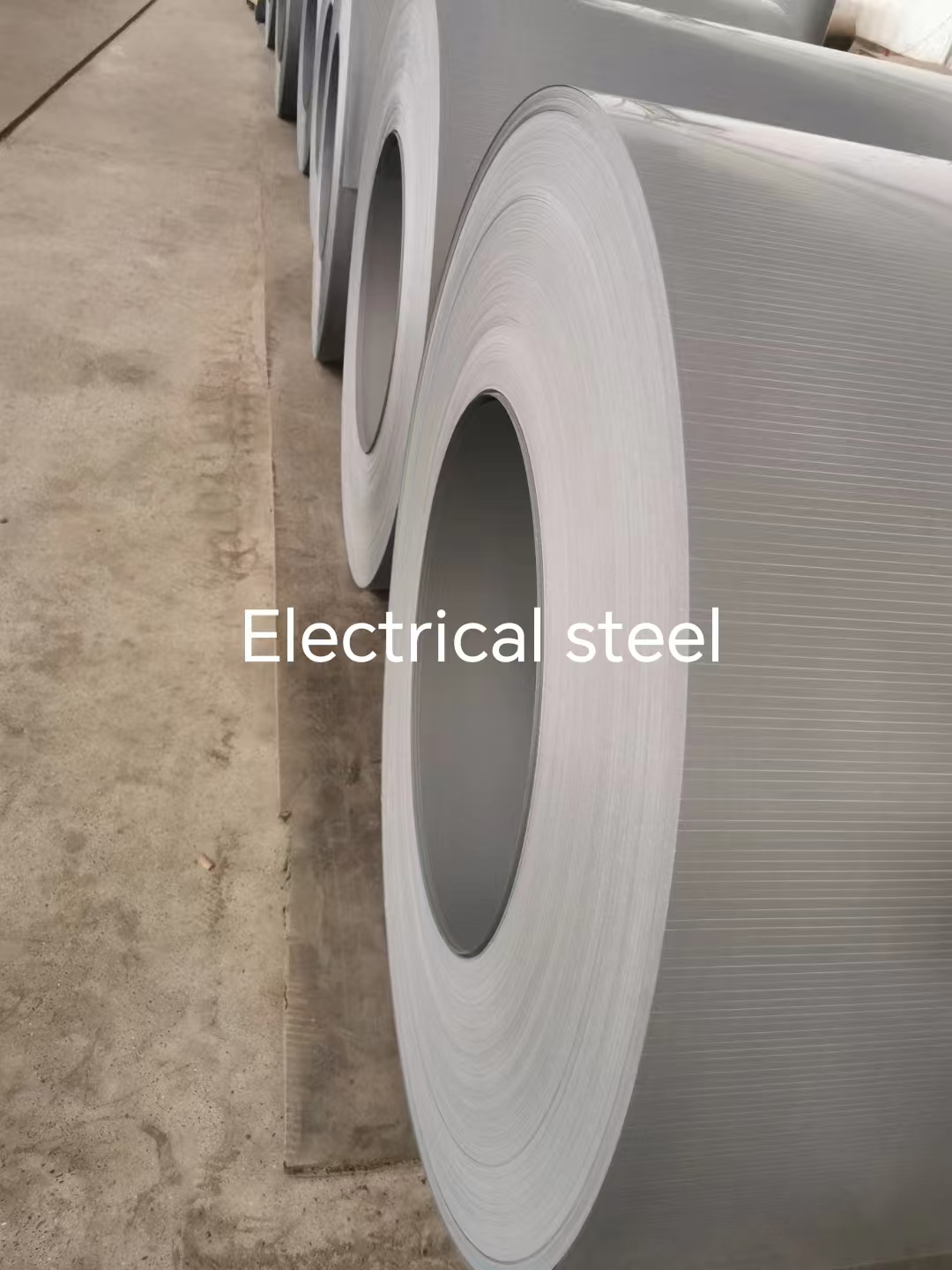
Sheet inspection before core assembly — datasheet limits and incoming inspection reports should be read together.
Comparison Table: Supplied Hi-B Grades by Datasheet Field
The table below uses only the values published in the supplied grade specifications. Loss figures are guaranteed limits unless marked as measured; B8 values are minimums.
| Grade | Nominal thickness | P1.7/50 (W/kg) | B8 (T) | Application stated in the grade specification |
|---|---|---|---|---|
| 18-65 | 0.18 mm | ≤ 0.65 | ≥ 1.88 | Ultra-high voltage transformers, power transformers, high-efficiency energy-saving transformer cores |
| 20R070 | 0.20 mm | ≤ 0.70 | ≥ 1.86 | High-efficiency distribution transformers, power transformer cores |
| 23Q080 | 0.23 mm | ≤ 0.80 (measured 0.76–0.78) | ≥ 1.89 | Energy-efficient transformers, power transformers, reactors, high-power frequency converters |
| 23Q085 | 0.23 mm | ≤ 0.85 | ≥ 1.88 | HVDC converter transformers, high-efficiency power transformer cores |
| 23Q090 | 0.23 mm | ≤ 0.90 | ≥ 1.88 | Industrial small and medium-sized transformers, power equipment cores |
| 23Q095 | 0.23 mm | ≤ 0.95 | ≥ 1.88 | High-efficiency transformers, power equipment cores, motors |
| 23Q100 | 0.23 mm | ≤ 1.00 | ≥ 1.75 | Common distribution transformers, general industrial transformers, electromagnetic equipment |
Two readings of this table are worth keeping in mind. First, thickness does not move in a straight line with loss: 20R070 at 0.20 mm carries a higher loss limit and a lower B8 than 23Q080 at 0.23 mm, because thickness is only one of the variables behind the number. Second, the largest single step in B8 across the set falls between 23Q085 and 23Q100, not between the thin and thick grades — a reminder that grade positioning is not a simple ranking.
Frequently Asked Questions
Do B8 and P1.7/50 values correspond to a recognised standard?
Grain-oriented electrical steel is specified within recognised frameworks such as ASTM A876, which covers flat-rolled, grain-oriented, fully processed low-carbon silicon-iron electrical steels for transformer cores and distinguishes conventional, high-permeability and laser-scribed high-permeability categories. That specification identifies magnetic properties including core loss, permeability and magnetic aging, plus dimensional and mechanical requirements such as lamination factor and ductility. A datasheet row is not itself a conformity statement: it must be read together with the grade category, the test method and the inspection certificate. Buyers should also confirm which edition and which regional requirements apply to their market, since raw steel and finished equipment are assessed differently.
Can the datasheet line be customised for thickness, coating or cut size?
Yes, within the stated capability range. Thickness can be supplied from 0.18 mm to 0.35 mm, and width is typically 800–1250 mm, with an ultra-wide 1250 mm specification available. Material options include general orientation CGO, high magnetic flux Hi-B, laser-engraved R series and heat-resistant engraved HS series. Coating can be organic with temperature resistance up to 180°C, inorganic with temperature resistance up to 800°C, or semi-organic. Strip cutting, fixed-length flat cutting and longitudinal cutting are treated as base processing, and export packaging with customised marks is available. Treat the published row as a reference point and specify the modified line in writing.
How do the three fields translate into a budget comparison?
They map to three different cost streams rather than one price. The loss limit drives long-term operating cost through no-load losses. Thickness drives how many laminations are cut and stacked, and therefore processing cost. B8 drives core geometry, and therefore how much material the design needs. Comparing 18-65 at ≤ 0.65 W/kg against 23Q100 at ≤ 1.00 W/kg is a comparison of a 0.18 mm ultra-high-voltage grade against a 0.23 mm general distribution grade — the loss gap is real, but so is the difference in lamination count and handling. A per-kilogram comparison that ignores these streams will misprice the project. Confirm delivered pricing, minimum order quantity and terms directly with the supplier.
How can a buyer verify a datasheet line before committing to a batch?
Through a three-layer quality process. Origin inspection is carried out at the factory as full-process random inspection or batch inspection. A material certificate and warranty certificate accompany the goods, including a batch inspection report. Third-party testing through CMA or CNAS laboratories is available for submission testing. Minimum order quantity is 25T, and monthly capacity is 4000T, so a verification batch can be scheduled without disrupting a full production run.
What lead times apply once a datasheet line is approved?
Regular orders typically run 15–20 days. Urgent or stock orders can ship in 3–7 days. Bulk export orders typically take 30–45 days to arrive at the destination port, and after receipt of a deposit or letter of credit the working lead time is 7–30 working days. Lead time should be confirmed against the specific thickness, coating and cut specification, since non-standard processing affects scheduling. For a project timeline, request a quotation that states the production slot, not only the price.
Conclusion: Read the Row as a Set, Not as a Score
A Hi-B datasheet row is a compact engineering statement. Thickness sets the physical build, P1.7/50 sets the guaranteed loss ceiling at a fixed excitation, B8 sets the flux the design can work with, and the silicon and impurity line explains why the grade behaves as it does. No single field ranks the grade on its own.
The supplied set shows the principle clearly: 18-65 sits at the low-loss end with a 0.18 mm build for ultra-high voltage and power transformer cores; 20R070 trades a slightly higher loss limit and lower flux density at 0.20 mm for distribution transformer work; 23Q080 pairs the highest B8 in the set with a ≤ 0.80 W/kg limit for energy-efficient transformers and reactors; 23Q085 is the grade named for HVDC converter transformers; 23Q090 and 23Q095 serve industrial transformers and motor cores; and 23Q100 carries the most relaxed limits and the broadest application language for common distribution and general industrial transformers.
Once that mapping is clear, datasheet comparison stops being a hunt for the smallest number and becomes a structured check: does the thickness fit the core drawing, does the loss limit fit the efficiency target, does the flux density fit the electromagnetic design, and does the certificate match the batch. For sourcing teams at the Research and Evaluation stage, that is the whole exercise — and it is repeatable from project to project.
Next Step: Match a Datasheet Row to Your Core Project
HL AND SL LIMITED is an electrical steel export enterprise registered in Taiyuan, Shanxi, China, operating a 30,000 m² processing plant with 30,000T annual output and acting as an authorised agent of China Baowu Steel Group. The company supplies oriented silicon steel and non-oriented electrical steel across thickness ranges from 0.18 mm to 0.35 mm, with in-house slitting, cut-to-length and coating options, and exports to markets including Mexico, Brazil, Italy, the UAE and India.
Send your core drawing, required grade and target loss limit, and the team will confirm which datasheet line fits, what the processing specification needs to be, and what lead time applies. A quotation and a sample arrangement can be prepared against your project schedule.
Contact: Lucas | Email: sales-01@hlslind.com | Tel / WhatsApp: +86 134-6700-2282 | WhatsApp chat: start a conversation | Website: www.hlslind.com
Download the full product brochure: HL AND SL LIMITED electrical steel catalogue (PDF)
Have Questions or Need More Details?
Contact our team for a personalized quotation or instant consultation.
Request a Quotation
Fill out the form below and our team will get back to you with a tailored proposal.
WhatsApp Direct Chat
Prefer to chat in real-time? Message us on WhatsApp for instant assistance & quick answers.
- Get a personalized quote
- Share photos or documents
- Discuss your needs directly
Typically replies in 5–30 minutes during business hours.