Transformer Core Loss Too High? A Problem-Solution Guide to Thinner Hi-B Electrical Steel
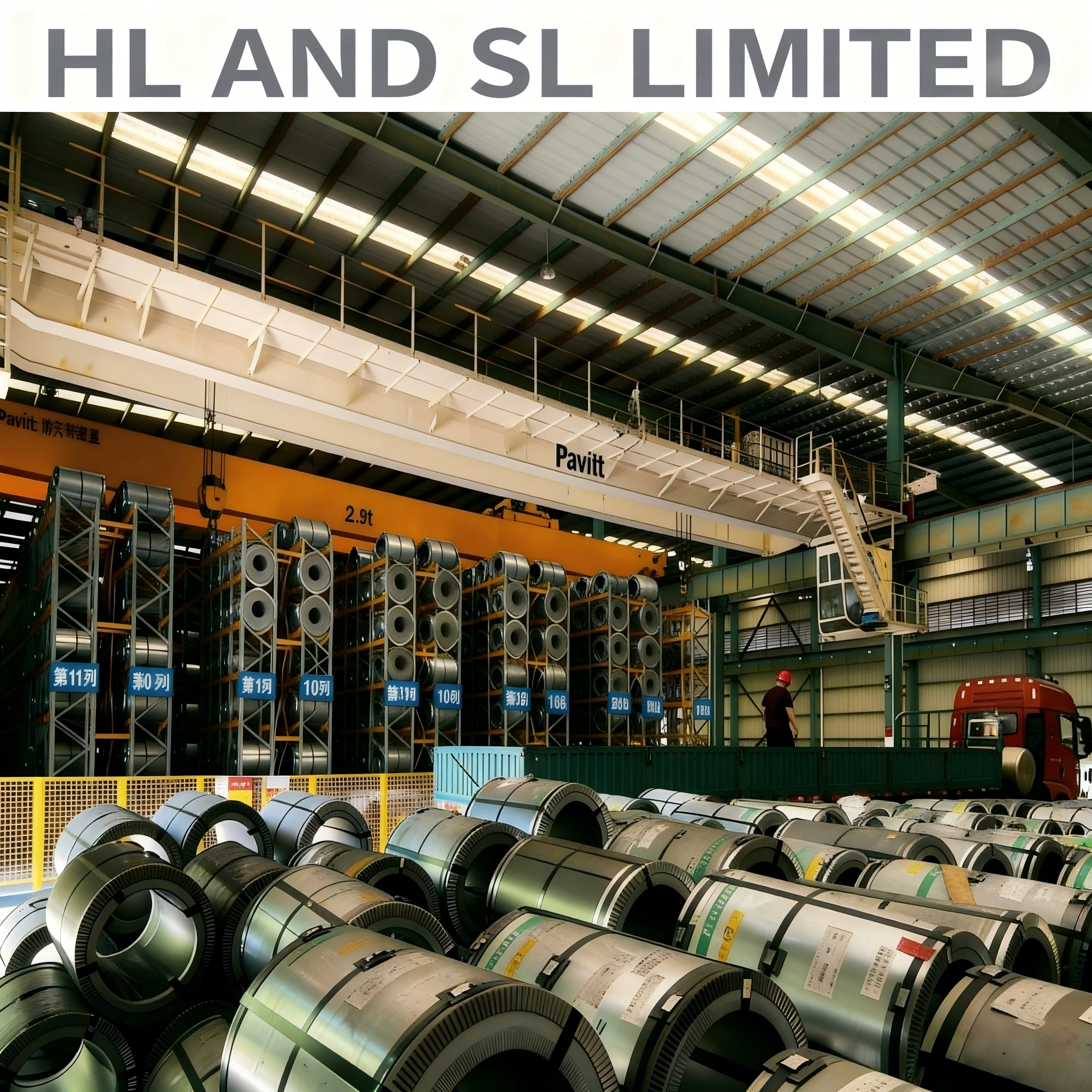
Hi-B oriented electrical steel supply and processing support for transformer core projects. Image: HL AND SL LIMITED.
A transformer core that misses its no-load loss target rarely has one cause. The design may be correct, the winding may be correct, and the build may pass routine tests, yet the core still runs above the allowed P1.7/50 or fails to reach the required B8 at the design flux density. In that situation, changing the grade name without changing the thickness tier or the processing route often moves the problem rather than solving it.
P1.7/50 is specific total loss at 1.7 T and 50 Hz. B8 is magnetic flux density at 800 A/m. The two values must be read together because a lower-loss grade that cannot support the design flux density may force a larger core, a different operating point, or a higher build cost.
The practical answer is a staged move to thinner Hi-B oriented electrical steel. Keep 0.23 mm 23Q080 to 23Q100 as the baseline for distribution and power transformers, move to 0.20 mm 20R070 when the loss budget tightens, and use 0.18 mm 18-65 for UHV, HVDC converter, and high-efficiency power transformer cores where the thinnest profile is justified. Verify every step with grade-specific P1.7/50 and B8 data.
Problem Definition: What 'Core Loss Too High' Actually Means
No-load loss is dominated by the core. Load loss is dominated by windings and resistance. If the no-load loss is high, the first place to check is the core material, the core build, and the processing history of the lamination. If the load loss is high while no-load loss is acceptable, the winding design and conductor resistance deserve more attention than a grade change.
A core loss problem usually appears in one of four forms:
- The measured P1.7/50 is above the guaranteed value, so the transformer misses its no-load loss guarantee.
- The design reaches the loss target but cannot reach the required B8, so the core must be oversized or the operating flux must be reduced.
- The core passes the bench test but overheats in service because harmonics or high-frequency components add loss that the 50 Hz test does not capture.
- The first article passes, but later coils drift because thickness tolerance, coating, or cut-edge quality is not controlled.
The diagnosis should separate material loss from process loss. A grade with a good mill certificate can still produce a high-loss core after poor slitting, burrs, excessive press-fit stress, or incorrect annealing. The material decision and the process decision must be made together.
Industry Background: Why Hi-B Grain-Oriented Steel Is Used in Transformer Cores
Grain-oriented electrical steel is a flat-rolled alloy steel product in which the metallic grains are elongated lengthwise in the rolling direction. That grain orientation supports magnetization in a preferred direction, which is why grain-oriented grades are associated with transformer cores. Non-oriented electrical steel has more uniform magnetic properties in all directions and is used in applications that require variable magnetization, such as electric motors and generators.
ASTM A876 provides a useful reference point for fully processed grain-oriented silicon-iron electrical steel. Its scope covers transformer cores operating at moderate to high magnetic flux densities at commercial power frequencies. The standard identifies conventional grain-oriented, high-permeability grain-oriented, and laser-scribed high-permeability grain-oriented categories. It also references magnetic properties such as core loss, permeability, and magnetic aging, along with dimensions and mechanical properties such as lamination factor and ductility.
That standard scope explains why a Hi-B discussion should not stop at the grade label. Two coils can carry the same nominal grade and still differ in thickness tolerance, coating, lamination factor, and actual loss. For a transformer manufacturer, the useful question is not 'which grade is best' but 'which thickness and grade combination meets the loss budget without creating a new processing or supply problem'.
The broader electrical steel category is large, and non-oriented grades hold the majority of demand by product type. In 2025, non-oriented electrical steel held more than 71% of the market by product type, according to Grand View Research. Grain-oriented Hi-B remains the specialist route for transformer cores where directional magnetic properties matter.
Detailed Solution: Four Levers That Bring Core Loss Under Control
The solution is not a single grade swap. It is a four-lever adjustment: thickness tier, grade position within the tier, processing control, and supply repeatability. Each lever changes a different part of the loss and risk equation.
1. Thickness tier: 0.23 mm, 0.20 mm, or 0.18 mm
Thinner steel reduces the eddy-current component of core loss, but it also changes permeability, handling, and cost. In HL AND SL LIMITED's comparison notes, moving from 0.23 mm to 0.18 mm is described as a 21.7% thickness reduction, with magnetic permeability only 0.01 to 0.03 T lower. A 0.95 W/kg iron-loss grade is cited as parity. That trade-off is useful when no-load loss is the constraint and the design can tolerate a small permeability difference.
The 0.23 mm tier is the practical baseline for distribution transformers and many power transformers. The 0.20 mm tier is the next step when the loss budget tightens or when harmonic loss is a concern. The 0.18 mm tier is the thinnest option in this set and is reserved for projects where the loss or space target justifies the higher processing sensitivity.
2. Grade position within the 0.23 mm tier
The 23Q080, 23Q085, 23Q090, 23Q095, and 23Q100 grades share a 0.23 mm thickness tier but occupy different positions in the loss and efficiency range. The suffix should not be treated as a marketing label. Ask for the actual P1.7/50 and B8 values at the design flux density and frequency, and compare them on the same test basis.
The comparison notes state that 85 to 95 grades can meet second-level energy-efficiency requirements, while high-end products are designed for first-level energy efficiency. That is a useful starting point for distribution transformer projects, but the final choice still depends on the measured loss value, the core build, and the customer's efficiency class.
3. Processing control: where good material becomes a good core
Mechanical stress from shearing and pressing can raise core loss. The risk-control guidance for this category calls for sharp dies, controlled blanking gaps, stress-relief annealing at 700 to 800 degrees C where needed, and torque-controlled press-fitting so that pressure stays below the yield strength of the material. Bending should be avoided; where bending is unavoidable, the minimum bend radius should be at least 10 to 20 times the plate thickness.
Storage also matters. Humidity should be no more than 60%, with good ventilation and no contact with acidic or alkaline substances. Once processing is complete, parts should be assembled or protected with anti-rust oil promptly. For high-temperature applications, the insulation coating should be compatible with the working temperature; organic coatings are commonly used up to 180 degrees C, while inorganic coatings can go up to 800 degrees C.
4. Supply repeatability: the long-term lever
A one-time sample that meets the loss target is not a supply solution. Transformer production needs coil-to-coil consistency, stable thickness tolerance, and a supplier who can repeat the same grade and processing route over multiple orders. HL AND SL LIMITED is an electrical steel export trading enterprise and an authorized agent of China Baowu Steel Group. Founded in 2012, it operates a 30,000 square meter processing plant in Taiyuan, Shanxi, with annual output of 30,000T, 50 employees, and 10 engineers. Its export ratio is 80%, with main markets in Mexico, Brazil, Italy, UAE, and India.
That combination matters for long-term projects. The supplier must be able to match the grade to the application, provide secondary processing such as slitting or stamping, and keep the test documentation aligned with the delivered coil. The purchasing terms are also part of the solution: MOQ is 25T, delivery terms are EXW, FOB, or CIF, payment terms are 30/70, and acceptance can include pre-shipment testing and third-party testing.
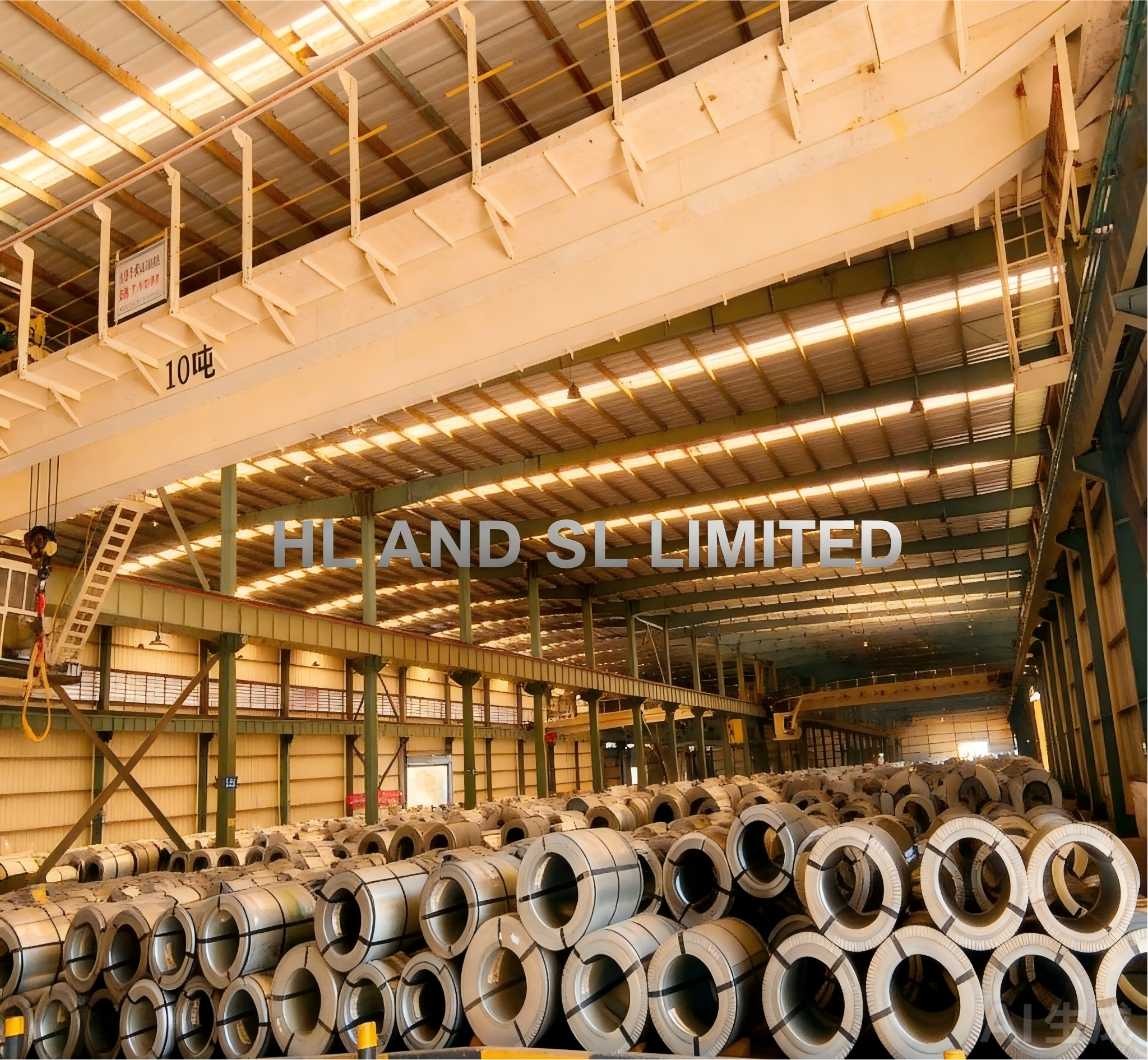
Grade and thickness review should be tied to measured P1.7/50 and B8, not to the grade label alone. Image: HL AND SL LIMITED.
Step-by-Step Breakdown: From Distribution Transformers to UHV
The following decision path is a practical sequence for a transformer manufacturer that needs to close a core loss gap without creating a new supply or processing risk.
Step 1: Define the loss budget and the efficiency class
Start with the guaranteed no-load loss, the target efficiency class, and the cost ceiling. A distribution transformer project may accept a 0.23 mm grade if the loss margin is sufficient. A power transformer project with a tighter loss budget may need 0.20 mm or a higher-position 0.23 mm grade. A UHV or HVDC project may justify 0.18 mm. The grade should follow the budget, not the other way around.
Step 2: Fix the design flux density and frequency
Request P1.7/50 and B8 at the design flux density and frequency. If the design runs at a different flux density or frequency, ask for the loss curve rather than a single point. For HVDC converter transformers, provide the harmonic spectrum so that the supplier can review high-frequency loss and recommend a thinner gauge if needed.
Step 3: Choose the thickness tier
Use 0.23 mm 23Q080 to 23Q100 for distribution transformers where cost and no-load loss need to be balanced. Move to 0.20 mm 20R070 for power transformers or HVDC converter transformers where the loss budget is tighter or harmonic loss is significant. Use 0.18 mm 18-65 for UHV, nuclear, military-grade, and high-efficiency power transformer applications where the thinnest core profile is justified and the processing route can handle it.
Step 4: Select the grade position within the tier
For distribution transformers, 23Q080, 23Q085, and 23Q090 are the natural starting points. The comparison notes state that 85 to 95 grades can meet second-level energy-efficiency requirements. For power transformers and projects targeting first-level efficiency, review 23Q095 and 23Q100, or move to 20R070 if the 0.23 mm tier cannot meet the loss target. The final choice should be based on the measured P1.7/50 and B8, not on the suffix alone.
Step 5: Validate the processing route
Confirm the cutting method, burr limit, annealing cycle, stacking pressure, and coating compatibility. For thin grades, the processing window is narrower. Use sharp dies, control the blanking gap, and specify stress-relief annealing at 700 to 800 degrees C where the process requires it. Control press-fit torque so that pressure is uniform and does not exceed the yield strength of the material. Keep storage humidity at or below 60% and protect finished parts from corrosion.
Step 6: Run a trial and define acceptance tests
Before a full order, run a trial that specifies the grade, thickness, test method, sample size, and acceptance values for P1.7/50 and B8. Pre-shipment testing and third-party testing are the stated acceptance criteria. The trial should also check thickness tolerance, coating, lamination factor, and cut-edge quality, because those variables can change the core loss after lamination.
Step 7: Lock the long-term supply plan
Once the grade and process are fixed, lock the annual volume, MOQ, delivery terms, payment terms, and documentation package. The stated MOQ is 25T. Delivery terms are EXW, FOB, or CIF, and payment terms are 30/70. Lead time is not a fixed catalog figure because it depends on grade, thickness, processing, and order quantity, so confirm it in the RFQ. A long-term plan should include a repeatability check on every lot, not only on the first sample.
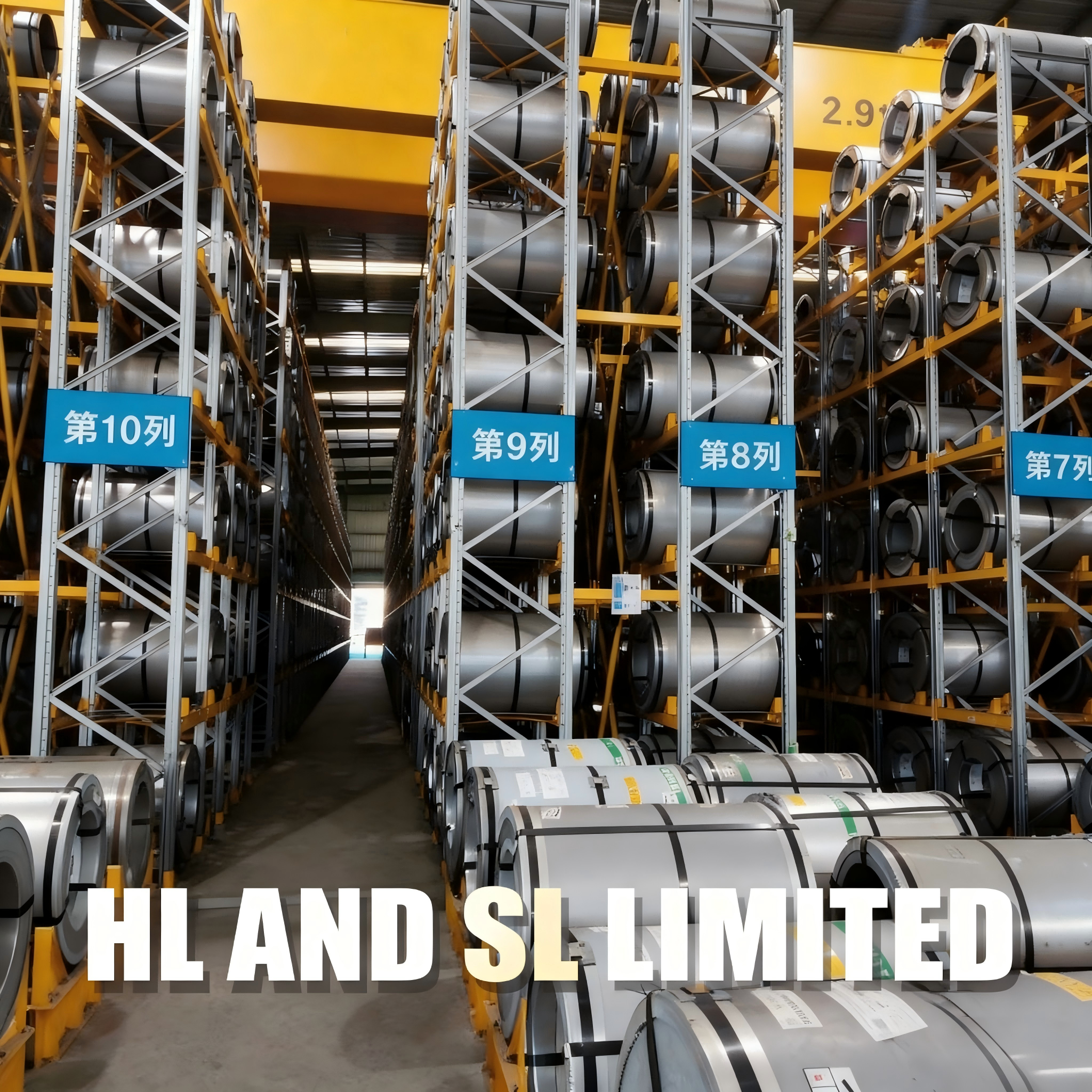
Thinner Hi-B grades require a controlled cutting, annealing, and stacking route. Image: HL AND SL LIMITED.
Use Cases: Matching the Grade to the Transformer Application
Distribution transformers
Distribution transformers usually balance no-load loss, material cost, and production volume. The 0.23 mm 23Q080 to 23Q090 range is the practical starting point. If the project needs second-level energy efficiency, the 23Q085 to 23Q095 range is the relevant review zone. If the loss margin is tight, test 23Q095 or 23Q100 before moving to a thinner gauge, because the 0.23 mm tier is easier to process and usually more cost-stable.
Power transformers
Power transformers often have a tighter loss budget and a higher cost of failure. The 20R070 grade is the natural step when 0.23 mm cannot meet the target. Within the 0.23 mm tier, 23Q095 and 23Q100 are positioned toward high-efficiency designs. The decision should consider the full core cost, including processing yield and scrap, not only the price per tonne.
HVDC converter transformers
HVDC converter transformers face harmonic content that a 50 Hz loss test does not fully represent. The risk-control guidance for high-frequency harmonics recommends thinner specifications, such as 0.20 mm or 0.15 mm, and optimization of control strategies or filters to reduce harmonic content. In the listed set, 20R070 and 18-65 are the thinner options. The technical agreement should state the applicable frequency range and harmonic limits, and the design should include harmonic simulation before trial production.
UHV applications
UHV projects typically require the thinnest core profile and a supplier with stable high-grade availability. The 18-65 grade is the thinnest option in this set. HL AND SL LIMITED's comparison notes state that UHV, nuclear, and military-grade applications are fully covered. For this type of project, verify the processing route, the test documentation, and the supplier's ability to repeat the same grade over multiple lots before committing to a long-term schedule.
Motors and generators are a different material route
Hi-B grain-oriented electrical steel is used for transformer cores. Motor and generator laminations typically use non-oriented electrical steel because the magnetic field rotates and the material needs more uniform properties in all directions. Do not compare a transformer-grade Hi-B product with a motor-grade non-oriented product as if they were interchangeable. The application determines the material family first, and the grade second.
Comparison Table: Hi-B Grades by Thickness and Application
The table below uses the stated grade set and verified application logic. It is a selection aid, not a substitute for a mill test certificate. Confirm P1.7/50 and B8 at the design conditions before approval.
| Grade | Thickness tier | Best-fit core application | What to verify |
|---|---|---|---|
| 18-65 | 0.18 mm | UHV, HVDC converter, high-efficiency power transformers, nuclear and military-grade applications where the thinnest core is required | P1.7/50, B8, coating, lamination factor, stress-relief plan, supply repeatability |
| 20R070 | 0.20 mm | Power transformers and high-efficiency distribution transformers with a tight loss budget; HVDC where harmonic loss is a concern | P1.7/50, B8, harmonic spectrum, cut-edge condition, annealing route |
| 23Q080 | 0.23 mm | Distribution transformers with cost-sensitive no-load loss targets | P1.7/50, B8, energy-efficiency class, thickness tolerance |
| 23Q085 | 0.23 mm | Distribution and industrial transformers targeting second-level energy efficiency | P1.7/50, B8, certificate, lot-to-lot consistency |
| 23Q090 | 0.23 mm | Distribution and power transformers where lower loss is required than 23Q080 | Actual loss value per coil, B8, coating compatibility |
| 23Q095 | 0.23 mm | Power transformers and higher-efficiency distribution units | P1.7/50, B8, processing sensitivity, third-party test |
| 23Q100 | 0.23 mm | High-efficiency power transformers and projects targeting first-level energy efficiency | Full test certificate, P1.7/50, B8, design flux confirmation |
Grade positions are selection guidance. The 85 to 95 grade range is stated in the comparison notes as meeting second-level energy-efficiency requirements, while high-end products are designed for first-level efficiency.
Compliance Note: Standards, CE, and UL
ASTM A876 is the relevant reference for fully processed grain-oriented electrical steel in this discussion. It identifies the grade categories and the property groups that should appear in a technical review. For market access, do not assume that CE or UL marking on a finished transformer applies directly to raw electrical steel. The conformity scope for a material and the conformity scope for a finished equipment assembly are different. Confirm the applicable standard for the steel, the lamination, and the finished transformer separately before the order is released.
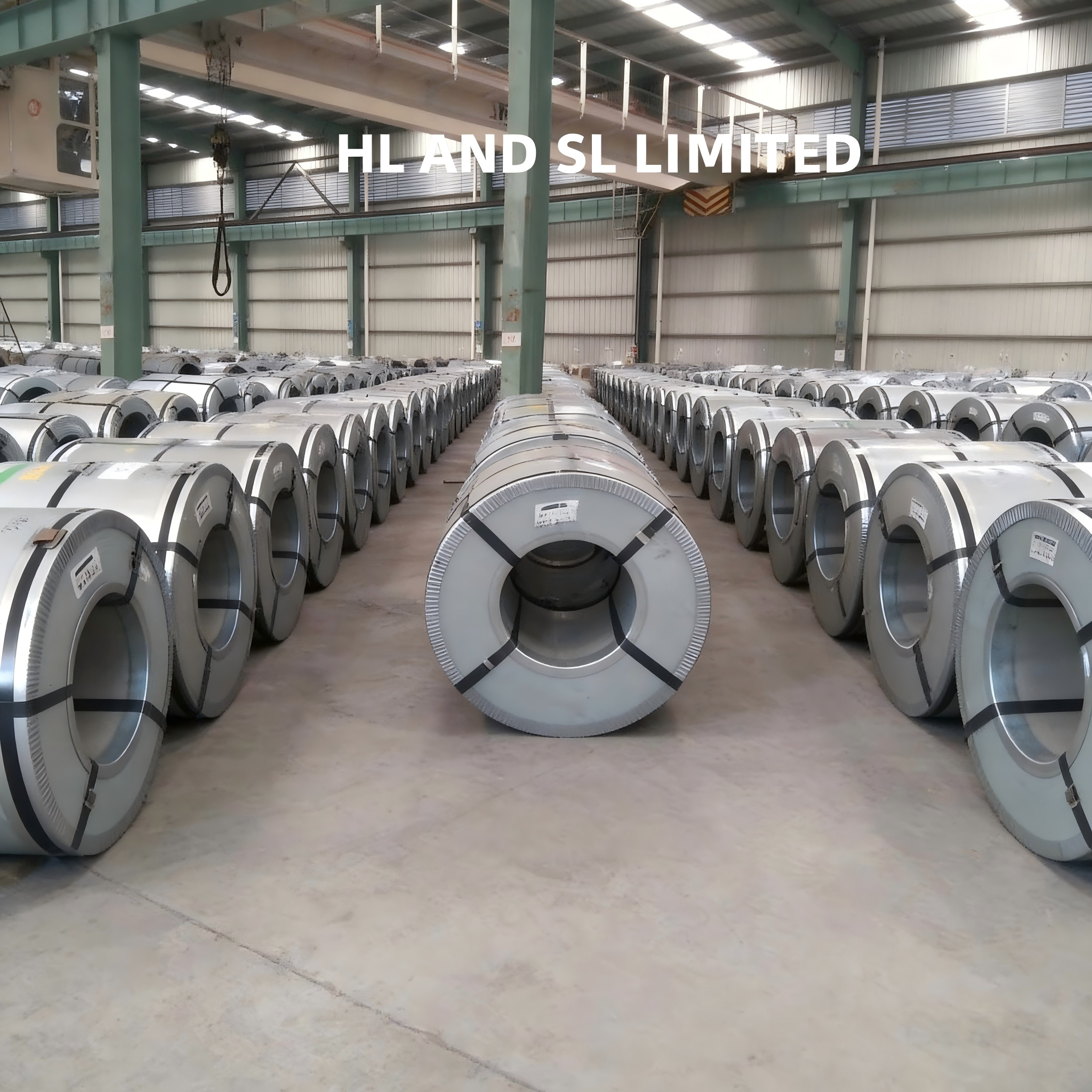
Documentation review should cover grade, thickness, P1.7/50, B8, coating, and test method. Image: HL AND SL LIMITED.
FAQ
Which standards and test data should I require for Hi-B electrical steel?
Use ASTM A876 as the reference for fully processed grain-oriented silicon-iron electrical steel. It covers conventional, high-permeability, and laser-scribed high-permeability categories, and it identifies core loss, permeability, magnetic aging, dimensions, lamination factor, and ductility as property groups. For each coil, ask for P1.7/50 and B8 at the design flux density and frequency, plus thickness, coating, and a third-party test report. Do not accept a generic electrical steel certificate in place of grade-specific data.
Can thinner Hi-B grades be supplied with custom slitting or stamping and consistent core loss?
HL AND SL LIMITED operates a 30,000 square meter material processing plant and provides precise secondary processing based on size, shape, and performance requirements. For thinner grades, confirm the cutting method, burr limit, stress-relief annealing, and stacking plan. The risk-control guidance for mechanical stress calls for sharp dies, controlled blanking gaps, stress-relief annealing at 700 to 800 degrees C where needed, and torque-controlled press-fitting. These process controls matter as much as the grade name.
How do 0.18 mm and 0.23 mm Hi-B grades compare on cost and efficiency?
In HL AND SL LIMITED's comparison notes, moving from 0.23 mm to 0.18 mm is described as a 21.7% thickness reduction, with magnetic permeability only 0.01 to 0.03 T lower. A 0.95 W/kg iron-loss grade is cited as parity. Thinner material can reduce eddy-current loss, but it may raise processing cost and handling risk. The same comparison notes position same-grade products at 10% to 20% below imported Nippon Steel, reflecting tariff and shipping savings. Use total core cost, not price per tonne alone.
Can I request samples or trial coils before a full order?
Contact the sales team to confirm the available grade, thickness, and test documentation before a trial. Pre-shipment testing and third-party testing are the stated acceptance criteria, and production orders start at a 25T MOQ. A trial should define the test method, sample size, and acceptance values for P1.7/50 and B8 before shipment.
What should I confirm about MOQ, lead time, and delivery terms before ordering?
The stated MOQ is 25T. Delivery terms are EXW, FOB, or CIF, and payment terms are 30/70. Lead time is not a fixed catalog figure because it depends on grade, thickness, processing, and order quantity, so confirm it in the RFQ. Send the drawing, grade, thickness, annual volume, and destination to sales-01@hlslind.com or WhatsApp +86 134-6700-2282 to receive a quote and the current catalog.
Conclusion: Solve the Core Loss Problem as a System
High transformer core loss is rarely solved by a single grade substitution. It is solved by matching the thickness tier to the loss budget, selecting the right grade position within that tier, controlling the cutting and annealing process, and securing a supplier who can repeat the result. For distribution transformers, the 0.23 mm 23Q080 to 23Q100 tier is the practical baseline. For tighter power transformer and HVDC targets, 20R070 is the next step. For UHV and high-efficiency power transformers, 18-65 is the thinnest option in this set.
The decision should be documented before the order: design flux density, frequency, target P1.7/50, target B8, thickness tolerance, coating, processing route, acceptance test, MOQ, delivery terms, and payment terms. That package turns a material purchase into a repeatable core-loss solution.
HL AND SL LIMITED supplies silicon steel and electrical steel from its base in Taiyuan, Shanxi, China. The company was founded in 2012, operates a 30,000 square meter processing plant, and reports annual output of 30,000T with 50 employees, 10 engineers, and an 80% export ratio. Its main markets are Mexico, Brazil, Italy, UAE, and India. Website: www.hlslind.com. Contact: sales-01@hlslind.com; WhatsApp +86 134-6700-2282.
 Next step: Send the transformer rating, core dimensions, target P1.7/50 and B8, annual volume, and destination. Request a grade recommendation, a sample or trial plan, and a quote. Download the electrical steel catalog.
Have Questions or Need More Details?
Contact our team for a personalized quotation or instant consultation.
Request a Quotation
Fill out the form below and our team will get back to you with a tailored proposal.
WhatsApp Direct Chat
Prefer to chat in real-time? Message us on WhatsApp for instant assistance & quick answers.
- Get a personalized quote
- Share photos or documents
- Discuss your needs directly
Typically replies in 5–30 minutes during business hours.