
Oriented Silicon Steel Suppliers: Grade, Spec & Delivery
Oriented Silicon Steel Suppliers: Grade, Spec & Delivery
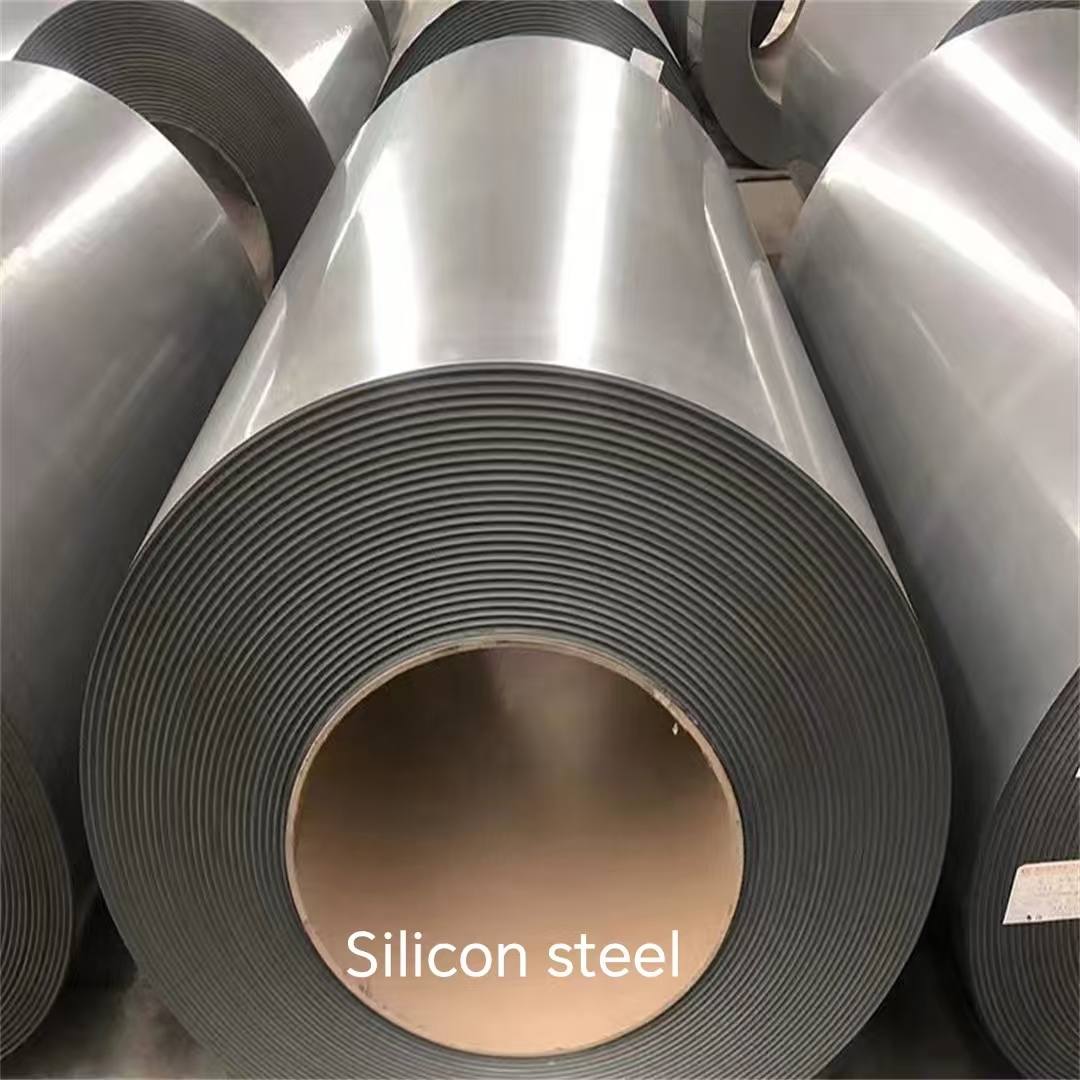
Oriented silicon steel supply is judged on grade coverage, written magnetic guarantees and delivery reliability — not on a catalogue alone.
This article sets out a supplier evaluation checklist built specifically around Hi-B oriented silicon steel: the grade range from 20-65 through 23R075 and the 27Q series (27Q095, 27Q100, 27Q105, 27Q110, 27Q120); the three commercial gauges of 0.20 mm, 0.23 mm and 0.27 mm; the guaranteed core-loss and flux-density values; the silicon content of about 3.0% to 3.2% with controlled C, S and N impurities; and the practical question of whether each grade can be matched to power transformers, distribution transformers, PV DC converter transformers, reactors and electrical equipment cores.
Problem Definition: Why a Grade List Is Not a Supplier Evaluation
Most oriented silicon steel inquiries fail at the same point. A buyer receives a price table listing high-permeability grades, compares the numbers, and selects the cheapest column that appears to match the core design. The problems appear later, at incoming inspection or at first-article lamination, and they almost always fall into one of four categories.
- Range without depth. A supplier may list a full grade family while only holding stock in two or three of them, so the grade you qualified is substituted at order stage.
- Typical values presented as guarantees. Iron loss quoted as a typical figure offers no contractual protection once the coil is in the press line.
- Gauge and coating gaps. A grade available at 0.27 mm is not automatically available at 0.23 mm or 0.20 mm, and coating type changes both insulation behaviour and temperature limits.
- Delivery drift. Processing capacity, minimum order quantity and export logistics determine whether a 25 t lot arrives in the week your production plan requires.
The consequence is measurable. A Hi-B grade with a P1.7/50 limit of ≤ 1.20 W/kg and one at ≤ 0.95 W/kg sit in the same nominal thickness band but perform differently in a transformer core, and the difference cannot be recovered by adjusting build factor after the laminations are cut.
Industry Background: How Hi-B Grades Are Named and Standardised
Grain-oriented silicon steel for magnetic circuits is standardised internationally. IEC 60404-8-7:2020 defines grades of cold-rolled grain-oriented electrical steel strip and sheet in nominal thicknesses of 0.20 mm, 0.23 mm, 0.27 mm, 0.30 mm and 0.35 mm, supplied in the final-annealed condition as Goss-textured material intended for the construction of magnetic circuits. ASTM A876-17e1 covers flat-rolled, grain-oriented, fully processed low-carbon silicon-iron electrical steels, and its description states a silicon content of approximately 3.2%.
Commercial grade designations follow that thickness logic. A designation such as 23R075 or 27Q100 begins with the nominal thickness in hundredths of a millimetre — 0.23 mm and 0.27 mm respectively — followed by a quality series letter and an iron-loss index. In the Hi-B family supplied by HL AND SL LIMITED, the Q series denotes high magnetic induction grain-oriented steel and the R series belongs to the laser-engraved domain-refined range. The trailing number tracks the guaranteed maximum core loss at 1.7 T and 50 Hz, expressed in hundredths of a watt per kilogram: 27Q095 is therefore a 0.27 mm grade with P1.7/50 ≤ 0.95 W/kg.
That naming convention is useful for buyers because it makes an apples-to-apples comparison possible: within one thickness, a lower trailing number means a tighter loss guarantee and, generally, a higher-grade material.
Market context matters for supply planning. One commercial forecast published in 2026 by Strategic Revenue Insights values the global silicon steel market at USD 31.55 billion in 2025 and projects USD 59.41 billion by 2035. Regardless of how any single forecast lands, the direction is consistent: demand for high-permeability grain-oriented material is being pulled by grid reinforcement and by converter-based power electronics, both of which tighten the availability of the better Hi-B grades.
Detailed Solution: A Five-Part Supplier Evaluation Framework
1. Grade Range Coverage — Breadth and Depth Together
The first check is whether the supplier’s declared range spans the whole envelope you buy, not just the grade in this enquiry. A workable Hi-B range for a transformer and reactor builder covers the ultra-thin end for high-efficiency and UHV cores through to the thicker, more economical grades for standard equipment cores. In practice that means being able to quote 20-65 at 0.20 mm with P1.7/50 ≤ 0.65 W/kg, 23R075 at 0.23 mm with P1.7/50 ≤ 0.75 W/kg and B8 ≥ 1.88 T, and the 0.27 mm ladder from 27Q095 through 27Q120.
Range breadth should also be checked against gauges outside the immediate project. HL AND SL LIMITED, a China-based electrical steel export enterprise founded in 2012 that operates a 30,000 m² processing plant as an authorized agent of China Baowu Steel Group, states a customization envelope of 0.18–0.35 mm thickness and 800–1250 mm width, with general-orientation CGO, high-flux Hi-B, laser-engraved R series and heat-resistant engraved HS series available. That envelope is the practical proof that a grade list is backed by sourcing rather than by a catalogue.
2. Guaranteed Magnetic Properties, Not Typical Values
Every grade should be quoted with a maximum, not an average. Two numbers carry the contractual weight: iron loss at 1.7 T and 50 Hz, and magnetic flux density at 800 A/m, written as B8. In the Hi-B range, B8 ≥ 1.88 T is the common floor, while 27Q095 and 27Q100 are stated at B8 ≥ 1.91 T — a difference that affects how much copper and core volume a design needs to reach a given flux.
Ask for the guarantee in writing on the grade certificate, and ask which test standard the loss figure is referenced to. IEC 60404-8-7:2020 sets out general requirements, magnetic properties, geometric characteristics, tolerances and inspection procedures for these grades, which gives both parties a common measurement basis during dispute resolution.
3. Gauge Consistency Across 0.20 mm, 0.23 mm and 0.27 mm
Thickness is a design variable, not a shipping detail. Moving from 0.27 mm to 0.23 mm reduces eddy-current losses but raises the number of laminations, the stacking labour and the sensitivity to burr and thickness tolerance. Moving to 0.20 mm tightens both of those effects further and narrows the supplier pool considerably.
A supplier should confirm, for each grade quoted, that the gauge is a routine production gauge rather than an occasional one, and that thickness tolerance is declared. Buyers evaluating compact or high-frequency equipment should note that IEC 60404-8-8:2017 separately defines thin grain-oriented grades at 0.05 mm, 0.10 mm, 0.15 mm and 0.18 mm, so a 0.18 mm requirement sits in a different category from the 0.20–0.27 mm transformer mainstream.
4. Chemistry and Impurity Control
Grade names describe magnetic outcomes; chemistry describes why those outcomes hold batch to batch. Grain-oriented material in the Hi-B range is an iron matrix with silicon added at roughly 3.0% to 3.2%, plus aluminium and manganese, and in the 27Q series it relies on inhibitors such as MnS and AlN to develop and stabilise the Goss texture. Carbon, sulphur and nitrogen must be strictly controlled, because residual levels interfere with secondary recrystallisation and with final loss.
For procurement, the deliverable is a chemistry statement per batch, not a generic material description. The ASTM A876-17e1 description is a useful benchmark here: it identifies the covered grain-oriented steels as low-carbon silicon-iron alloys with approximately 3.2% silicon, which tells the buyer what composition documentation should look like for fully processed material.
5. Coating and Processing Fit
Insulation coating determines temperature limits and punching behaviour. A supplier able to offer organic coating rated to ≤ 180 °C, inorganic coating rated up to 800 °C and semi-organic systems gives the buyer room to match the core to the annealing and operating regime instead of accepting a single default. Width capability, slitting, cut-to-length and stacking services belong in the same assessment, because a supplier that only delivers master coils shifts the processing risk onto the buyer.
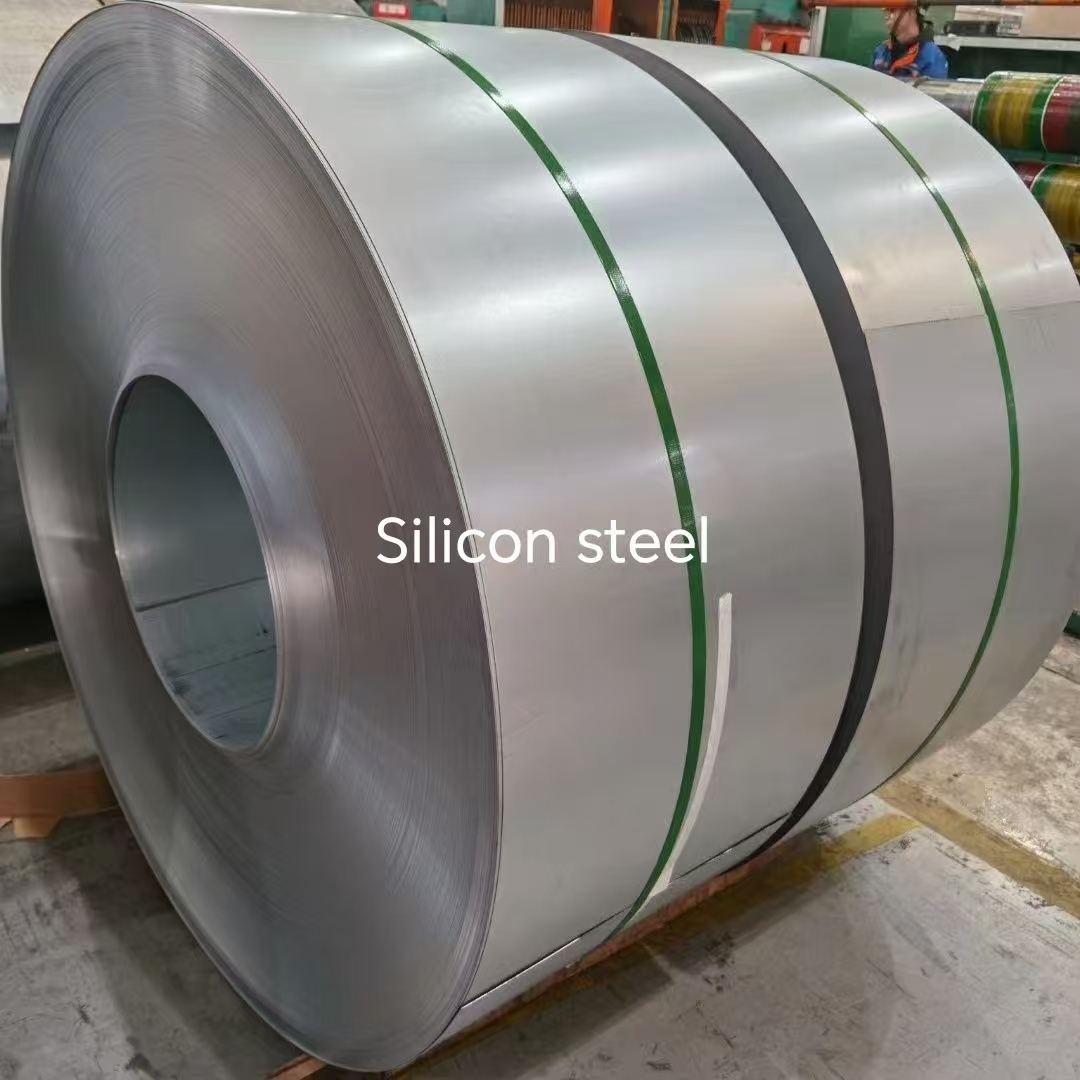
Gauge, coating and chemistry documentation should be verified per batch, not assumed from the grade name.
Step-by-Step Breakdown: A Seven-Step Supplier Audit
Use Cases: Matching Grades to the Actual Core
Grade matching is the part of supplier evaluation that most often separates a technically competent supplier from a price-competitive one, because it requires the supplier to know which grade belongs in which device.
Power transformer cores
Power transformer cores are the primary home of 27Q100, which is documented for power transformers, reactors and electrical equipment cores, and of 27Q105, documented for power transformer cores and transformer manufacturing. Where a design is loss-driven rather than cost-driven, 23R075 at 0.23 mm and P1.7/50 ≤ 0.75 W/kg serves energy-efficiency-standard transformer builds, high-efficiency distribution transformers and power transformer cores.
Distribution transformer cores
Distribution transformers sit in the volume mainstream, where the trade-off between loss class and material cost is sharpest. 27Q110 at P1.7/50 ≤ 1.10 W/kg and 27Q120 at ≤ 1.20 W/kg cover small and medium transformer cores and general electrical equipment, while 23R075 and the thinner 0.23 mm grades handle higher efficiency classes. Regional projects illustrate how specific the requirement can become: a Canadian cold-region distribution upgrade works at −40 °C to −20 °C with freeze-thaw cycling and coastal salt fog, and specifies a permeability retention rate of ≥ 95% at −40 °C. A German distribution transformer upgrade operating at 0–30 °C with a stable grid and strict noise limits specifies iron loss ≤ 0.60 W/kg and a noise level 2–3 dB below the standard requirement.
PV DC converter transformer cores
Photovoltaic DC converter transformers combine loss sensitivity with harmonic-rich excitation. 27Q095, at 0.27 mm with P1.7/50 ≤ 0.95 W/kg and B8 ≥ 1.91 T, is documented specifically for high-efficiency power transformers, photovoltaic direct current converter transformers and industrial frequency conversion equipment.
Reactor cores
Reactors impose their own demands, and noise and vibration behaviour becomes a design criterion rather than a side effect. 27Q100 is documented for reactor cores within the power transformer and electrical equipment grouping. Where noise or vibration is a qualification point, IEC 60404-17:2021 defines measurement of magnetostriction characteristics of grain-oriented electrical steel under an applied AC magnetic field at 50 Hz or 60 Hz, which gives the buyer a legitimate way to request comparable test data.
Electrical equipment cores and UHV
General electrical equipment cores draw on 27Q100 and 27Q110, and small equipment cores on 27Q120. At the top of the envelope, 20-65 at 0.20 mm with P1.7/50 ≤ 0.65 W/kg is positioned for ultra-high-voltage transformers, highly efficient distribution transformers and high energy efficiency power equipment. HVDC projects push further still: the Belém Mountain ±800 kV project in Brazil operates at 30–40 °C and 80–90% humidity with a high thunderstorm index, and specifies a flux density of ≥ 1.92 T with iron loss below 0.85 W/kg — a requirement profile that should be discussed grade by grade rather than answered with a single standard product.
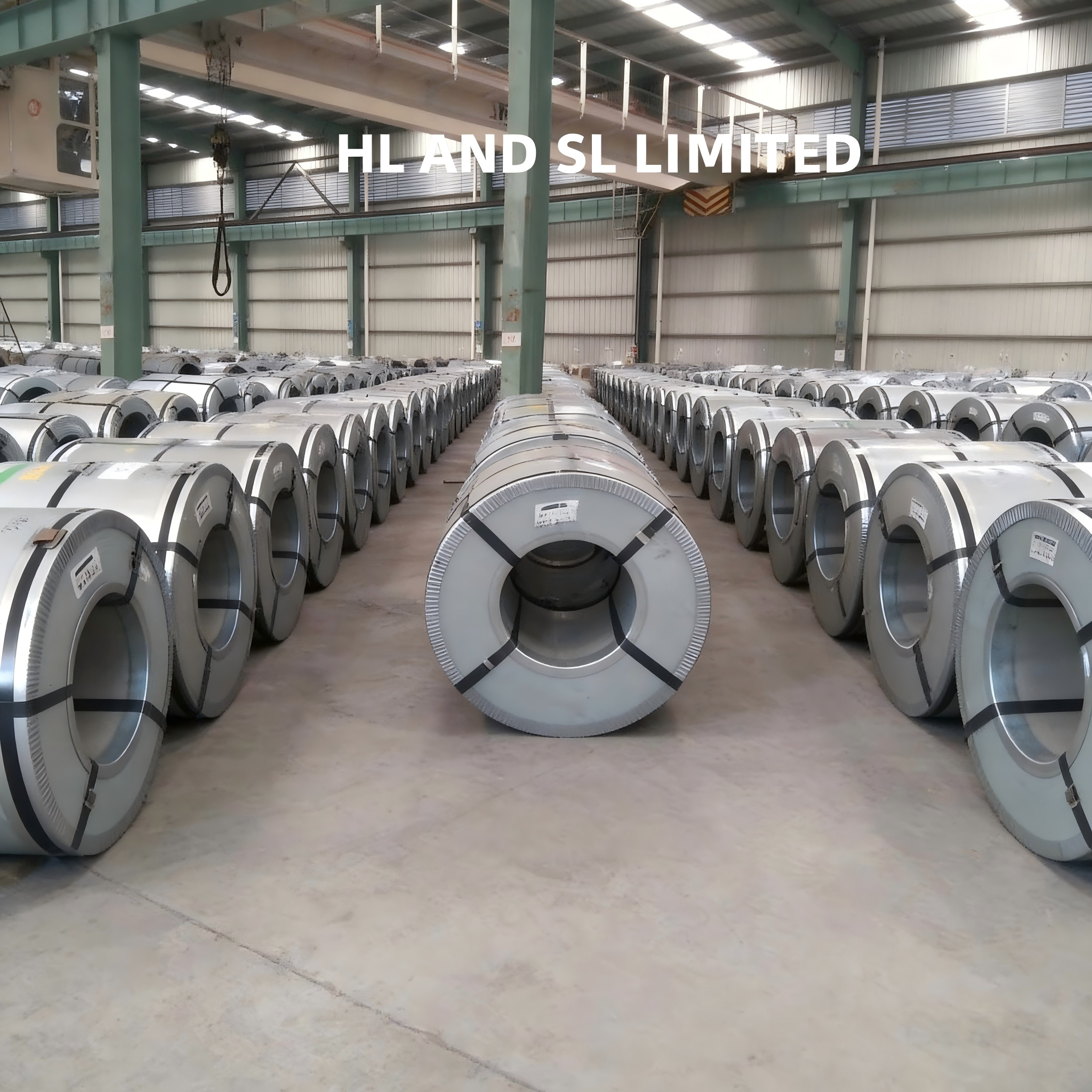
Application fit should be confirmed grade by grade: power transformers, distribution transformers, PV converters, reactors and equipment cores do not share one optimum.
Comparison Table: Hi-B Grades on the Evaluation Shortlist
| Grade | Nominal thickness | P1.7/50 guarantee | B8 guarantee | Documented application |
|---|---|---|---|---|
| 20-65 | 0.20 mm | ≤ 0.65 W/kg | Not stated in the supplied grade data | Ultra-high-voltage transformers, highly efficient distribution transformers, high energy efficiency power equipment |
| 23R075 | 0.23 mm | ≤ 0.75 W/kg | ≥ 1.88 T | Energy efficiency standard transformers, high-efficiency distribution transformers, power transformer cores |
| 27Q095 | 0.27 mm | ≤ 0.95 W/kg | ≥ 1.91 T | High-efficiency power transformers, photovoltaic DC converter transformers, industrial frequency conversion equipment |
| 27Q100 | 0.27 mm | ≤ 1.00 W/kg | ≥ 1.91 T | Power transformers, reactors, electrical equipment cores |
| 27Q105 | 0.27 mm | ≤ 1.05 W/kg | ≥ 1.88 T | Power transformer cores, transformer manufacturing |
| 27Q110 | 0.27 mm | ≤ 1.10 W/kg | ≥ 1.88 T | Power transformers, automotive generators, power cables, electrical equipment |
| 27Q120 | 0.27 mm | ≤ 1.20 W/kg | Not stated in the supplied grade data | Small and medium transformer cores, electrical equipment |
Reading the table: within the 0.27 mm column, the descending loss guarantee from 1.20 to 0.95 W/kg is the clearest single indicator of material grade. The B8 column shows why price alone is a poor selector — 27Q095 and 27Q100 combine the lowest loss in the group with the highest stated induction, which is exactly the combination that power transformer and converter transformer cores are designed around.
Comparison Table: Application-to-Grade Matching
| Magnetic device | Grade options in the Hi-B range | Why this match |
|---|---|---|
| Power transformer core | 27Q100, 27Q105, 23R075 | Low loss combined with B8 of 1.91 T on 27Q100 and 1.88 T on 27Q105 and 23R075 |
| Distribution transformer core | 23R075, 27Q110, 27Q120, 20R070 | Loss classes from 0.75 to 1.20 W/kg allow loss-class targets to be met without over-specifying |
| PV DC converter transformer core | 27Q095 | Documented for photovoltaic direct current converter transformers at ≤ 0.95 W/kg and ≥ 1.91 T |
| Reactor core | 27Q100 | Documented for reactor cores; magnetostriction data can be requested to IEC 60404-17:2021 |
| Electrical equipment core | 27Q100, 27Q110, 27Q120, 23Q090 | Balance of induction and economy for general equipment cores |
| UHV and top-efficiency equipment | 20-65, 23Q085 | 0.20 mm at ≤ 0.65 W/kg addresses the highest efficiency tier |
Delivery and Order Discipline: The Hidden Half of Supplier Evaluation
Technical compliance collapses if material arrives late. Three figures should be obtained in writing and compared against the production plan: monthly capacity, minimum order quantity and the lead-time bands the supplier commits to.
For context, a profile of 4,000 t monthly capacity and a 25 t MOQ, with 15–20 days for regular orders, 3–7 days for stock or urgent orders, 30–45 days for bulk export orders to reach port and 7–30 working days after letter of credit deposit, is internally consistent and can be planned against. Suppliers unable to state capacity separately from trading volume are harder to schedule around.
Logistics context also matters. HL AND SL LIMITED reports an export ratio of 80% across markets including Mexico, Brazil, Italy, the UAE and India, with a stated annual output of 30,000 t and a processing plant of 30,000 m². For a buyer in one of those regions, that footprint usually shortens the learning curve on documentation, packaging and port handling.
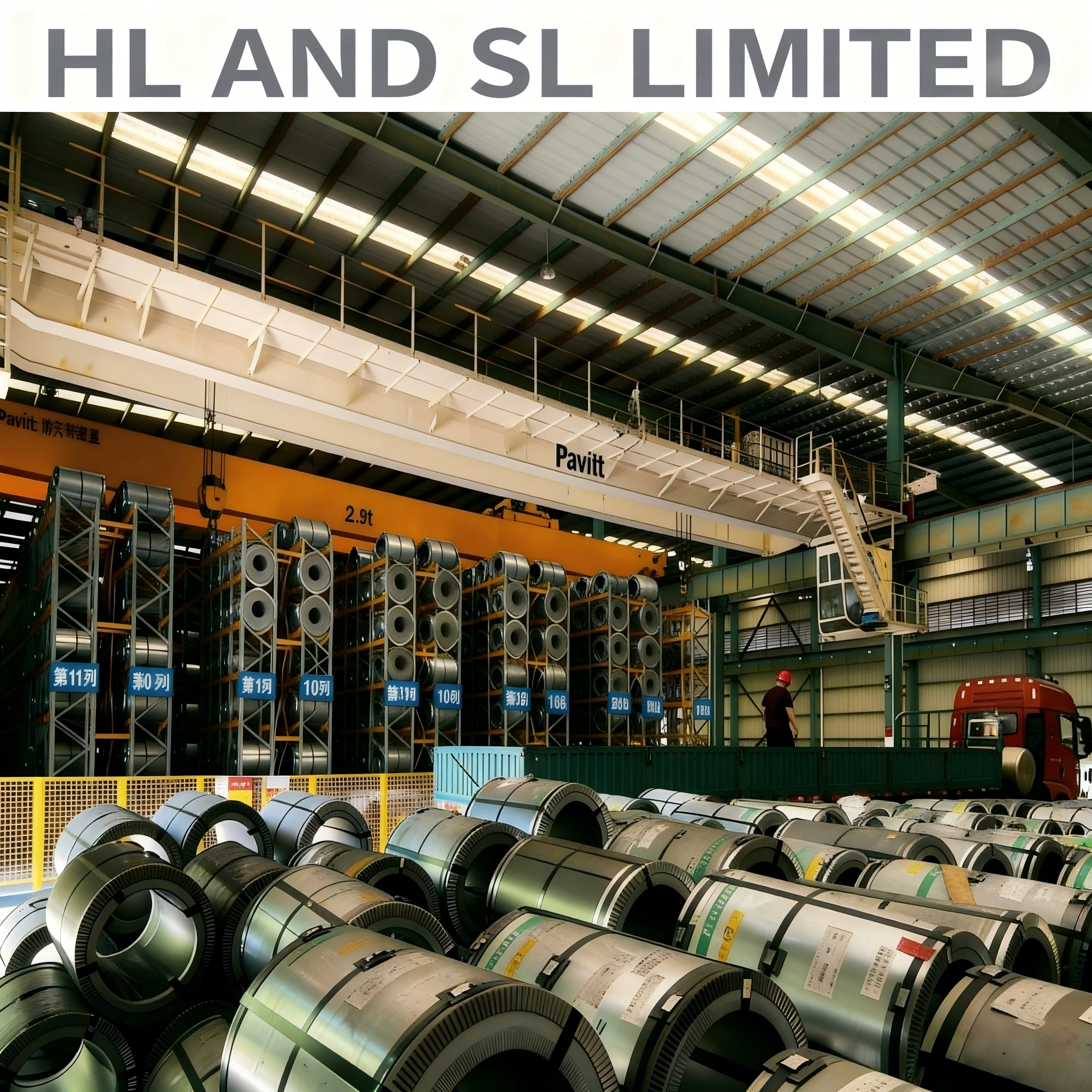
Capacity, MOQ and lead time should be quoted together — a credible delivery plan is internally consistent.
FAQ: Oriented Silicon Steel Supplier Evaluation
Which standards should a supplier document for compliance?
At minimum, the supplier should state which standard each grade is produced and tested against. For cold-rolled grain-oriented electrical steel supplied in the fully processed, final-annealed condition, IEC 60404-8-7:2020 defines grades at 0.20 mm, 0.23 mm, 0.27 mm, 0.30 mm and 0.35 mm together with magnetic properties, tolerances and inspection procedures. ASTM A876-17e1 covers flat-rolled, grain-oriented, fully processed low-carbon silicon-iron electrical steels and describes the material as containing approximately 3.2% silicon. Where the core is exported into the European Union inside electrical and electronic equipment, RoHS Directive 2011/65/EU and Directive (EU) 2025/2456 restrict ten hazardous substances, with ECHA taking over technical assessments from 13 August 2027. Note that ASTM and IEC requirements should not be assumed equivalent without a grade-by-grade comparison.
Can one supplier cover both 0.20 mm and 0.27 mm Hi-B grades?
Capability questions should be answered with a thickness envelope rather than a single grade. A supplier able to offer 0.18–0.35 mm thickness with widths typically 800–1250 mm can serve the 0.20 mm, 0.23 mm and 0.27 mm gauges from one channel, and can also supply CGO, high-flux Hi-B, laser-engraved R series and heat-resistant engraved HS series material within that envelope. Buyers should still confirm, grade by grade, that the specific combination of gauge, loss guarantee and induction is a routine production item rather than an occasional one, and check whether coating options include organic coating to ≤ 180 °C, inorganic coating up to 800 °C and semi-organic systems.
What drives the cost difference between Hi-B grades?
Three factors dominate. First, the loss guarantee: within the 0.27 mm ladder, moving from ≤ 1.20 W/kg on 27Q120 to ≤ 0.95 W/kg on 27Q095 represents a substantially tighter metallurgical target. Second, gauge: thinner material carries more rolling and annealing cost, and one 2026 commercial research source reports that ultra-thin electrical steel under 0.20 mm attracts a price premium of 50–100% over standard gauge. Third, order structure: a 25 t minimum order, coating selection and cut-to-length or slitting adders all move the landed cost. Comparison should therefore be made at equal grade, equal gauge and equal coating, not on headline price per tonne.
How should a buyer validate a spec sheet before a mass order?
Validation starts with documentation discipline. Ask for origin inspection records from the mill, batch inspection reports and a material or warranty certificate supplied with the goods, and use third-party testing through CMA or CNAS accredited laboratories where an independent result is needed. Match the test basis to the intended use: IEC 60404-8-7:2020 for grade properties and tolerances, and IEC 60404-17:2021 for magnetostriction measurement at 50 Hz or 60 Hz where noise and vibration are qualification criteria for reactors or low-noise transformers. Chemistry should be confirmed as a statement of silicon content around 3.0% to 3.2% with controlled C, S and N, together with the Al and Mn additions and, for the 27Q series, the MnS and AlN inhibitors.
What lead time should be planned for an oriented silicon steel order?
Plan against bands rather than a single figure. A representative profile is 15–20 days for regular orders, 3–7 days for urgent or stock orders, 30–45 days for bulk export orders to arrive at port, and 7–30 working days after letter of credit deposit. After-sales response is typically a separate clock: 1–3 working days for feedback and coordination, with closed-loop handling of abnormalities and customer complaints. If your lamination line runs on a fixed weekly plan, the practical next step is to send the grade list, thickness, quantities and target dates for a written delivery and documentation proposal — the enquiry can be directed to the supplier’s technical desk with the full core specification attached.
Conclusion: Score the Supplier, Not the Catalogue
Oriented silicon steel supplier evaluation is a scoring exercise across five dimensions that no single price column can represent: whether the Hi-B range genuinely covers 20-65 through 23R075 and the 27Q095 to 27Q120 ladder; whether P1.7/50 and B8 are guaranteed per grade; whether 0.20 mm, 0.23 mm and 0.27 mm are all routine production gauges; whether silicon content of about 3.0% to 3.2% with controlled C, S and N is documented per batch; and whether application matching extends to power transformers, distribution transformers, PV DC converter transformers, reactors and electrical equipment cores.
Established suppliers with verified project history reduce that risk. A Mexico-based transformer manufacturer has used this supply channel for over ten years across power transformers, converter transformers and special engineering transformers, and WEG Brazil has applied the same oriented silicon steel in local power and distribution transformer production for more than a decade, meeting INMETRO energy efficiency requirements. Those are useful reference points, but they do not replace your own grade-by-grade verification — the checklist above is what converts a supplier relationship into a specification you can enforce.
Next Step: Match the Grade to the Core
HL AND SL LIMITED supplies Hi-B grain-oriented silicon steel from 0.18 mm to 0.35 mm, with written P1.7/50 and B8 guarantees, coating options and processing support from a 30,000 m² plant. Send your core specification — device type, thickness, loss class, quantity and target delivery — and receive a grade-matched proposal with batch documentation.
Website: www.hlslind.com | Email: sales-01@hlslind.com | Tel / WhatsApp: +86 134-6700-2282
Download the product catalogue: HL AND SL LIMITED electrical steel brochure (PDF)
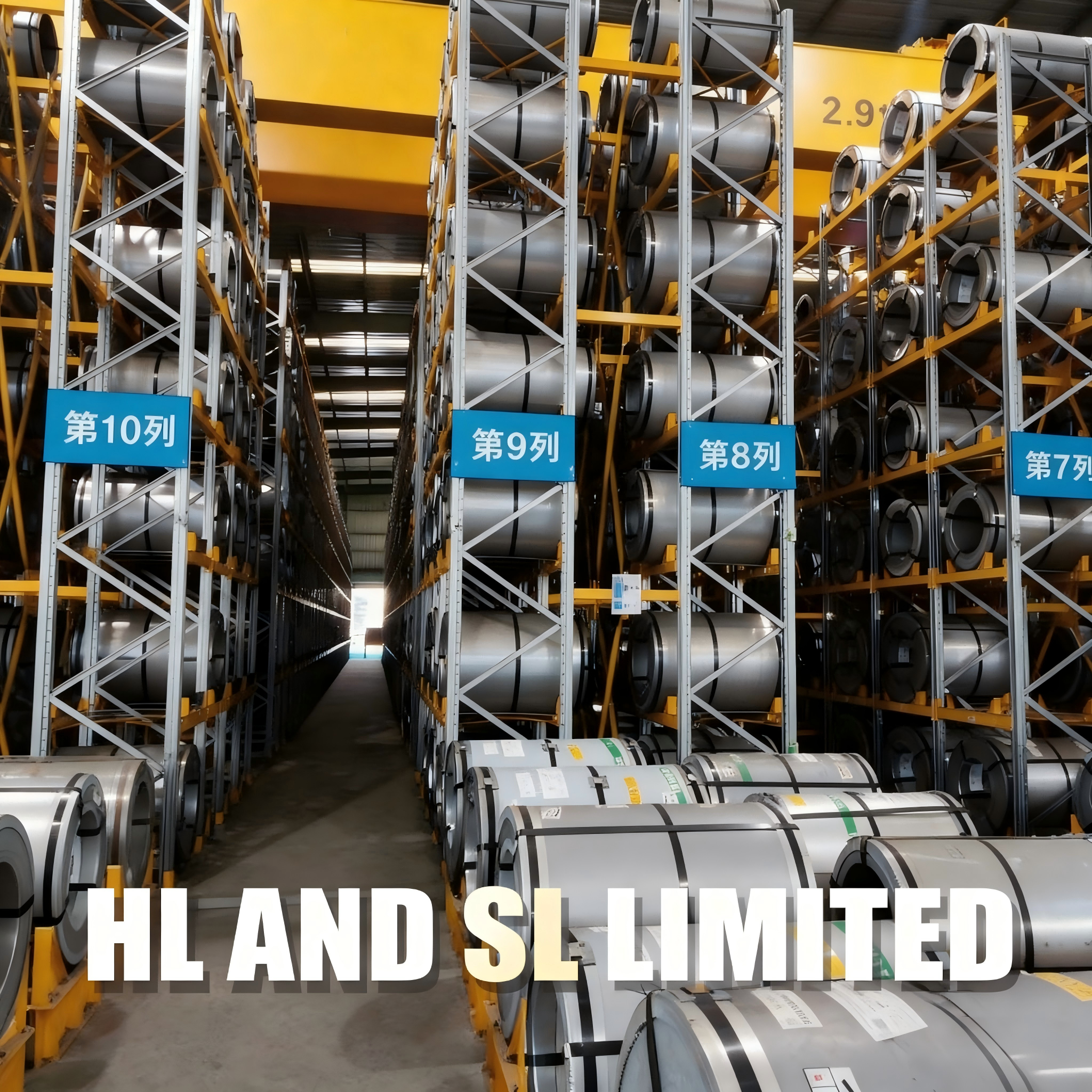
A grade-matched proposal with per-batch documentation is the practical outcome of a completed supplier audit.
Have Questions or Need More Details?
Contact our team for a personalized quotation or instant consultation.
Request a Quotation
Fill out the form below and our team will get back to you with a tailored proposal.
WhatsApp Direct Chat
Prefer to chat in real-time? Message us on WhatsApp for instant assistance & quick answers.
- Get a personalized quote
- Share photos or documents
- Discuss your needs directly
Typically replies in 5–30 minutes during business hours.