
20-65 vs 23R075 vs 27Q095: Hi-B Oriented Silicon Steel Comparison for UHV and PV Transformer Cores
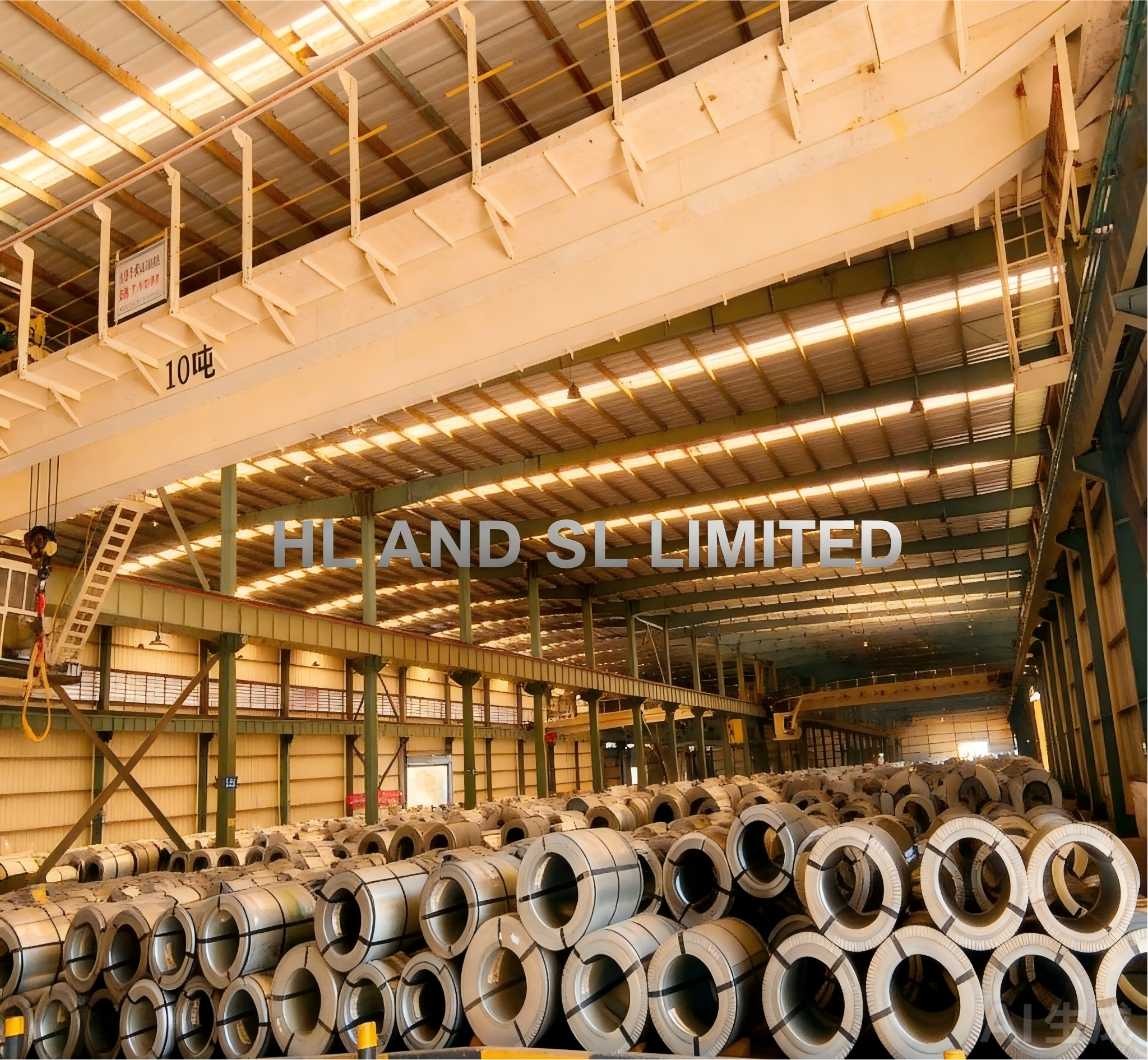
HL AND SL LIMITED supplies and processes Hi-B grain-oriented silicon steel for transformer core manufacturers.
20-65, 23R075 and 27Q095 are three Hi-B (high magnetic induction) grain-oriented silicon steel grades that regularly appear on the same shortlist for UHV transformer and photovoltaic converter projects. They differ in three measurable ways: nominal thickness, the guaranteed ceiling on iron loss at 1.7 T and 50 Hz, and the guaranteed magnetic flux density B8.
Quick answer. 20-65 is a 0.20 mm grade with iron loss P1.7/50 ≤ 0.65 W/kg, listed for ultra-high voltage transformers, high-efficiency distribution transformers and high energy-efficiency power equipment. 23R075 is a 0.23 mm grade with ≤ 0.75 W/kg and B8 ≥ 1.88 T, listed for energy-efficiency-standard transformers, high-efficiency distribution transformers and power transformer cores. 27Q095 is a 0.27 mm grade with ≤ 0.95 W/kg and B8 ≥ 1.91 T, listed for high-efficiency power transformers, photovoltaic direct current converter transformers and industrial frequency conversion equipment.
Those three sentences are the technical summary. What follows is the specification detail, the selection logic between the grades, the application fit, and the purchasing and acceptance criteria that make the choice enforceable in a purchase order.
The Actual Decision Behind 20-65 vs 23R075 vs 27Q095
The comparison is not about which grade is technically superior. All three are Hi-B grain-oriented silicon steel with comparable chemistry, and all three operate at the same power frequency. The decision is about matching a loss ceiling and a flux density floor to the transformer class being built, and then confirming that the gauge can be processed in the core shop without adding cost that cancels the electrical benefit.
The grade name carries the first half of the data. The number before the separator states the nominal thickness in millimetres, and the trailing digits state the maximum iron loss at 1.7 T and 50 Hz. That gives 0.20 mm and 0.65 W/kg for 20-65, 0.23 mm and 0.75 W/kg for 23R075, and 0.27 mm and 0.95 W/kg for 27Q095. A buyer can read the loss ceiling straight off the grade name.
The grade name does not carry flux density. 23R075 guarantees B8 ≥ 1.88 T and 27Q095 guarantees B8 ≥ 1.91 T, while the published data for 20-65 lists thickness and iron loss only. Where a project specification sets a minimum flux density — as converter transformer projects routinely do — the missing B8 value for 20-65 has to be resolved with the mill before the order is issued, not after the cores are cut.
Gauge is the third variable. Moving from 0.27 mm to 0.20 mm reduces the eddy-current contribution to core loss, which is why thinner grades are offered at lower loss ceilings, but it also changes how the material behaves in slitting, cutting and stacking. Within this specific three-grade set the trade-off is visible directly in the data: the thinnest grade has the lowest loss ceiling, and the thickest grade has the highest guaranteed flux density.
Market Context: Where Hi-B Grain-Oriented Steel Sits Now
Electrical steel is a large but unevenly weighted market. Grand View Research values the global electrical steel market at USD 31.0 billion in 2025, projected to grow to USD 47.0 billion by 2033. Inside that total, MarketsandMarkets estimates that non-grain-oriented (NGO) electrical steel held the largest share in 2025, at approximately 69.7%. Grain-oriented grades — the category that 20-65, 23R075 and 27Q095 belong to — sit in the smaller, specification-driven part of the market. Research Nester values grain-oriented silicon steel at USD 13.55 billion in 2025, growing to USD 23.57 billion by 2035 at a CAGR of 5.8%.
Supply is concentrated. MarketsandMarkets lists Baosteel (China), POSCO (South Korea), ArcelorMittal (Luxembourg), Nippon Steel (Japan) and TISCO (China) among the major electrical steel manufacturers. Export flows matter as much as production capacity: China's steel exports reached a record 117.055 million tonnes in 2024, a 25.1% year-on-year increase, according to the General Administration of Customs (via S&P Global). That is the volume backdrop against which overseas transformer builders plan procurement and lead time.
Thickness is moving in one direction across the category. SMM Analysis identifies ultra-thin gauge silicon steel under 0.25 mm as the preferred choice for high-frequency motors in new energy vehicles, where power density is the binding constraint. Transformer cores follow a different duty cycle at 50 Hz but the same pressure: lower loss ceilings at the same operating point. This is why 0.20 mm, 0.23 mm and 0.27 mm grades all remain current at the same time — they answer different project specifications rather than replacing one another.
Project specifications, not catalogue names, decide the final grade. Three records from live transformer projects show how specific those constraints become. A German distribution transformer upgrade specifies iron loss ≤ 0.60 W/kg, a noise level 2–3 dB below the standard requirement, and a coating that withstands West Coast salt-spray conditions, operating continuously at 50 Hz. A Canadian cold-region programme specifies oriented silicon steel B20HS070 for Class 1 energy-efficient rolled iron core transformers, with freeze-thaw cycles, −40 °C to −20 °C winters and a permeability retention rate of ≥ 95% at −40 °C. The Phase II ±800 kV ultra-high voltage direct current project at Belém, Brazil, specifies oriented silicon steel with magnetic flux density ≥ 1.92 T and iron loss below 0.85 W/kg, operating at 30–40 °C with 80–90% humidity. A loss ceiling read off a grade name is the starting point for these projects, not the finish line.
Specification Breakdown: What Each Grade Guarantees
All three grades are supplied by HL AND SL LIMITED, a China-based electrical steel exporter established in 2012 that operates a 30,000 m² processing plant, produces 30,000 tonnes annually and exports roughly 80% of its volume, with markets including Mexico, Brazil, Italy, the UAE and India. The published differences between the three grades are set out below.
20-65 — 0.20 mm, P1.7/50 ≤ 0.65 W/kg
- Thickness: 0.20 mm
- Iron loss: P1.7/50 ≤ 0.65 W/kg (maximum)
- Magnetic flux density: not stated in the published grade data — confirm B8 with the mill for designs that specify a minimum
- Composition: iron with approximately 3.0–3.2% silicon, plus Al and Mn; C, S and N strictly controlled
- Listed applications: ultra-high voltage transformers, high-efficiency distribution transformers, high energy-efficiency power equipment
This is the lowest loss ceiling in the set. In a UHV transformer, excitation loss accumulates across a very large core mass that runs continuously for decades, so the 0.65 W/kg ceiling is the single strongest lever available in this comparison. The limitation to plan around is that the published data sheet states thickness and iron loss but no B8 value, so any project with a flux density floor must have that figure confirmed and written into the order.
23R075 — 0.23 mm, P1.7/50 ≤ 0.75 W/kg, B8 ≥ 1.88 T
- Thickness: 0.23 mm
- Iron loss: P1.7/50 ≤ 0.75 W/kg (maximum)
- Magnetic flux density: B8 ≥ 1.88 T
- Composition: iron with 3.0–3.2% silicon, plus Al and Mn; impurities such as C, S and N strictly controlled
- Listed applications: energy-efficiency-standard transformers, high-efficiency distribution transformers, power transformer cores
23R075 pairs a defined flux density floor with a mid-range loss ceiling, which is why it appears in energy-efficiency-standard and high-efficiency distribution transformer lists as well as power transformer cores. It is the grade to reach for when a project has to satisfy an efficiency threshold and a design flux density at the same time, without paying for the extra rolling implied by a 0.20 mm product. The R designation sits alongside the laser-engraved series that HL AND SL LIMITED lists among its material customization options.
27Q095 — 0.27 mm, P1.7/50 ≤ 0.95 W/kg, B8 ≥ 1.91 T
- Thickness: 0.27 mm
- Iron loss: P1.7/50 ≤ 0.95 W/kg (maximum)
- Magnetic flux density: B8 ≥ 1.91 T — the highest guaranteed value of the three grades
- Composition: iron with approximately 3% silicon, plus Al and Mn, with inhibitors (MnS, AlN) stated as required constituents of the grade
- Listed applications: high-efficiency power transformers, photovoltaic direct current converter transformers, industrial frequency conversion equipment
27Q095 is the only grade in this set explicitly listed for photovoltaic direct current converter transformers and industrial frequency conversion equipment, and it carries the highest guaranteed B8 of the three. Where the design is constrained by flux density rather than by the loss ceiling — typical of converter duty and frequency-conversion equipment — the 1.91 T guarantee is the reason to select this grade over a thinner alternative, even though its loss ceiling is the highest of the three.
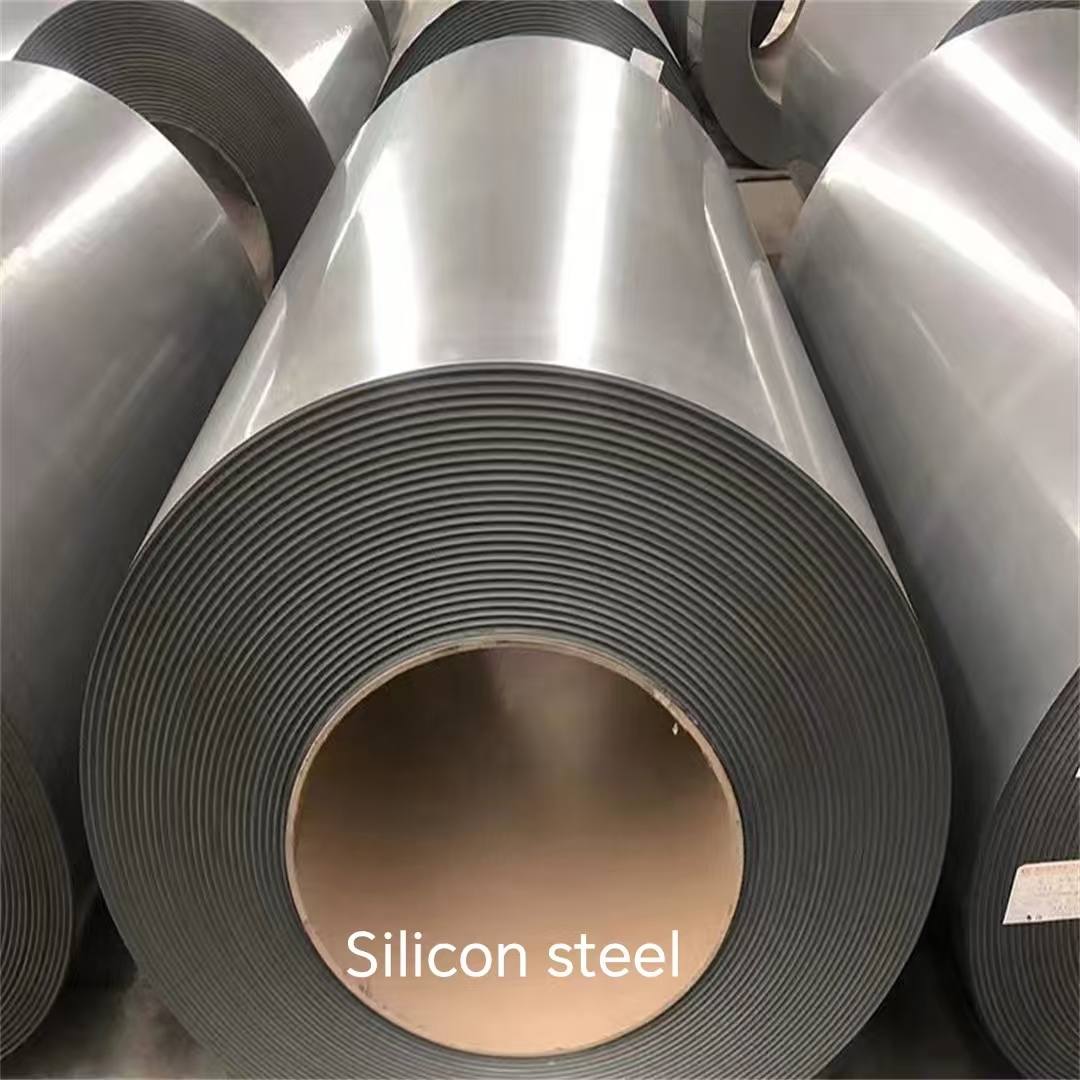
Hi-B grain-oriented silicon steel in the 0.20–0.27 mm range used for UHV, distribution and converter transformer cores.
Side-by-Side Comparison of the Three Hi-B Grades
The table below compares the three grades across every parameter published for them. Where a parameter is not stated by the supplier, the table says so rather than filling the gap.
| Parameter | 20-65 | 23R075 | 27Q095 |
|---|---|---|---|
| Type | Hi-B high magnetic induction grain-oriented silicon steel | Hi-B high magnetic induction grain-oriented silicon steel | Hi-B high magnetic induction grain-oriented silicon steel |
| Nominal thickness | 0.20 mm | 0.23 mm | 0.27 mm |
| Iron loss P1.7/50 | ≤ 0.65 W/kg | ≤ 0.75 W/kg | ≤ 0.95 W/kg |
| Magnetic flux density B8 | Not stated in published grade data | ≥ 1.88 T | ≥ 1.91 T |
| Silicon content | Approx. 3.0–3.2% | 3.0–3.2% | Approx. 3% |
| Other stated constituents | Al and Mn; C, S, N strictly controlled | Al and Mn; C, S, N strictly controlled | Al and Mn; inhibitors (MnS, AlN) required |
| Listed applications | UHV transformers; high-efficiency distribution transformers; high energy-efficiency power equipment | Energy-efficiency-standard transformers; high-efficiency distribution transformers; power transformer cores | High-efficiency power transformers; photovoltaic DC converter transformers; industrial frequency conversion equipment |
Read the table as three trade-offs rather than three quality levels. 20-65 wins on loss and gives up nothing in stated chemistry, but has no published B8 value. 23R075 holds a defined B8 floor of 1.88 T with a loss ceiling 0.10 W/kg above the 0.20 mm grade. 27Q095 carries the highest guarantee on flux density at 1.91 T with the highest loss ceiling. None of the three dominates the other two on every line.
Step-by-Step: Selecting a Grade for a UHV or PV Converter Core
The following sequence converts a transformer specification into a grade decision and then into an orderable line item. It assumes the buyer has already fixed the transformer class, the voltage level and the applicable efficiency regulation.
- Fix the transformer class and voltage level first. The application lists published for the three grades are the fastest filter: UHV transformers and high energy-efficiency power equipment point to 20-65; energy-efficiency-standard and distribution transformer cores point to 23R075; photovoltaic DC converter transformers and frequency conversion equipment point to 27Q095.
- Convert the efficiency obligation into a W/kg ceiling. Express the no-load loss requirement as a maximum iron loss at 1.7 T and 50 Hz. Compare that number to 0.65, 0.75 and 0.95 W/kg. If the project target is tighter than the catalogue ceiling of the grade you selected, the specification has to be negotiated at mill level before ordering.
- Check the flux density floor. If the design specifies a minimum B8, only 23R075 (≥ 1.88 T) and 27Q095 (≥ 1.91 T) carry a published guarantee. Selecting 20-65 in a design with a B8 floor requires an explicit confirmation from the mill, because the published data sheet does not state one.
- Match the gauge to the manufacturing window. Thickness affects punching, cutting and stacking behaviour, not only core loss. Confirm the intended cut length, slit width and stacking method against the chosen gauge before the material is ordered, since a thinner grade that the core line cannot process economically will not deliver the intended saving.
- Fix the coating. HL AND SL LIMITED offers organic coating with temperature resistance up to 180 °C, inorganic coating with temperature resistance up to 800 °C, and semi-organic coating. For cores that see high annealing or stress-relief temperatures, the coating selection is not a downstream detail; it constrains the grade choice.
- Fix the delivery format. Customization covers thickness from 0.18 mm to 0.35 mm, width typically 800–1250 mm with ultra-wide customization up to 1250 mm, and processing options including strip cutting, fixed-length flat cutting and longitudinal cutting. Ordering coil rather than cut-to-length sheet changes the core shop workload and the scrap rate.
- Write the guarantee into the purchase order. State the grade designation, the thickness, the P1.7/50 ceiling, the B8 floor where applicable, the coating type, the delivery format and the inspection documents. A loss ceiling that is not written into the order is not a guarantee.
| Design priority | Start with | Verified basis |
|---|---|---|
| Lowest excitation loss in this set | 20-65 | P1.7/50 ≤ 0.65 W/kg; listed for UHV transformers and high-efficiency distribution transformers |
| Balanced loss ceiling with a defined flux density floor | 23R075 | P1.7/50 ≤ 0.75 W/kg; B8 ≥ 1.88 T |
| Highest guaranteed flux density; PV DC converter and frequency conversion duty | 27Q095 | P1.7/50 ≤ 0.95 W/kg; B8 ≥ 1.91 T; listed for photovoltaic DC converter transformers |
Application Fit: Where Each Grade Is Used
Application lists are the most reliable guide when two grades appear technically close. The published lists place 20-65 in ultra-high voltage transformers, high-efficiency distribution transformers and high energy-efficiency power equipment; 23R075 in energy-efficiency-standard transformers, high-efficiency distribution transformers and power transformer cores; and 27Q095 in high-efficiency power transformers, photovoltaic DC converter transformers and industrial frequency conversion equipment.
Real project records show how those categories translate into operating conditions. A German distribution transformer upgrade runs SCB dry-type or oil-immersed units on continuous 50 Hz grid connection, with a mild 0–30 °C climate, strict noise limits set 2–3 dB below standard, a project loss target of ≤ 0.60 W/kg, and a coating required to resist West Coast salt-spray exposure. A Canadian cold-region programme runs Class 1 energy-efficient rolled iron core transformers through −40 °C to −20 °C winters, repeated freeze-thaw cycles and coastal salt fog, with a permeability retention rate of ≥ 95% at −40 °C.
In Brazil, oriented silicon steel has been applied in local transformer production at WEG for over ten years, meeting the regional INMETRO energy efficiency certification requirements; the same supply relationship has supported power transformer and distribution transformer manufacturing in Latin America's largest power equipment market. A separate Mexican transformer manufacturer has received batch supply for over ten years for power transformer, converter transformer and special engineering transformer cores. The Phase II ±800 kV ultra-high voltage direct current project at Belém operates at 30–40 °C and 80–90% humidity with a bipolar ±800 kV / 4000 MW regime, and specifies oriented silicon steel with B8 ≥ 1.92 T and iron loss below 0.85 W/kg. That project-level flux density requirement sits above the published 1.88 T guarantee of 23R075, which is exactly the kind of gap a buyer should identify at specification stage rather than at delivery.
Purchasing and Acceptance Criteria Buyers Should Fix in the PO
Grade selection only becomes reliable when acceptance is defined. The following criteria are the ones that matter for Hi-B oriented silicon steel sourced through HL AND SL LIMITED.
- Grade and parameters: state the model designation, thickness, P1.7/50 ceiling and, where applicable, the B8 floor, together with coating type and delivery format.
- Inspection at origin: full-process random inspection and batch inspection are performed at the factory before shipment.
- Documents with the goods: a batch inspection report and a material certificate / warranty certificate accompany each shipment.
- Third-party verification: submission for CMA/CNAS third-party testing is supported, which is the normal route where a project owner or insurer requires independent confirmation.
- Coatings: organic (≤ 180 °C temperature resistance), inorganic (up to 800 °C) and semi-organic options are available.
- Dimensions and processing: thickness customization from 0.18 mm to 0.35 mm, width typically 800–1250 mm with ultra-wide customization to 1250 mm, plus slitting, fixed-length flat cutting and longitudinal cutting.
- Packaging: standard export sea-worthy packaging, with logo and graphic customization available.
- Commercial terms: minimum order quantity 25 T, with monthly capacity of 4,000 T. Regular orders run 15–20 days; urgent or stock orders ship in 3–7 days; bulk export orders take 30–45 days to arrive at port; after a letter of credit deposit, 7–30 working days.
- After-sales: lifecycle technical guidance and application support, inbound quality inspection dispute handling with re-inspection, and feedback or complaint coordination closed out within 1–3 working days.
HL AND SL LIMITED is an authorized agent of China Baowu Steel Group and also integrates export resources from multiple private steel mills, which allows it to match different performance grades and price ranges — from high-grade Hi-B material to cost-effective non-oriented grades — against a single procurement requirement. Company details and product ranges are available at www.hlslind.com, with technical articles published on blog.hlslind.com.
FAQ
Are 20-65, 23R075 and 27Q095 covered by recognized standards, and what documents should accompany delivery?
All three are Hi-B grain-oriented silicon steel, and the supplier ships each batch with a batch inspection report plus a material certificate / warranty certificate; submission for CMA/CNAS third-party testing is supported. On the standards side, buyers should note that the widely cited electrical steel standards are largely written for non-oriented product: IEC 60404-8-4 (2013) defines the specifications for non-oriented fully processed electrical steel strips and sheets delivered in the finally annealed state, and in North America ASTM A677 covers fully processed non-oriented types while ASTM A683 covers semi-processed types. Because 20-65, 23R075 and 27Q095 are grain-oriented Hi-B grades rather than non-oriented, the safest acceptance route is to state the exact grade designation, thickness, iron loss ceiling and flux density floor in the purchase order and to require the corresponding batch inspection report with the shipment.
What cutting, coating and width options are available for these three grades?
Customization covers thickness from 0.18 mm to 0.35 mm and width typically 800–1250 mm, with ultra-wide customization available up to 1250 mm. Processing options include strip cutting, fixed-length flat cutting and longitudinal cutting, so material can be delivered to suit either coil-fed or sheet-fed core lines. Coating options are organic coating with temperature resistance up to 180 °C, inorganic coating with temperature resistance up to 800 °C, and semi-organic coating. Packaging can be supplied as standard export sea-worthy packaging, with logo and graphic customization on request.
What drives the cost difference between 20-65, 23R075 and 27Q095?
The three grades sit at different points in the product ladder, and the gap follows the grade rather than the supplier's margin. The 0.20 mm grade carries the lowest loss ceiling of the set and the thinnest gauge, which places it at the top of the ladder; the 0.23 mm grade occupies the middle; and the 0.27 mm grade is the entry point of the three. Because HL AND SL LIMITED also integrates export resources from multiple private steel mills alongside its Baowu agency channel, buyers can be quoted across both high-grade and economy options for the same application, and the company's stated selection principle is to match performance grade and price range to the actual requirement rather than to push the highest grade. Quotations are issued per specification, and the minimum order quantity is 25 T.
How can a buyer validate a grade before committing to a full production order?
Validation normally works in three layers. First, request the batch inspection report and material certificate alongside the quotation and check that the stated P1.7/50 ceiling and, where applicable, the B8 floor match the design. Second, for projects with an efficiency or certification obligation, arrange CMA/CNAS third-party testing on a trial lot rather than relying on a certificate alone. Third, confirm the processing format — slit width, cut length, coating type — on the trial material, because a grade that performs correctly on paper can still fail if the coating or the cut dimensions do not suit the core line. Buyers who want to run this sequence should contact the supplier directly to agree the evaluation material and the test plan.
What lead time should be planned for 20-65, 23R075 and 27Q095 orders?
Lead time depends on the order type. Regular orders are quoted at 15–20 days; urgent orders and stock orders ship in 3–7 days; bulk export orders take 30–45 days to arrive at port; and after the deposit under a letter of credit, production runs 7–30 working days. With a minimum order quantity of 25 T and a monthly capacity of 4,000 T, the practical planning risk is not capacity but material grade availability at the required thickness, which is why the grade, the B8 floor and the coating should be confirmed before the order is placed. To discuss grade selection, request a quotation, or arrange evaluation material, contact HL AND SL LIMITED at sales-01@hlslind.com or +86 134-6700-2282. The full electrical steel catalogue is available for download at the HL AND SL LIMITED brochure.
Conclusion
The choice between 20-65, 23R075 and 27Q095 comes down to two numbers and one format decision. 20-65 delivers the lowest loss ceiling in the set, at P1.7/50 ≤ 0.65 W/kg on a 0.20 mm gauge, and is listed for UHV transformers and high-efficiency distribution transformers. 23R075 balances a ≤ 0.75 W/kg ceiling against a guaranteed B8 ≥ 1.88 T on a 0.23 mm gauge for energy-efficiency-standard transformers and power transformer cores. 27Q095 carries the highest guaranteed flux density at B8 ≥ 1.91 T with a ≤ 0.95 W/kg ceiling on a 0.27 mm gauge, and is the grade listed for photovoltaic direct current converter transformers and industrial frequency conversion equipment. The format decision — coating type, slit width, cut length and packing — determines whether the electrical advantage survives into the finished core.
Read the three grades as three different answers to three different specifications, confirm the flux density floor in writing wherever a project sets one, and lock the loss ceiling, coating and delivery format into the purchase order. That sequence is what converts a comparison of catalogue numbers into a core that meets its acceptance test.
Next Step
Send your transformer class, voltage level and target iron loss to HL AND SL LIMITED and receive a grade recommendation for 20-65, 23R075 or 27Q095 with the matching batch inspection documentation.
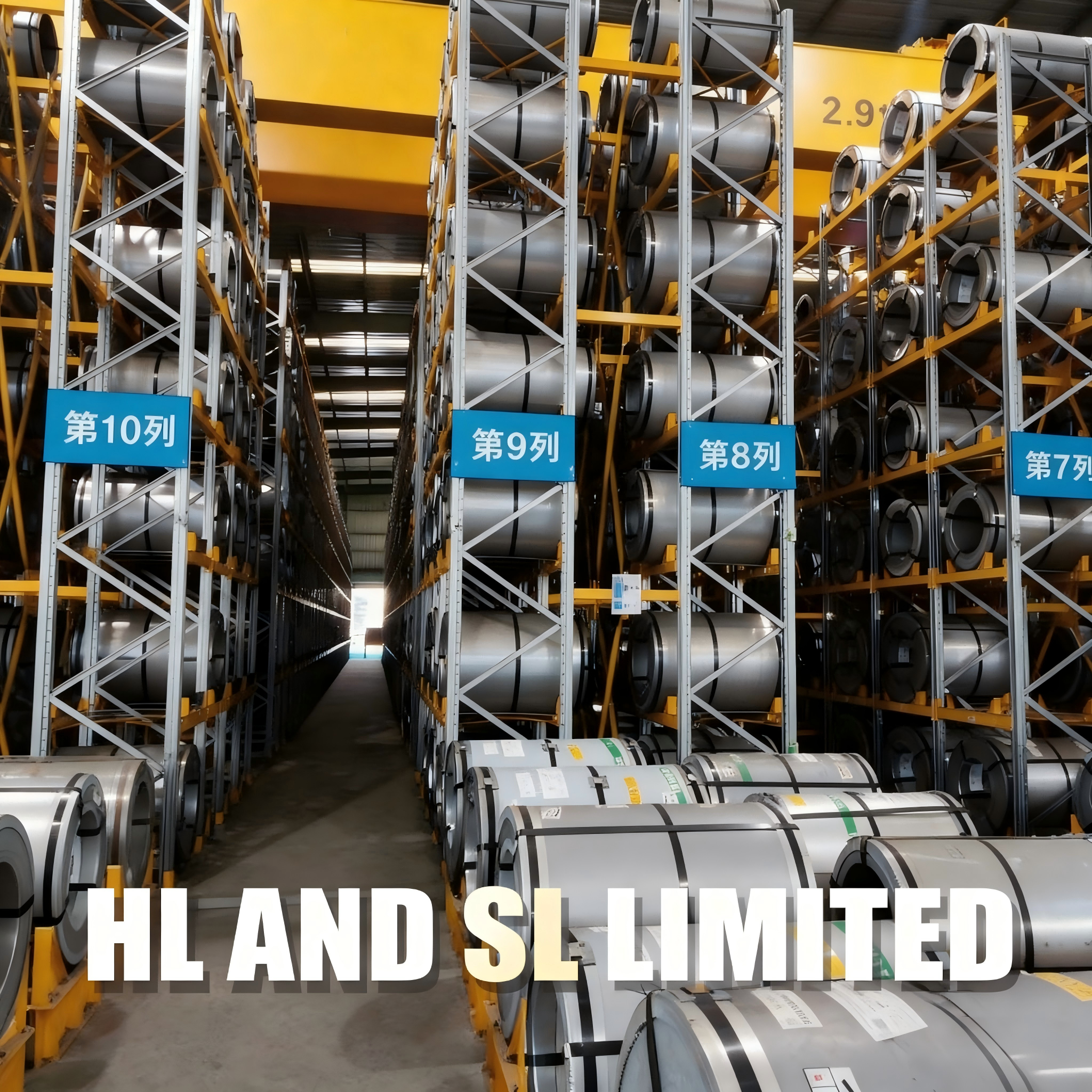
Email: sales-01@hlslind.com | Tel / WhatsApp: +86 134-6700-2282 | Website: www.hlslind.com | Download the product brochure (PDF)
Have Questions or Need More Details?
Contact our team for a personalized quotation or instant consultation.
Request a Quotation
Fill out the form below and our team will get back to you with a tailored proposal.
WhatsApp Direct Chat
Prefer to chat in real-time? Message us on WhatsApp for instant assistance & quick answers.
- Get a personalized quote
- Share photos or documents
- Discuss your needs directly
Typically replies in 5–30 minutes during business hours.