
Ranking the Best Hi-B Oriented Silicon Steel Grades for Transformer Cores
Short answer: across the seven Hi-B (high magnetic induction grain-oriented) grades compared here, 18-65 ranks first for transformer core loss, with a guaranteed iron loss of P1.7/50 ≤ 0.65 W/kg at 0.18 mm thickness and B8 ≥ 1.88 T. 20R070 ranks second (≤ 0.70 W/kg, 0.20 mm), and 23Q080 ranks third — it carries the highest magnetic flux density in the set at B8 ≥ 1.89 T, with a guaranteed iron loss ceiling of ≤ 0.80 W/kg and measured values of 0.76–0.78 W/kg. The remaining 23Q series grades — 23Q085, 23Q090, 23Q095 and 23Q100 — rank fourth through seventh on the same criteria.
The Ranking at a Glance
- Rank 1 — 18-65: 0.18 mm, iron loss ≤ 0.65 W/kg, B8 ≥ 1.88 T. Lowest guaranteed loss in the set.
- Rank 2 — 20R070: 0.20 mm, iron loss ≤ 0.70 W/kg, B8 ≥ 1.86 T. Laser-engraved R series option.
- Rank 3 — 23Q080: 0.23 mm, iron loss ≤ 0.80 W/kg (measured 0.76–0.78 W/kg), B8 ≥ 1.89 T. Highest flux density in the set.
- Rank 4 — 23Q085: 0.23 mm, iron loss ≤ 0.85 W/kg, B8 ≥ 1.88 T. Positioned for HVDC converter transformer cores.
- Rank 5 — 23Q090: 0.23 mm, iron loss ≤ 0.90 W/kg, B8 ≥ 1.88 T. Industrial small and medium transformer cores.
- Rank 6 — 23Q095: 0.23 mm, iron loss ≤ 0.95 W/kg, B8 ≥ 1.88 T. Transformer, power equipment and motor cores.
- Rank 7 — 23Q100: 0.23 mm, iron loss ≤ 1.00 W/kg, B8 ≥ 1.75 T. Common distribution and general industrial transformers.
Why Hi-B Grade Selection Is Harder Than the Data Sheet Suggests
All seven grades in this ranking are labelled Hi-B, which tells a buyer that the material is high magnetic induction grain-oriented silicon steel with silicon content in the region of 3.0%–3.2% and tightly controlled carbon, sulphur and nitrogen impurities. It does not tell the buyer which grade belongs in the core being designed. The gap between 0.65 W/kg and 1.00 W/kg looks narrow on paper; at core scale it becomes a difference in no-load loss, temperature rise and efficiency-class compliance that determines whether a design passes or fails its target.
Three complications make the decision harder than a single-column sort.
- Loss and flux density do not move together. The two best grades on iron loss, 18-65 and 20R070, are not the strongest on magnetic flux density. 23Q080 has the highest B8 in the set (≥ 1.89 T) with a higher guaranteed loss ceiling.
- Designations within one thickness family differ materially. 23Q085, 23Q090, 23Q095 and 23Q100 are all 0.23 mm material, yet their guaranteed iron loss spans 0.85 to 1.00 W/kg and 23Q100's flux density sits at a distinctly lower B8 ≥ 1.75 T.
- Catalogue ceilings are not the same as delivered performance. A grade ceiling is a guarantee; the measured value is what the core designer actually works with. 23Q080 is the clearest example here, at ≤ 0.80 W/kg guaranteed against 0.76–0.78 W/kg measured.
A ranking therefore has to state its criteria openly, which is what the framework below does. Otherwise the word "best" carries no procurement meaning.
Industry Background: Where Oriented Electrical Steel Sits in 2026
The global electrical steel market was valued at USD 31.0 billion in 2025 and is projected to reach USD 47.0 billion by 2033, growing at a CAGR of 5.5% over 2026–2033, according to Grand View Research. On the supply side, China's export volume of grain-oriented electrical steel reached 393,200 mt in H1 2025, up 16.0% year on year, as reported by SMM (Shanghai Metals Market). Those two figures point in the same direction: demand for high-efficiency core material keeps rising, and a large share of the incremental tonnage moves through export channels.
High-grade electrical steel production is concentrated. Baosteel (China Baowu), POSCO and Nippon Steel are the top three global producers of high-grade electrical steel, according to MarketsandMarkets. For buyers outside those production bases, access to a specific Hi-B grade at a specific width, coating and lead time depends less on the mill than on the supply partner holding the relationship with that mill.
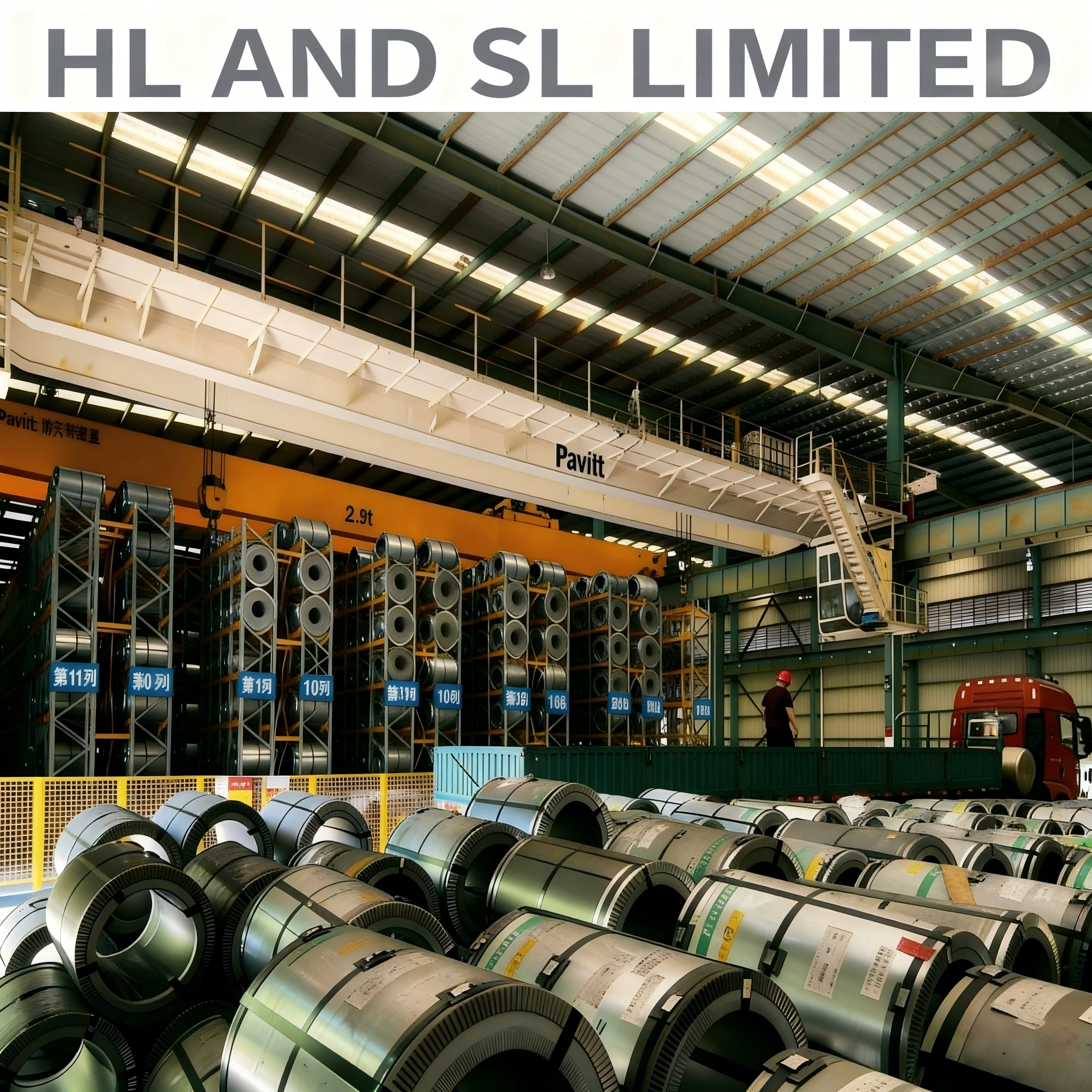
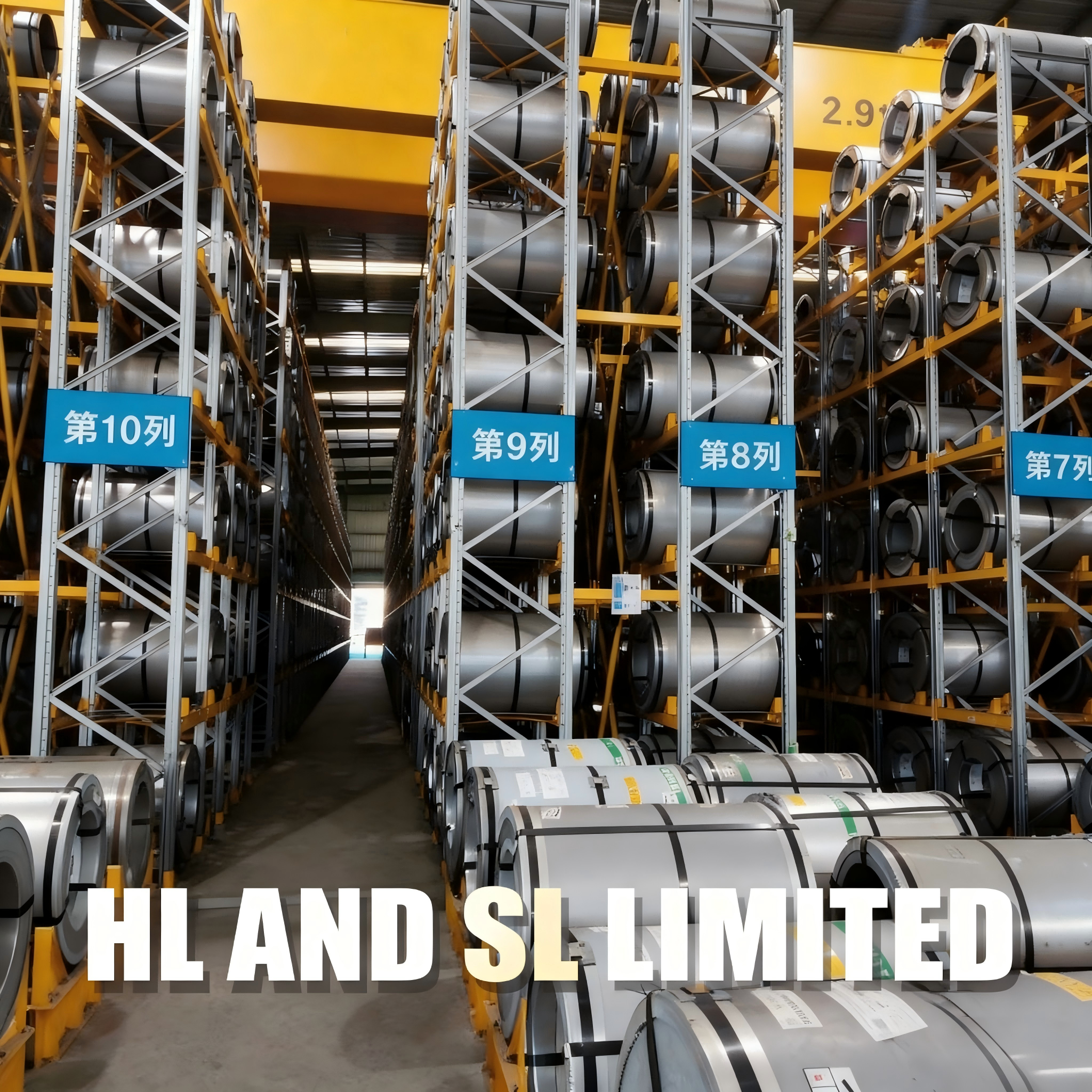
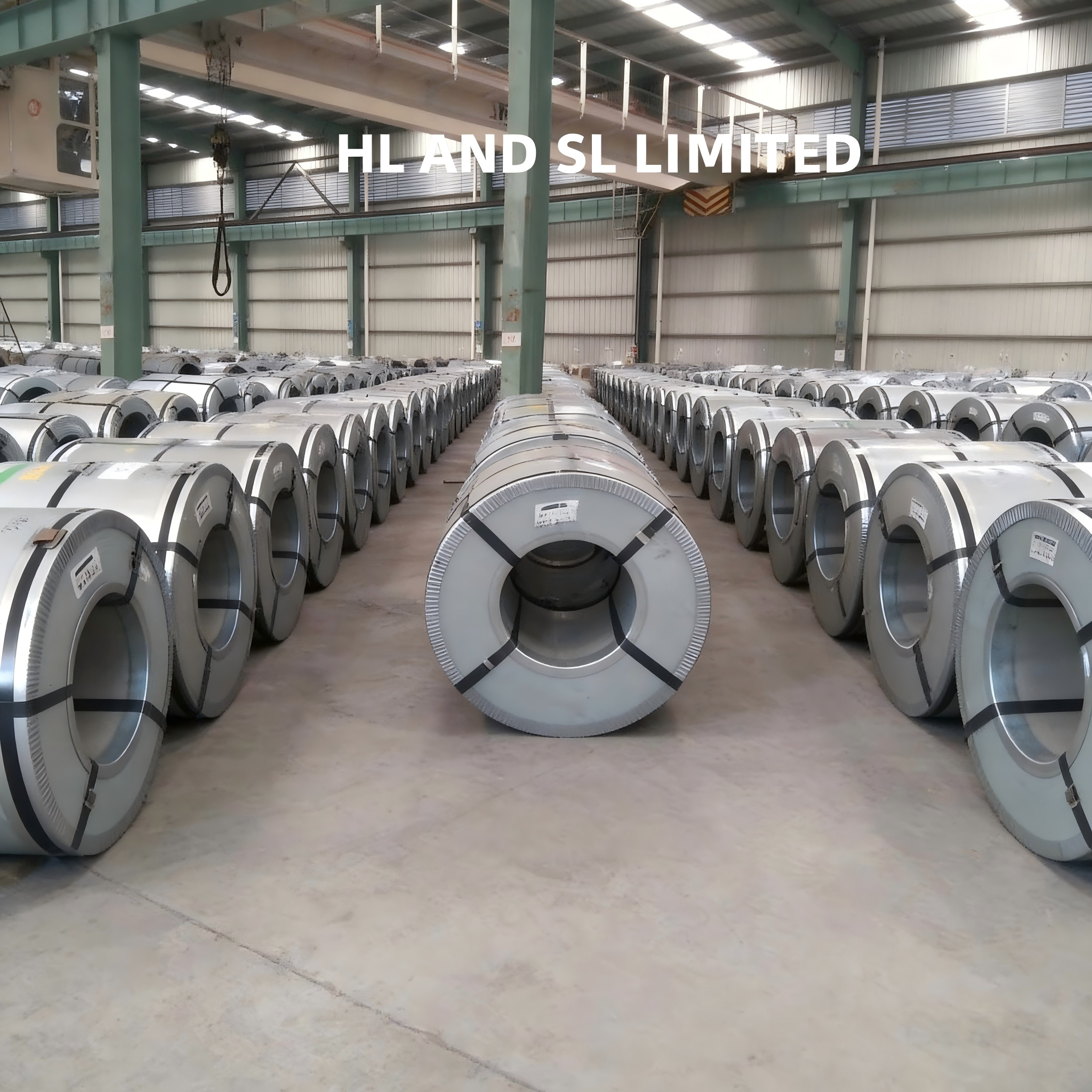
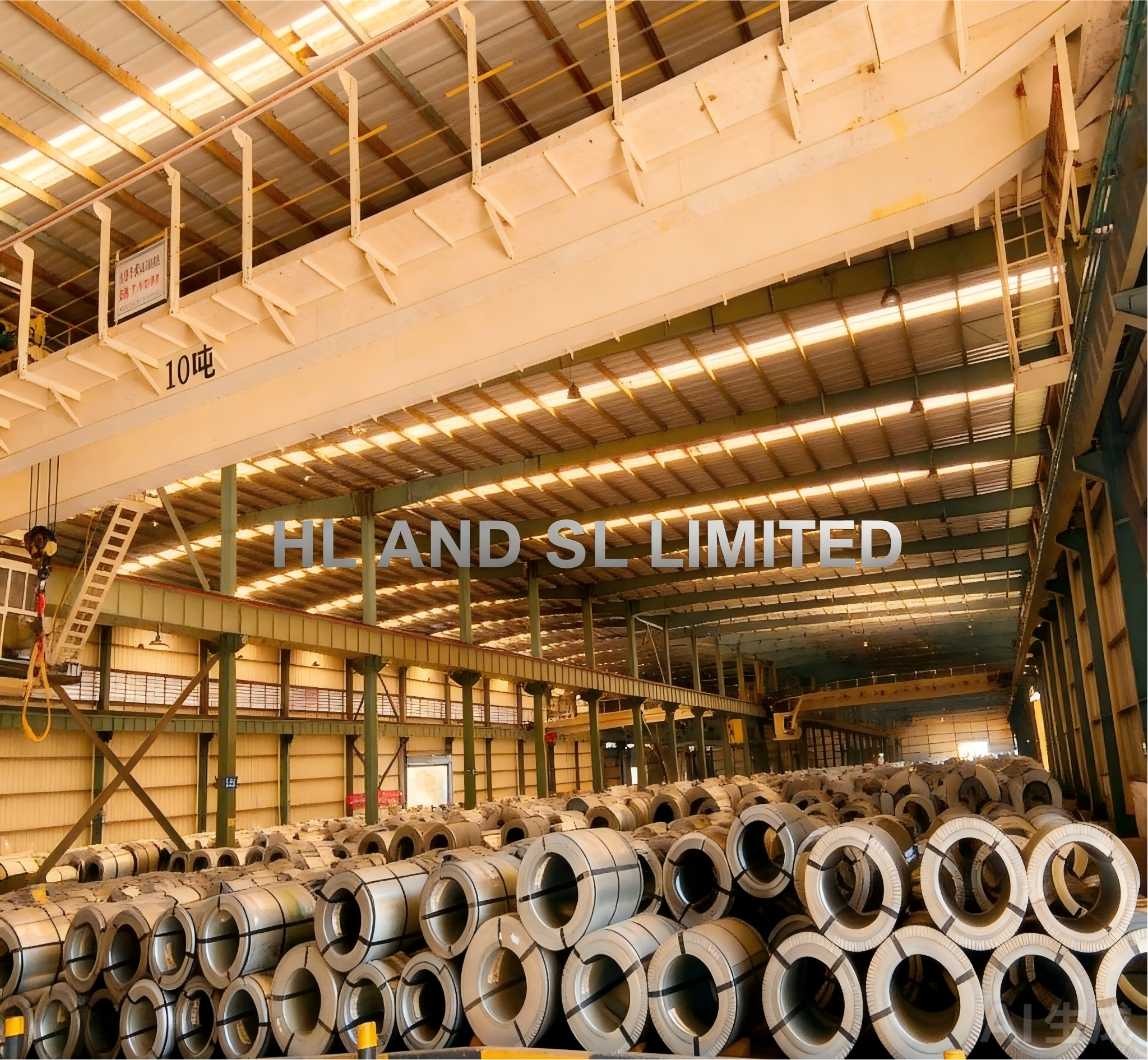
HL AND SL LIMITED is an electrical steel (silicon steel) export and processing company founded in 2012 and based in Taiyuan City, Shanxi Province, China. It supplies oriented and non-oriented silicon steel to transformer and motor manufacturers, operates a 30,000 m² processing facility with annual output of 30,000 T and monthly capacity of 4,000 T, exports roughly 80% of its volume, and serves markets including Mexico, Brazil, Italy, UAE and India. It is an authorized agent of China Baowu Steel Group and additionally integrates export resources from multiple private steel mills, which is what allows the same grade family to be matched across different performance and price bands.
The Three Ranking Criteria: Iron Loss, Flux Density, Thickness
The ranking in this article is built on a fixed order of criteria so that the result is reproducible rather than impressionistic.
- Guaranteed iron loss (P1.7/50), primary criterion. Iron loss is expressed in W/kg measured at 1.7 T and 50 Hz, which is the basis of core loss calculation in transformer design. The grade with the lowest guaranteed ceiling ranks higher.
- Magnetic flux density B8, secondary criterion. Flux density governs how much magnetising current a core needs at a given induction and is a factor in excitation behaviour. Where two grades sit close on loss, the higher B8 ranks higher.
- Thickness, tertiary criterion. Thickness is the variable a buyer can least afford to ignore, because it interacts with the cutting and stacking plan as much as with loss. It is also the criterion that most often decides whether a specification is buildable at the planned core dimension.
Limitation to state plainly: ranking order is not a purchase recommendation on its own. The right grade is the lowest-loss grade that still meets the project's B8 requirement, width and coating constraints, and commercial terms. A grade that ranks first on loss but cannot be supplied at the required width or coating is not the best grade for that project.
The Ranking: Seven Hi-B Oriented Silicon Steel Grades for Transformer Cores
Rank 1 — 18-65 (0.18 mm)
18-65 is a high magnetic induction grain-oriented silicon steel at 0.18 mm thickness with a guaranteed iron loss of P1.7/50 ≤ 0.65 W/kg and B8 ≥ 1.88 T. It takes first position because it pairs the lowest guaranteed loss in the set with a flux density that is still among the highest. Its stated application scope is ultra-high voltage transformers, power transformers and high-efficiency energy-saving transformer cores. The thinner gauge also means more laminations per unit of core cross-section, which is the practical reason it is specified where core loss reduction is the dominant design objective.
Rank 2 — 20R070 (0.20 mm)
20R070 is a 0.20 mm Hi-B grade with iron loss ≤ 0.70 W/kg and B8 ≥ 1.86 T. It ranks second on loss, and the "R" designation places it in the laser-engraved series of the supply range. Its stated application scope is high-efficiency distribution transformers and power transformer cores. Buyers should note the trade-off clearly: 20R070 has the lowest B8 of the top two, so where excitation current, magnetising behaviour or noise is a primary constraint, the comparison with 23Q080 deserves a direct check rather than a default assumption that the lower-loss grade is always preferable.
Rank 3 — 23Q080 (0.23 mm)
23Q080 ranks third overall but first on flux density, with B8 ≥ 1.89 T — the highest figure among the seven grades compared here. Its guaranteed iron loss is ≤ 0.80 W/kg, with measured values of 0.76–0.78 W/kg, meaning delivered material has been running below the guaranteed ceiling. Its stated application scope is energy-efficient transformers, power transformers, reactors and high-power frequency converters. For buyers who need one grade that balances loss, flux density and 0.23 mm handling on the same core line, 23Q080 is the strongest all-round position in the set.
Rank 4 — 23Q085 (0.23 mm)
23Q085 is a 0.23 mm Hi-B grade with iron loss ≤ 0.85 W/kg and B8 ≥ 1.88 T. Its stated application scope is high-voltage direct current (HVDC) converter transformer cores and high-efficiency power transformer cores. That positioning is the reason it stays in the top half of the ranking: converter transformer cores have their own loss and harmonic requirements, and a grade specified for that application should not be substituted by a general-purpose grade on nominal loss figures alone.
Rank 5 — 23Q090 (0.23 mm)
23Q090 offers iron loss ≤ 0.90 W/kg with B8 ≥ 1.88 T at 0.23 mm, and is stated for industrial small and medium-sized transformers and power equipment cores. It sits in the middle of the 23Q series: high enough flux density for standard core designs, and a loss ceiling that still supports efficiency-driven projects where the project specification has some tolerance above the premium grades.
Rank 6 — 23Q095 (0.23 mm)
23Q095 carries iron loss ≤ 0.95 W/kg and B8 ≥ 1.88 T at 0.23 mm. Its stated application scope covers high-efficiency transformers, power equipment cores and motors. The material specification for this grade lists silicon content of 2.5%–3.5% with aluminium and manganese additions. It ranks sixth because its guaranteed loss ceiling is higher than 23Q090's, not because of any weakness in flux density — B8 is identical to the grades above it.
Rank 7 — 23Q100 (0.23 mm)
23Q100 carries iron loss ≤ 1.00 W/kg at 0.23 mm and is stated for common distribution transformers, general industrial transformers and electromagnetic equipment. It ranks seventh on the loss criterion, and the table below shows why that matters for selection: its B8 is ≥ 1.75 T, the lowest in the comparison set. A buyer moving from 23Q095 to 23Q100 to gain commercial headroom is changing both loss and flux density, and both changes should be checked against the core design before the switch is approved.
Scope note: the wider oriented silicon steel supply family also includes 0.27 mm grades from 27Q095 to 27Q120 and additional 0.20 mm and 0.23 mm options such as 20-65 and 23R075. They fall outside the comparison set for this ranking and are evaluated separately against the same three criteria.
Grade Comparison Table
| Rank | Grade | Thickness | Iron loss P1.7/50 (W/kg) | B8 (T) | Stated core application |
|---|---|---|---|---|---|
| 1 | 18-65 | 0.18 mm | ≤ 0.65 | ≥ 1.88 | Ultra-high voltage transformers, power transformers, high-efficiency energy-saving cores |
| 2 | 20R070 | 0.20 mm | ≤ 0.70 | ≥ 1.86 | High-efficiency distribution transformers, power transformer cores |
| 3 | 23Q080 | 0.23 mm | ≤ 0.80 (measured 0.76–0.78) | ≥ 1.89 | Energy-efficient transformers, power transformers, reactors, high-power frequency converters |
| 4 | 23Q085 | 0.23 mm | ≤ 0.85 | ≥ 1.88 | HVDC converter transformer cores, high-efficiency power transformer cores |
| 5 | 23Q090 | 0.23 mm | ≤ 0.90 | ≥ 1.88 | Industrial small and medium-sized transformers, power equipment cores |
| 6 | 23Q095 | 0.23 mm | ≤ 0.95 | ≥ 1.88 | High-efficiency transformers, power equipment cores, motors |
| 7 | 23Q100 | 0.23 mm | ≤ 1.00 | ≥ 1.75 | Common distribution transformers, general industrial transformers, electromagnetic equipment |
Step-by-Step: How to Run a Hi-B Grade Selection
A grade ranking is a starting point, not a selection process. The sequence below turns the ranking into a decision that can be defended to a project team or a customer.
- Convert the project specification into a loss figure. Take the no-load loss or efficiency requirement and express it on the same basis used in the table — W/kg at P1.7/50 — so the target is comparable with grade data.
- Build a shortlist from the loss column. Start with the lowest-loss grade that the specification allows and work down until the cost of the grade exceeds the value of the remaining loss reduction. For premium efficiency projects the shortlist usually starts at 18-65 or 20R070.
- Screen the shortlist against B8. If the core design is sensitive to excitation behaviour, keep only grades whose flux density meets the design assumption. This is where 23Q080 (≥ 1.89 T) enters the shortlist ahead of lower-loss options.
- Check thickness against the build plan. Grade thickness determines lamination count and cutting pattern. Confirm that the planned core dimensions, cutting equipment and stacking method suit 0.18 mm, 0.20 mm or 0.23 mm material.
- Confirm width, coating and processing. Thickness can be supplied from 0.18 mm to 0.35 mm and width typically 800–1250 mm, with ultra-wide 1250 mm available on customisation. Coatings include organic (temperature resistance ≤ 180 °C), inorganic (up to 800 °C) and semi-organic, and processing covers strip cutting, fixed-length flat cutting and longitudinal cutting under an OEM/ODM arrangement.
- Verify the evidence behind the grade. Ask for the batch inspection report and material/warranty certificate, and where the project requires it, third-party testing. Origin inspection at the factory is available as full-process random inspection or batch inspection.
- Lock the commercial terms. Confirm the minimum order quantity, monthly capacity and lead time against the production schedule before the grade is written into the specification.
Use Cases: Matching Each Grade to a Transformer Project
Ultra-high voltage and large power transformers
These cores sit at the top of the loss-reduction requirement, which is why 18-65 is the natural first candidate. Its combination of 0.18 mm thickness and a ≤ 0.65 W/kg guarantee is stated specifically for ultra-high voltage and power transformer cores, where core loss accumulates across very large core volumes.
High-efficiency distribution transformers
Distribution transformer designs are usually constrained by efficiency class and by material cost per unit. 20R070 serves high-efficiency distribution transformers and power transformer cores at 0.20 mm, while 23Q080 and 23Q085 remain in scope for energy-efficient distribution transformer designs where 0.23 mm processing is preferred.
HVDC converter transformers
HVDC converter transformers are named directly in the application scope of 23Q085, which combines a ≤ 0.85 W/kg loss ceiling with B8 ≥ 1.88 T at 0.23 mm. For this application the grade's stated positioning is a more reliable starting point than a generic comparison of loss values.
Reactors and high-power frequency converters
Reactors and high-power frequency converters appear in the stated scope of 23Q080, whose B8 ≥ 1.89 T is the highest in the set. Where a design needs maximum flux density at 0.23 mm rather than the lowest possible loss, this is the grade the ranking points to.
Industrial small and medium transformers and equipment cores
23Q090 is stated for industrial small and medium-sized transformers and power equipment cores at ≤ 0.90 W/kg. It is the point in the ranking where a project moves from premium efficiency targets to standard industrial requirements without dropping below B8 ≥ 1.88 T.
Motors and general electromagnetic equipment
23Q095 is stated for high-efficiency transformers, power equipment cores and motors. 23Q100 is stated for common distribution transformers, general industrial transformers and electromagnetic equipment, and is the grade to choose when the design can accommodate B8 ≥ 1.75 T and a ≤ 1.00 W/kg loss ceiling.
Evidence From Field Projects
Grade data answers what a material can do; project history answers whether it holds up. Two long-running supply relationships are relevant to the grades ranked above.
In Mexico, a transformer manufacturer has used the product for manufacturing iron cores of power transformers, converter transformers and special engineering transformers worldwide. The project involved batch supply covering complete power transmission and distribution transformer manufacturing, with the customer's annual business scale at approximately USD 500 million. The material has been in stable operation for over 10 years, and the collaboration established a model where the user becomes a partner in the industrial chain. That project's product set spans the 23Q and 27Q grade families, including 23Q100, 23Q095, 23Q090, 23Q085, 23Q080 and 20R070, together with 18-65.
In Brazil, WEG — a major electrical equipment manufacturer — has used the product for local manufacturing of power transformers and distribution transformers since 2010. The large-scale application across Brazil has delivered stable operation verified for over 10 years and met local grid energy efficiency standards and low-carbon transformation requirements. Localised technical services and supply chain support were provided through a representative office in Brazil.
Read against the ranking, these two cases illustrate the same point from different ends: a premium grade such as 18-65 or 20R070 supports efficiency targets on large cores, while the 23Q series supports volume manufacturing where the loss ceiling and flux density balance differently.
Supplier Context: What to Confirm Beyond the Grade
HL AND SL LIMITED supplies these grades from a 30,000 m² processing facility with annual output of 30,000 T, monthly capacity of 4,000 T and a minimum order quantity of 25 T. The company employs 10 engineers in its R&D team and retains 80% of its business in export markets including Mexico, Brazil, Italy, UAE and India. As an authorized agent of China Baowu Steel Group, it holds stable channels to high-grade oriented silicon steel, and it also integrates export resources from multiple private steel mills to match different performance grades and price ranges.
For a buyer evaluating this grade range, the practical questions are the ones that decide whether a specification can be executed: which width can be supplied at the required thickness, which coating system suits the annealing or operating temperature, whether slitting and fixed-length flat cutting are available, and what documentation accompanies the shipment. Details are available at www.hlslind.com.
FAQ: Hi-B Oriented Silicon Steel Grades for Transformer Cores
Which standards apply to these grades, and what documentation should buyers verify?
Two standards are commonly referenced when buyers specify cold-rolled electrical steel strip and sheet: IEC 60404-8-4, which specifies the properties of cold-rolled electrical steel strip and sheet for magnetic applications, and ASTM A677, which covers core loss grades such as M15, M19 and M22 and magnetic permeability. Because both references are drafted around cold-rolled non-oriented or general cold-rolled product rather than high magnetic induction grain-oriented grades, buyers procuring Hi-B material should confirm with the supplier which standard and test method applies to the specific grade before writing it into a specification. On the documentation side, HL AND SL LIMITED supplies a batch inspection report and a material/warranty certificate with the goods, and supports third-party testing through CMA/CNAS laboratories. Origin (factory) inspection is available as full-process random inspection or batch inspection.
Can one supplier cover the full Hi-B grade and processing range?
HL AND SL LIMITED covers the full range on both axes. On material, it supplies oriented silicon steel from 0.18 mm to 0.35 mm thickness at widths typically from 800 mm to 1250 mm, including general oriented (CGO), high magnetic flux Hi-B, laser-engraved R series and heat-resistant engraved HS series. On processing, it offers coating selection — organic with temperature resistance ≤ 180 °C, inorganic with temperature resistance up to 800 °C, and semi-organic — plus strip cutting, fixed-length flat cutting and longitudinal cutting, under a research-and-production and OEM/ODM model. Production capacity stands at 4,000 T per month, and packaging can be customised from standard export sea-worthy packing to logo and graphic customisation.
What drives the cost difference between these Hi-B grades?
Several structural factors drive grade-level cost differences: lower guaranteed iron loss generally requires more demanding processing, thinner gauge adds rolling and handling cost, and laser-engraved series material carries additional processing steps. Cost discussions should therefore be tied to a performance requirement rather than to a grade label alone. HL AND SL LIMITED addresses this commercially in two ways — as an authorized agent of China Baowu Steel Group it holds stable channels for high-grade material, and it also integrates export resources from multiple private steel mills to match grades across different performance and price ranges. The minimum order quantity is 25 T, which is the relevant unit when comparing grade economics for a specific project.
How can a buyer validate a grade before committing to a full order?
Validation starts with documented, batch-specific performance rather than a catalogue ceiling. Buyers should request the batch inspection report and material/warranty certificate for the actual batch offered, and where the project requires independent confirmation, request third-party CMA/CNAS testing. The 23Q080 data point shows why this matters: the guaranteed ceiling is ≤ 0.80 W/kg, while measured values run at 0.76–0.78 W/kg. A buyer evaluating 23Q080, 18-65 or any other grade in this ranking should ask for measured values on the offered batch and confirm the applicable testing route before placing a production order. Inspection and documentation requirements can be aligned with the sales team at sales-01@hlslind.com before the order is placed.
What are the lead times and after-sales arrangements?
Lead time depends on the order type. Regular orders are quoted at 15–20 days; urgent or stock orders ship in 3–7 days; bulk export orders arrive at port in 30–45 days; and orders placed after deposit of a letter of credit are handled within 7–30 working days. After-sales support covers lifecycle technical guidance and application support, inbound quality inspection dispute handling with re-inspection where required, and a feedback and coordination cycle of 1–3 working days for abnormal cases or customer complaints. To move from a grade shortlist to a quotation, the product brochure can be downloaded at the HL AND SL LIMITED brochure, or a quotation requested directly with the target grade, thickness, width, coating and quantity.
Conclusion: Rank First, Then Match the Project
The ranking above orders seven Hi-B oriented silicon steel grades by guaranteed iron loss first, magnetic flux density second and thickness third. 18-65 takes first place at ≤ 0.65 W/kg and 0.18 mm with B8 ≥ 1.88 T; 20R070 follows at ≤ 0.70 W/kg; 23Q080 is third overall and first on flux density at B8 ≥ 1.89 T with measured loss of 0.76–0.78 W/kg; and 23Q085, 23Q090, 23Q095 and 23Q100 complete the list at ≤ 0.85, ≤ 0.90, ≤ 0.95 and ≤ 1.00 W/kg respectively, with 23Q100 also carrying the lowest flux density at B8 ≥ 1.75 T.
The ranking helps a buyer shortlist quickly. The selection work is then project-specific: fix the loss target, screen by B8, confirm thickness, width, coating and processing, verify batch-level evidence, and only then compare commercial terms. Buyers who follow that sequence end up with a grade that is defensible on both performance and cost grounds.
Next step: put a grade to the test
Send the project requirement — grade, thickness, width, coating, quantity and destination port — and the relevant Hi-B oriented silicon steel option will be matched to it.
Email: sales-01@hlslind.com | Tel / WhatsApp: +86 134-6700-2282 | Web: www.hlslind.com | Blog: blog.hlslind.com
Contact: Lucas, HL AND SL LIMITED, Shantou Qingyuncheng, Jiankang South Street, Jinyuan District, Taiyuan City, Shanxi Province, China. Brochure: download the product brochure.
Have Questions or Need More Details?
Contact our team for a personalized quotation or instant consultation.
Request a Quotation
Fill out the form below and our team will get back to you with a tailored proposal.
WhatsApp Direct Chat
Prefer to chat in real-time? Message us on WhatsApp for instant assistance & quick answers.
- Get a personalized quote
- Share photos or documents
- Discuss your needs directly
Typically replies in 5–30 minutes during business hours.