
Power vs. Distribution Transformers: Matching Hi-B Steel Grade to Core Application
Hi-B grade selection is a matching decision, not a ranking decision. Within the 0.23 mm grain-oriented Hi-B family, the working rule is: 23Q085 for high-efficiency power transformer and HVDC converter transformer cores (iron loss P1.7/50 ≤ 0.85 W/kg, magnetic flux density B8 ≥ 1.88 T); 23Q100 for standard distribution transformer cores (≤ 1.00 W/kg, B8 ≥ 1.75 T); and 23Q090 or 23Q095 for industrial small-to-medium transformer cores, where the ≤ 0.90 W/kg and ≤ 0.95 W/kg iron loss ceilings decide which of the two fits.
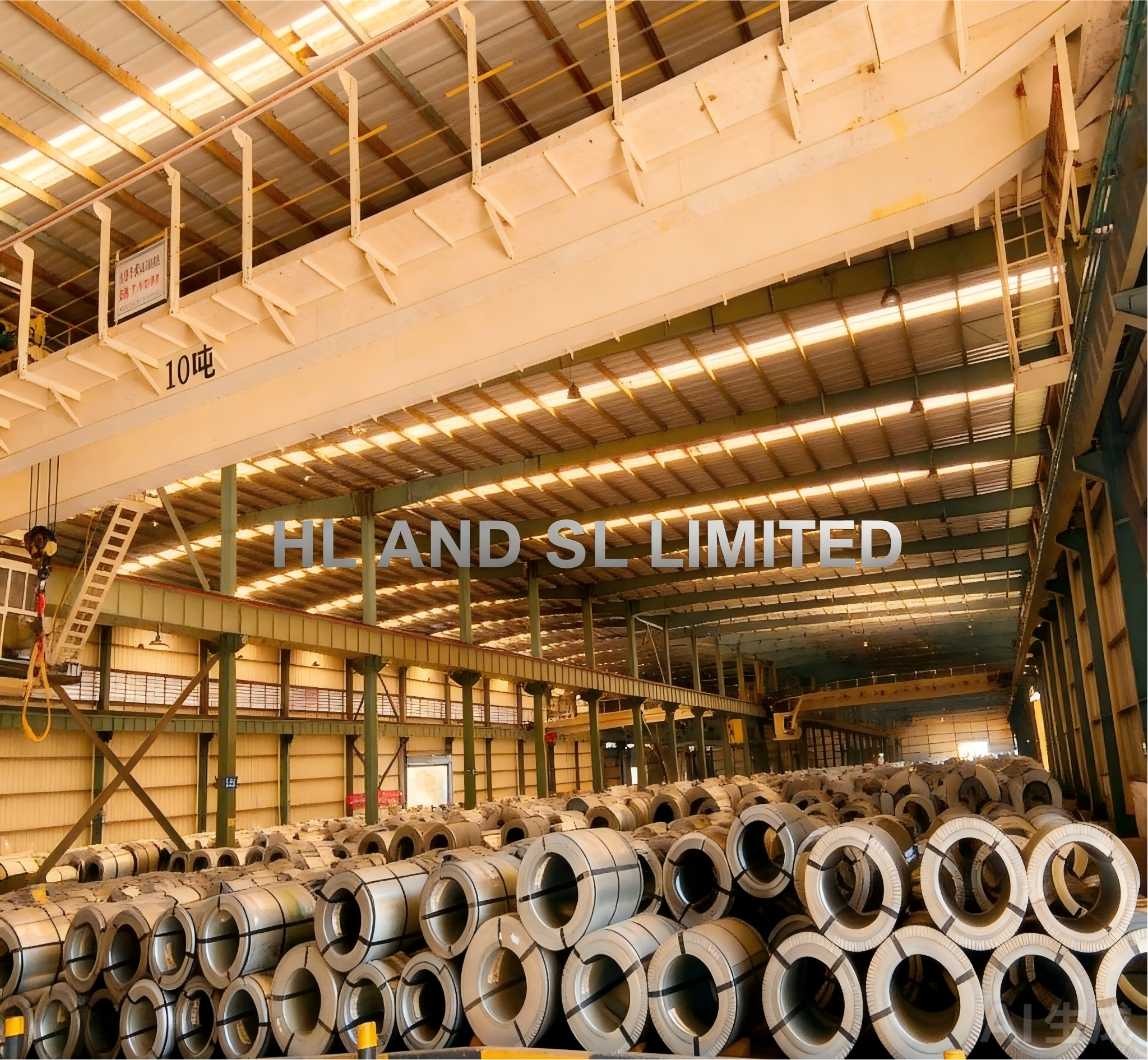
Hi-B grain-oriented electrical steel supplied by HL AND SL LIMITED for power and distribution transformer core production.
This guide is written for transformer design engineers, procurement managers and OEM buyers who already know the transformer class they are building and now need to close the gap between 'we need Hi-B steel' and 'this is the exact grade, thickness and loss limit our core is built from.' It works from the published grade parameters of HL AND SL LIMITED, an electrical steel (silicon steel) export enterprise founded in 2012, operating a 30,000 m² processing plant with 10 R&D engineers, an annual output of 30,000 t, a monthly production capacity of 4,000 t and an 80% export ratio across markets including Mexico, Brazil, Italy, the UAE and India.
Problem Definition: One Grade Across Two Transformer Classes
The most common grade-matching error in transformer procurement is applying a single Hi-B grade across both the power and the distribution product line. The two classes are not specified against the same loss budget, and in this grade family they are not even specified against the same flux density floor.
- Power transformers and converter transformers run continuously at high load at transmission level, with service lives measured in decades. No-load loss accumulates for the whole life of the unit, so a lower iron loss ceiling has a disproportionate effect on total cost of ownership — and on temperature rise inside the core.
- Distribution transformers are deployed in far higher numbers, are far more cost-sensitive per unit, and are sized around a deliberate cost-versus-loss trade-off. A grade with a slightly higher loss ceiling and a lower flux density floor is frequently the economically correct choice.
The consequences of getting the pairing wrong are symmetrical. Over-specifying puts a lower-loss, higher-cost grade into a unit whose design does not monetise the difference. Under-specifying pushes no-load loss above the design margin, which typically shows up as core heating, higher operating temperature and, in efficiency-regulated markets, a unit that cannot be certified against its declared efficiency class.
There is a second, quieter mismatch. Engineers commonly compare grades on iron loss alone and ignore flux density. In the 0.23 mm family that omission is decisive, because one grade in the set carries a materially lower flux density floor than the other three.
Industry Background: Efficiency Pressure Is Reshaping Grain-Oriented Steel Demand
Grade matching matters more now than it did a decade ago, because both the volume and the specification pressure behind grain-oriented electrical steel have increased.
- The global electrical steel market was valued at USD 31.0 billion in 2025 and is projected to reach USD 47.0 billion by 2033, a CAGR of 5.5% for 2026–2033 (Grand View Research).
- China's electrical steel production reached 16.1 million tonnes in 2024, a 5.4% year-on-year increase (Chinese Society for Metals, via MarketReportsWorld).
- China's export volume of grain-oriented electrical steel reached 393,200 mt in H1 2025, up 16.0% year on year (SMM).
- Baosteel (China Baowu), POSCO and Nippon Steel are the top three global producers of high-grade electrical steel (MarketsandMarkets).
The practical reading of these figures is not that material is scarce. It is that grade supply is globally available and increasingly comparable, so the differentiator has shifted from availability to selection discipline: choosing the grade whose guaranteed loss ceiling and flux density floor actually match the core being built.
HL AND SL LIMITED operates in exactly that space. The company is an authorized agent of China Baowu Steel Group and also integrates export business from a number of private steel mills, which allows it to match different performance grades and price ranges — from high-grade grain-oriented Hi-B material to cost-effective non-oriented material — to specific customer requirements.
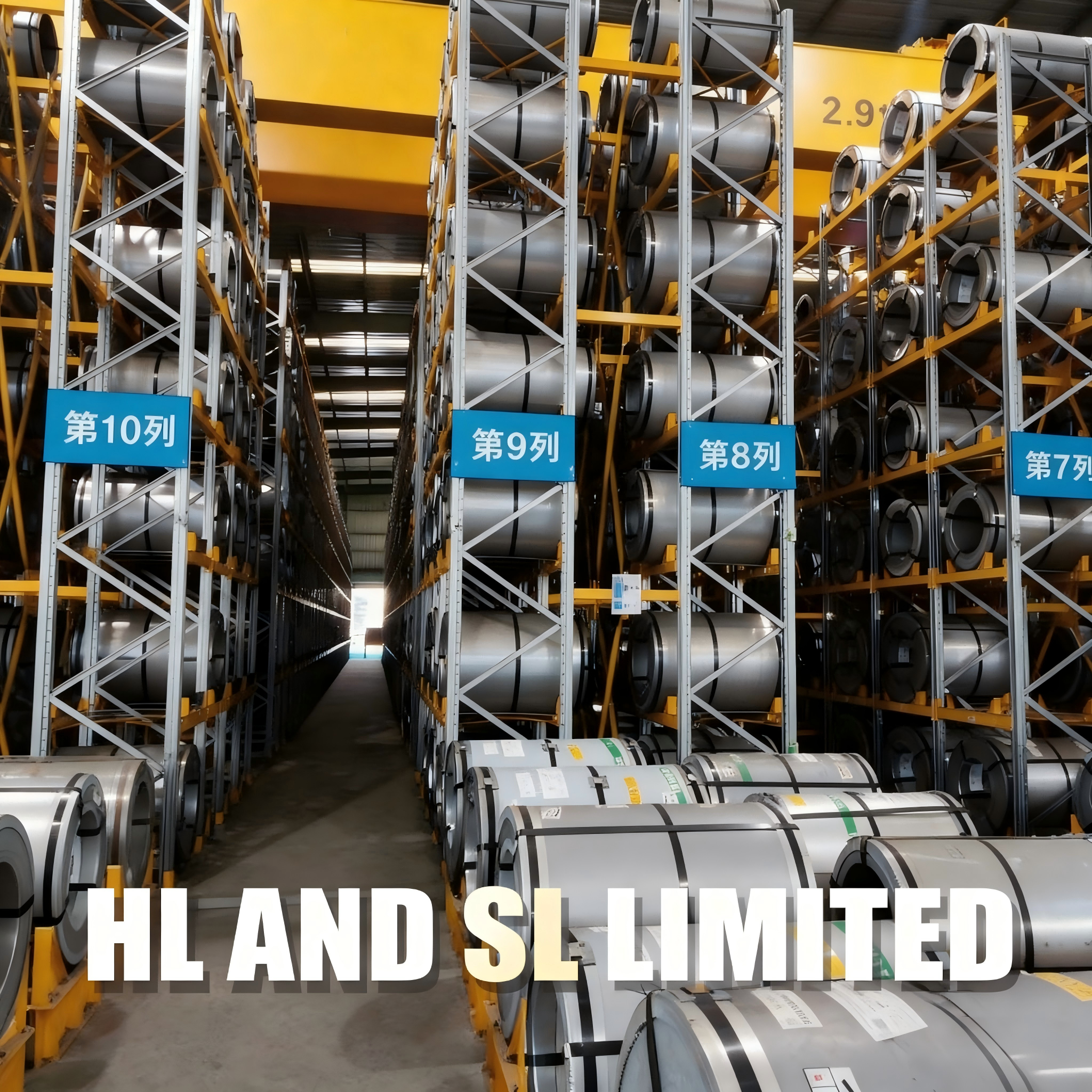
Grade matching starts with the core application, not with the material name.
Detailed Solution: Matching the 0.23 mm Hi-B Q-Series to the Core Application
All four grades discussed here are 0.23 mm high magnetic induction grain-oriented silicon steel (Hi-B). The main components are iron (Fe) and silicon (Si), with silicon content around 3.0–3.2% in the 23Q080–23Q090 group and 2.5–3.5% in 23Q095 and 23Q100, supplemented by elements such as Al and Mn, with C, S and N impurities strictly controlled in the high-permeability variants. They are not interchangeable. Each carries a different guaranteed iron loss ceiling, and one carries a different flux density floor.
23Q085 — High-Efficiency Power Transformers and HVDC Converter Transformers
23Q085 is specified at 0.23 mm thickness with iron loss P1.7/50 ≤ 0.85 W/kg and magnetic flux density B8 ≥ 1.88 T. Its stated core applications are high-voltage direct current (HVDC) converter transformers and high-efficiency power transformer cores.
The pairing logic is the loss ceiling. Converter transformers operate under harmonic-rich current and see additional loss beyond the sinusoidal reference condition behind the P1.7/50 guarantee, so the design margin built into a lower W/kg ceiling matters in service, not only on the test certificate. In a high-efficiency power transformer core, the same ceiling is what protects the declared efficiency class over the life of the unit. When the loss budget of the core is tight and the unit runs continuously, 23Q085 is the grade to anchor on.
23Q100 — Standard Distribution Transformers
23Q100 is the outlier in this group in two ways. It is specified at 0.23 mm thickness with iron loss P1.7/50 ≤ 1.00 W/kg, and its magnetic flux density is B8 ≥ 1.75 T — lower than the ≥ 1.88 T floor of 23Q085, 23Q090 and 23Q095. Its stated applications are common distribution transformers, general industrial transformers and electromagnetic equipment.
Both numbers point in the same direction. The higher loss ceiling reflects the cost-driven loss budget of a standard distribution unit. The lower flux density floor is a design constraint rather than a defect: at a given operating flux, a core built from material with a lower B8 needs a larger cross-section, which changes core weight, winding mean-turn length and the overall cost stack. That is why 23Q100 belongs in distribution and general industrial designs where the cost balance is deliberately set, and not in a power transformer core where the loss budget has already been tightened.
23Q090 vs. 23Q095 — Industrial Small-to-Medium Transformers
This is the pair that generates the most procurement questions, because the two grades share everything except one number. Both are 0.23 mm, both are high magnetic induction grain-oriented Hi-B steel, and both have a magnetic flux density of B8 ≥ 1.88 T.
The distinguishing parameter is the guaranteed iron loss ceiling: 23Q090 is ≤ 0.90 W/kg, while 23Q095 is ≤ 0.95 W/kg. In the supplied grade data, 23Q090 is listed for industrial small and medium-sized transformers and power equipment cores, while 23Q095 is listed for high-efficiency transformers, power equipment cores and motors.
A 0.05 W/kg difference in the guaranteed ceiling is small in absolute terms, but it is the number a designer works with when the core margin is already thin. The decision rule that follows from the data is:
- If the core design already sits at or near its efficiency limit and the unit runs at high duty, specify 23Q090 and treat the lower ceiling as usable design margin.
- If the unit is small, cost-sensitive, or the same material is also being used for power equipment cores and motor applications, 23Q095 covers the requirement with a defined ceiling and broader stated application coverage.
Neither choice is a compromise on flux density, because the two grades share the same B8 floor. The trade-off is entirely between the guaranteed loss ceiling and the cost of buying headroom the design may not need.
Adjacent Options: When 0.27 mm or 0.18–0.20 mm Grades Fit Better
The 0.23 mm family is not the only answer. In the supplied data, 0.27 mm grades offer a higher flux density at a comparable loss class: 27Q095 is specified at ≤ 0.95 W/kg with B8 ≥ 1.91 T, and 27Q100 at ≤ 1.00 W/kg with B8 ≥ 1.91 T. Where stacking space and core build factor dominate the design, that higher flux density floor can reduce the required core cross-section. At the other end, 18-65 and 20-65 are specified at ≤ 0.65 W/kg, and 20R070 at ≤ 0.70 W/kg with B8 ≥ 1.86 T, for ultra-high-voltage transformers and high-efficiency energy-saving cores where the loss ceiling is the binding constraint rather than the build factor.
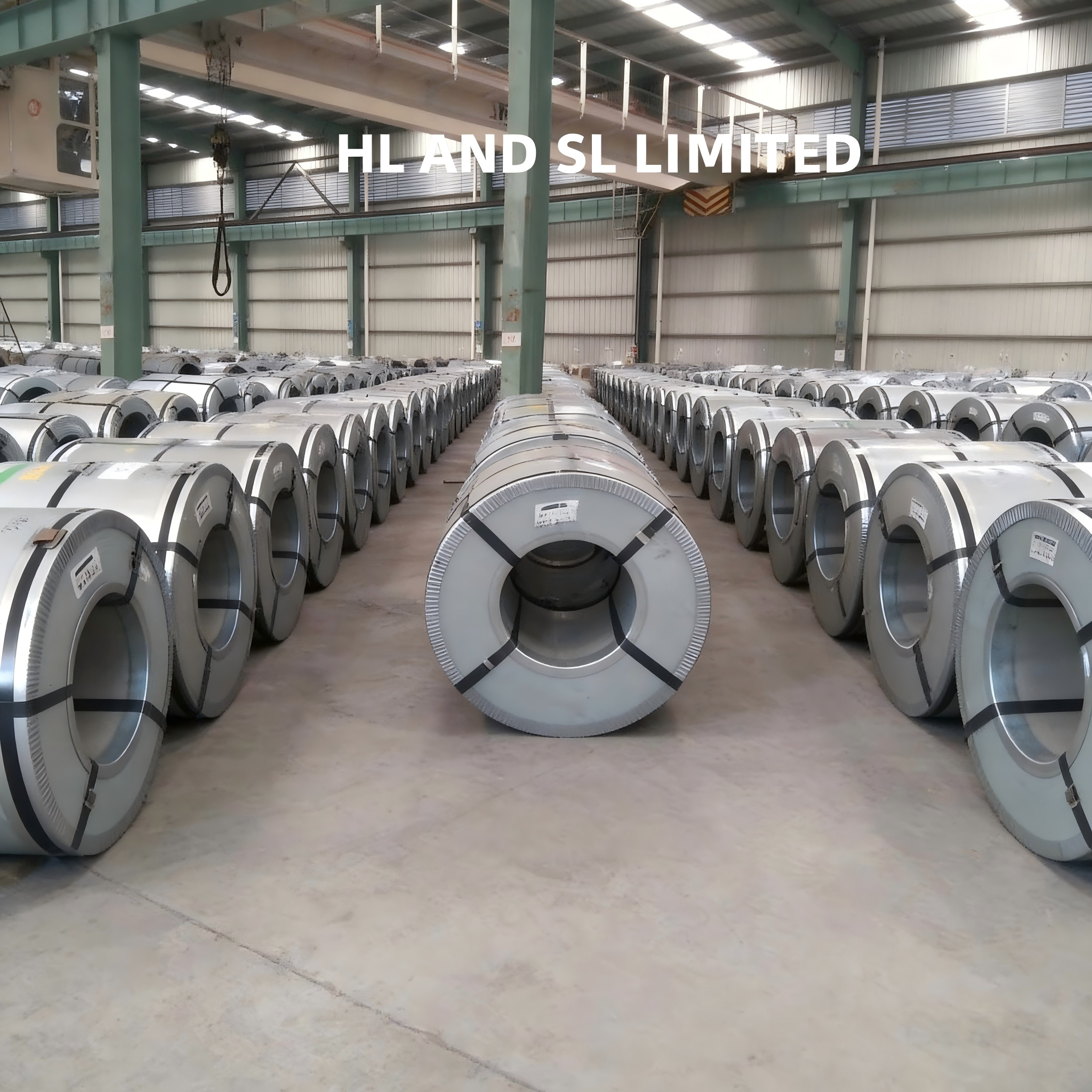
Grade matching is followed by processing specification: thickness, width, coating and cutting.
Step-by-Step Breakdown: A Seven-Step Grade Matching Workflow
- Classify the core unit. Power transformer, HVDC converter transformer, standard distribution transformer, or industrial small-to-medium transformer. The classification sets the loss budget before any grade is named.
- Convert the efficiency target into a guaranteed W/kg ceiling. Work backwards from the declared efficiency class to the no-load loss budget, then to the iron loss ceiling the grade must guarantee at P1.7/50.
- Lock the flux density requirement. Decide the minimum B8 the core cross-section can accept. This step separates 23Q100 (B8 ≥ 1.75 T) from 23Q085, 23Q090 and 23Q095 (B8 ≥ 1.88 T), and it is also what decides whether a 0.27 mm grade is worth evaluating.
- Match the grade to the application. 23Q085 for high-efficiency power and HVDC converter cores; 23Q100 for standard distribution and general industrial cores; 23Q090 or 23Q095 for industrial small-to-medium cores depending on the loss ceiling the design can absorb.
- Specify thickness, width, coating and cutting to the core line. OEM and ODM scope covers thickness from 0.18 mm to 0.35 mm, width typically 800–1250 mm with customization up to a 1250 mm ultra-wide specification, and material options spanning general oriented CGO, high magnetic flux Hi-B, laser-engraved R series and heat-resistant HS series. Coating options include organic coating with temperature resistance ≤ 180°C, inorganic coating with temperature resistance up to 800°C, and semi-organic coating. Size processing covers strip cutting, fixed-length flat cutting and longitudinal cutting, with packaging customization including standard export sea-worthy packaging and logo or graphic customization.
- Validate before mass production. Quality control runs through origin inspection at the factory as full-process random inspection or batch inspection, a material certificate or warranty certificate issued together with batch inspection reports, and third-party testing with CMA/CNAS accreditation. Purchase acceptance criteria combine pre-shipment testing and third-party testing.
- Confirm the supply parameters. Minimum order quantity is 25 t, monthly production capacity is 4,000 t, and commercial terms are EXW, FOB or CIF with 30/70 payment terms.
Steps 2 and 3 are where most mismatches are introduced. Teams that start from the grade name and work towards the design usually end up over- or under-specifying. Teams that start from the loss budget and the flux density floor usually land on the correct grade on the first pass.
Use Cases: These Pairings in Production
Power, Converter and Special Engineering Transformer Cores — Mexico
A transformer manufacturer client in Mexico has used this material for the iron cores of power transformers, converter transformers and special engineering transformers supplied worldwide. The engagement is a batch supply relationship covering the manufacture of complete power transmission and distribution transformers, with an annual business scale of approximately USD 500 million. The material has been in use for over 10 years with stable operation verified, and the project established a working model of industrial chain collaboration in which users become each other's partners rather than remaining transactional buyer and seller.
The relevance to grade matching is direct: a customer producing power, converter and special engineering transformer cores needs more than one grade on the same purchase programme. That is the practical case for a supplier that can match performance grades to individual core types instead of offering a single standard grade across a whole product range.
Power and Distribution Transformers — Brazil (WEG)
In Brazil, the largest power equipment market in Latin America, this material is used by WEG, a major electrical equipment manufacturer, for local manufacturing of power transformers and distribution transformers. The application is large-scale and has been in operation for over 10 years with stable performance, meeting local grid energy efficiency standards and the requirements of the low-carbon transformation. Localized technical services and supply chain support are provided through a representative office in Brazil.
This case is the clearest illustration of the power-versus-distribution split described above: the same buyer runs both product lines, and both product lines need an efficiency-compliant core — but not the same grade, and not necessarily the same flux density floor.
Export Footprint
Third-party shipment records show HL AND SL LIMITED exporting grain-oriented silicon steel (HS 72261101) to markets including Mexico and Sri Lanka (Export Genius). Combined with the company's stated main markets — Mexico, Brazil, Italy, the UAE and India — the grade-matching logic above is applied across multiple grid environments and efficiency regimes.
Comparison Table: Hi-B Grade Parameters and Stated Core Applications
All figures below are the published grade parameters and stated applications for the 0.23 mm Hi-B series.
| Hi-B grade | Thickness | Iron loss P1.7/50 | Flux density B8 | Stated core application |
|---|---|---|---|---|
| 23Q085 | 0.23 mm | ≤ 0.85 W/kg | ≥ 1.88 T | HVDC converter transformer; high-efficiency power transformer core |
| 23Q090 | 0.23 mm | ≤ 0.90 W/kg | ≥ 1.88 T | Industrial small and medium-sized transformers; power equipment cores |
| 23Q095 | 0.23 mm | ≤ 0.95 W/kg | ≥ 1.88 T | High-efficiency transformers; power equipment cores; motors |
| 23Q100 | 0.23 mm | ≤ 1.00 W/kg | ≥ 1.75 T | Common distribution transformers; general industrial transformers; electromagnetic equipment |
Quick Matching Framework
| Core application | Grade indicated by the parameter data | Parameter that decides the pairing |
|---|---|---|
| High-efficiency power transformer core | 23Q085 | Iron loss ceiling ≤ 0.85 W/kg |
| HVDC converter transformer core | 23Q085 | Iron loss ceiling under harmonic-rich duty |
| Industrial small-to-medium transformer core | 23Q090 (tight margin) or 23Q095 (cost-driven) | Guaranteed iron loss ceiling ≤ 0.90 W/kg vs ≤ 0.95 W/kg |
| Standard distribution transformer core | 23Q100 | Loss ceiling ≤ 1.00 W/kg with B8 ≥ 1.75 T |
Read together, the two tables show that the 0.23 mm Hi-B series is a graded set of loss ceilings rather than a single material with variations. The flux density floor of ≥ 1.88 T is shared by three of the four grades and drops only on 23Q100 — which is precisely why 23Q100 belongs in the distribution and general industrial segment and not in power or converter cores.
Frequently Asked Questions
What inspection and documentation accompanies Hi-B steel for transformer cores?
Three layers of documentation apply. First, origin inspection is performed at the factory as full-process random inspection or batch inspection. Second, each shipment is accompanied by a material certificate or warranty certificate together with batch inspection reports. Third, third-party testing is available with CMA/CNAS accreditation. The acceptance criteria used in the purchase terms combine pre-shipment testing and third-party testing, so a buyer can verify the delivered batch against the grade's guaranteed iron loss ceiling and flux density floor before the material enters core production.
Can Hi-B grades be customized in thickness, width and coating for a specific core design?
Yes. OEM and ODM services cover thickness from 0.18 mm to 0.35 mm and width typically from 800 mm to 1250 mm, including customization to a 1250 mm ultra-wide specification. Material options include general oriented CGO, high magnetic flux Hi-B, laser-engraved R series and heat-resistant HS series. Coating options include organic coating with temperature resistance ≤ 180°C, inorganic coating with temperature resistance up to 800°C, and semi-organic coating. Size processing covers strip cutting, fixed-length flat cutting and longitudinal cutting, and packaging can be customized with standard export sea-worthy packaging, logos and graphics.
What are the commercial terms for ordering Hi-B electrical steel?
Minimum order quantity is 25 t, with a monthly production capacity of 4,000 t. Delivery terms are EXW, FOB or CIF, and payment terms are 30/70. Because grade, thickness, coating type and processing scope all vary with the core design, commercial terms are confirmed per order against the specific grade combination — for example 23Q085 for a power or converter core programme versus 23Q100 for a standard distribution transformer programme.
How can a buyer validate a grade before committing to a full batch?
Validation follows the same order as the matching workflow: confirm the core's loss budget and flux density requirement, check the candidate grade's guaranteed ceiling against that budget, then verify through pre-shipment testing and third-party CMA/CNAS testing, using the batch inspection reports that travel with the goods. For buyers weighing 23Q090 against 23Q095, the practical next step is to request a quotation and the batch inspection documentation for both grades, so the 0.05 W/kg difference in the guaranteed ceiling can be checked against the actual design margin rather than assumed. Requests can be sent to sales-01@hlslind.com or by WhatsApp on +86 134-6700-2282.
What lead times apply to Hi-B steel orders?
Typical production lead time for regular orders is 15–20 days. For urgent orders and stock orders, shipment can be made within 3–7 days. Bulk export orders take 30–45 days for arrival at port, and after deposit of a letter of credit the working window is 7–30 working days.
Conclusion: Match the Loss Ceiling, Then Confirm the Flux Density Floor
Power transformers and distribution transformers are specified against different loss budgets, and the 0.23 mm Hi-B series is built to express that difference. 23Q085 (≤ 0.85 W/kg, B8 ≥ 1.88 T) is the grade for high-efficiency power transformer cores and HVDC converter transformer cores. 23Q100 (≤ 1.00 W/kg, B8 ≥ 1.75 T) is the grade for standard distribution transformers, general industrial transformers and electromagnetic equipment. Between them, 23Q090 (≤ 0.90 W/kg) and 23Q095 (≤ 0.95 W/kg) split the industrial small-to-medium segment on a single decision parameter: how much guaranteed loss headroom the design can justify paying for, given that both share the same B8 ≥ 1.88 T floor.
The workflow that produces the right answer every time is to classify the core, convert the efficiency target into a guaranteed W/kg ceiling, lock the flux density floor, and only then name a grade. Documentation and third-party testing, thickness and width customization, and lead time are then confirmed against that choice — with 25 t as the minimum order quantity, 4,000 t of monthly capacity, and 15–20 day regular lead times behind it.
HL AND SL LIMITED is an electrical steel (silicon steel) export enterprise founded in 2012, operating a 30,000 m² processing facility with 10 R&D engineers and 80% export ratio across markets including Mexico, Brazil, Italy, the UAE and India. Website: www.hlslind.com.
Check the Grade Against Your Core Design
HL AND SL LIMITED supplies grain-oriented Hi-B electrical steel with OEM and ODM processing for power, converter, distribution and industrial transformer cores. Send your core class, loss budget and flux density requirement and request a quotation, batch inspection documents or the full product brochure.
Email: sales-01@hlslind.com | Tel / WhatsApp: +86 134-6700-2282 | Website: www.hlslind.com
Download the brochure: HL AND SL LIMITED Electrical Steel Product Brochure (PDF)
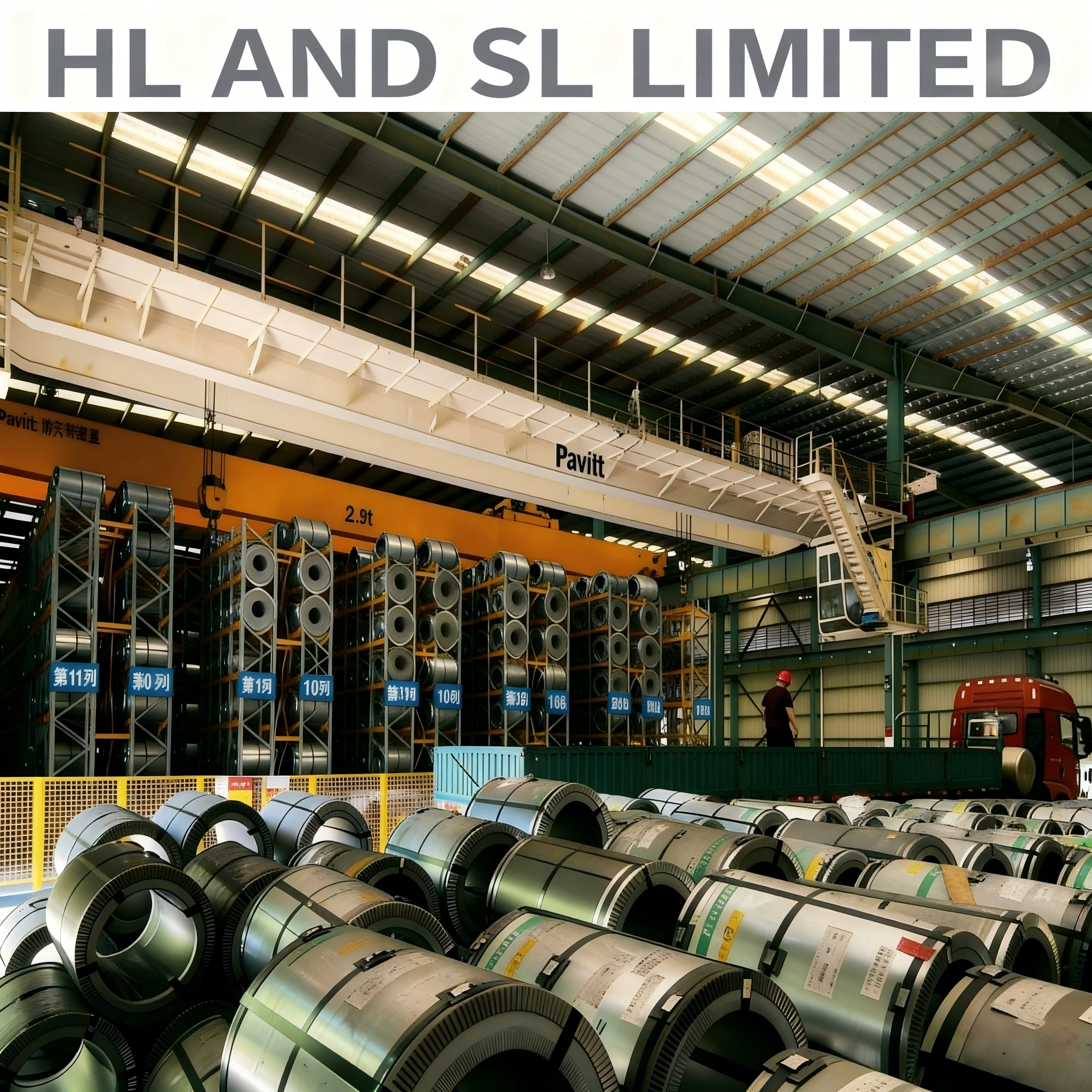
Have Questions or Need More Details?
Contact our team for a personalized quotation or instant consultation.
Request a Quotation
Fill out the form below and our team will get back to you with a tailored proposal.
WhatsApp Direct Chat
Prefer to chat in real-time? Message us on WhatsApp for instant assistance & quick answers.
- Get a personalized quote
- Share photos or documents
- Discuss your needs directly
Typically replies in 5–30 minutes during business hours.