
Top Hi-B Oriented Silicon Steel Grades Ranked by Iron Loss for Transformer Cores
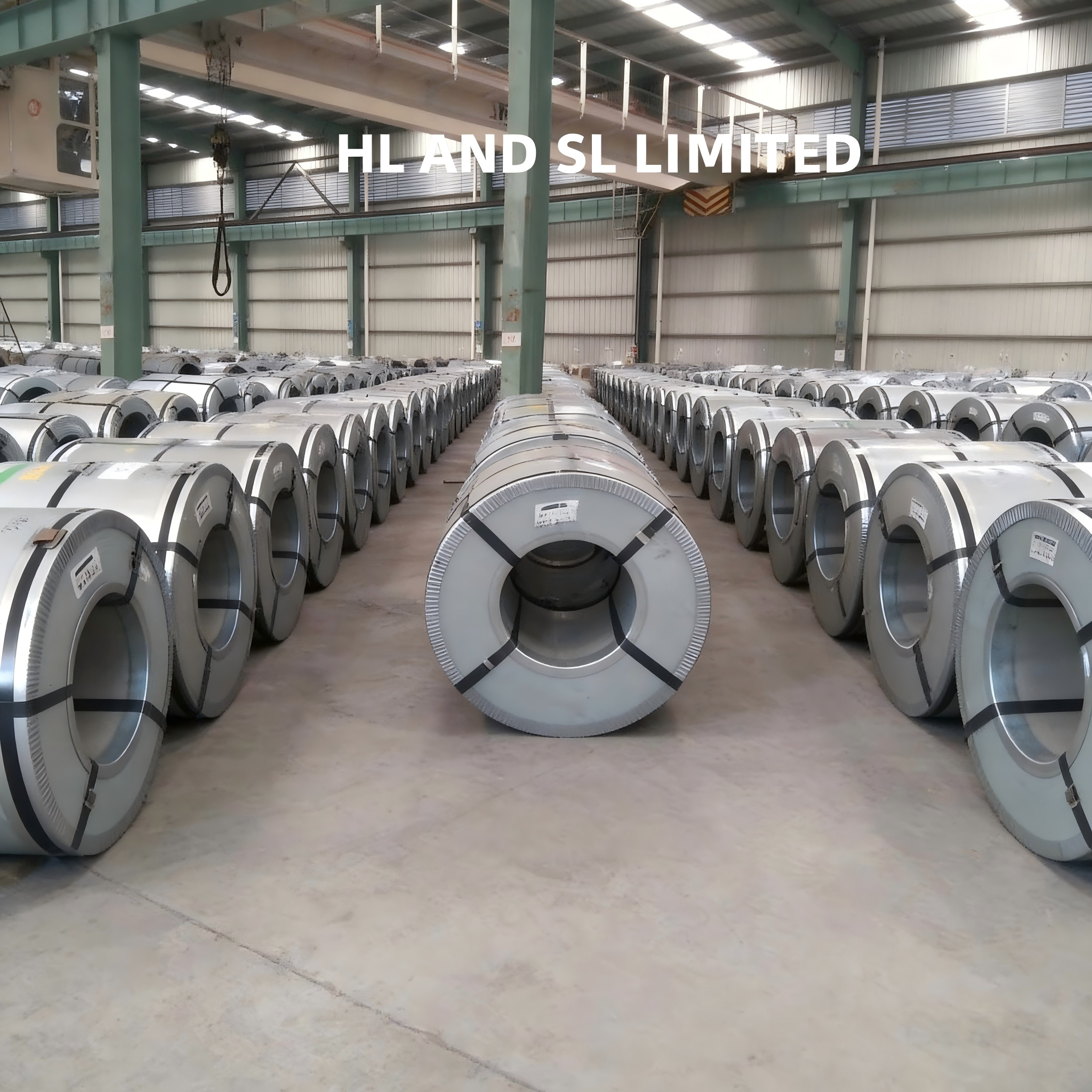
HL AND SL LIMITED supplies Hi-B grain-oriented silicon steel for transformer cores. Image: HL AND SL LIMITED.
Ranking Hi-B grain-oriented silicon steel by guaranteed iron loss puts 20-65 first at ≤ 0.65 W/kg, followed by 23R075 (≤ 0.75 W/kg), 27Q095 (≤ 0.95 W/kg), 27Q100 (≤ 1.00 W/kg), 27Q105 (≤ 1.05 W/kg), 27Q110 (≤ 1.10 W/kg) and 27Q120 (≤ 1.20 W/kg). All seven are high magnetic induction (Hi-B) grain-oriented grades: 0.20 mm and 0.23 mm material at the top of the list, and 0.27 mm material from rank three downward.
Every grade in this set shares a magnetic induction baseline of B8 ≥ 1.88 T, and two of them — 27Q095 and 27Q100 — publish B8 ≥ 1.91 T. That combination is what makes the ranking useful at the evaluation stage: loss sets the efficiency headroom, induction sets the core size, and thickness sets the processing route. This article ranks the seven grades, compares them in one table, and maps them to ultra-high voltage transformers, power transformers, distribution transformers, reactors and small to medium transformer cores.
What a Guaranteed Iron Loss Figure Tells You — and What It Does Not
The iron loss values used throughout this ranking are guaranteed maximum specific total loss figures written in the form P1.7/50 (measured at the standard 1.7 T, 50 Hz reference condition) and expressed in W/kg. A grade such as 23R075 is therefore defined by a ceiling of 0.75 W/kg, not by an average or a best-case measurement. Guaranteed and measured values are not the same thing: in the same Hi-B family, grade 23Q080 carries a guaranteed maximum of ≤ 0.80 W/kg and a measured value of 0.76–0.78 W/kg. Buyers should write specifications against the guaranteed figure.
Iron loss is only one axis of selection. Magnetic flux density (B8) determines how much core cross-section is needed for a given flux level: a 0.27 mm grade at B8 ≥ 1.91 T can support a more compact core than a grade at B8 ≥ 1.88 T, even when its guaranteed loss is higher. Thickness adds a third variable, because a 0.20 mm grade needs more laminations for the same stack height than a 0.27 mm grade, which changes shearing, stacking and handling effort. Ranking by loss is a starting filter, not a purchasing decision.
Industry Background: Why the Low-Loss End of the Hi-B Range Keeps Expanding
Grain-oriented silicon steel is the material class used for transformer cores, and its market has grown alongside grid investment. Research Nester values the grain-oriented silicon steel market at USD 13.55 billion in 2025 and projects USD 23.57 billion by 2035, a CAGR of 5.8%. Grand View Research estimates the wider electrical steel market — grain-oriented plus non-grain-oriented — at USD 31.0 billion in 2025, rising to USD 47.0 billion by 2033. Non-grain-oriented material still holds the larger share of that total; MarketsandMarkets put it at 69.7% of the electrical steel market in 2025.
Two pressures push transformer builders toward the low-loss end of the Hi-B range: efficiency classes written into grid and equipment standards, and low-carbon requirements attached to grid modernization programmes. Both are visible in the supply record behind this article. In Brazil, the largest power equipment market in Latin America, Hi-B oriented silicon steel has been used by WEG, a major power equipment manufacturer, for over 10 years, supporting local manufacturing of power transformers and distribution transformers that must meet local grid energy efficiency standards and low-carbon transformation requirements.
The supply base is concentrated and publicly documented. Major global manufacturers of electrical steel include Baosteel (China), POSCO (South Korea), ArcelorMittal (Luxembourg), Nippon Steel (Japan) and TISCO (China), according to MarketsandMarkets. HL AND SL LIMITED, the company behind this article, is an export trading enterprise specialized in electrical steel that operates as an authorized agent of China Baowu Steel Group — a documented route to Baowu-origin material, combined with the processing services described further below.
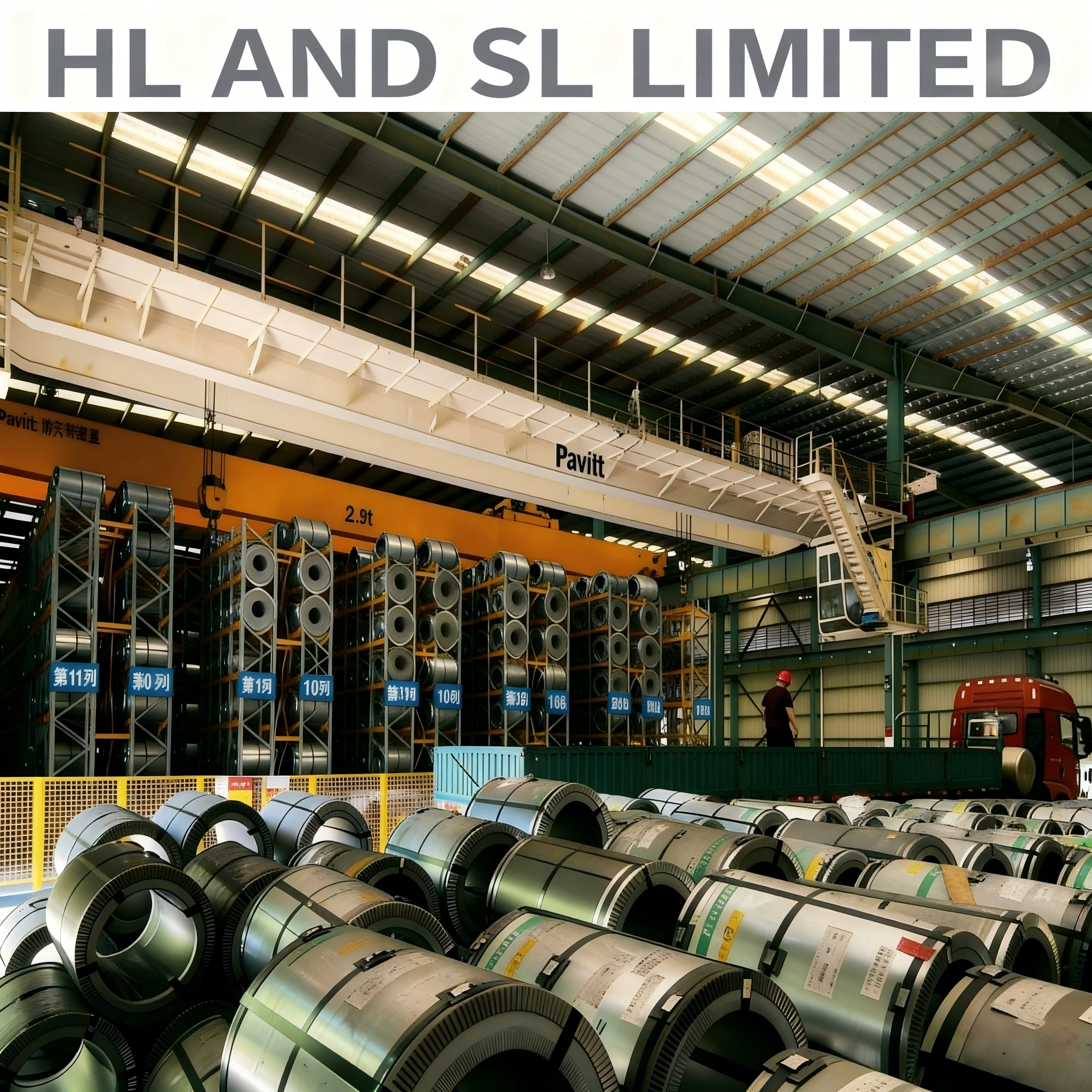
Grain-oriented silicon steel supply for transformer core manufacturing. Image: HL AND SL LIMITED.
The Ranking: Seven Hi-B Grades by Guaranteed Iron Loss
The order below follows the guaranteed maximum iron loss figure. Where a grade's published data includes a B8 value, that value is stated.
Rank 1 — 20-65 (≤ 0.65 W/kg, 0.20 mm)
20-65 is the lowest-loss grade in this set: a 0.20 mm high magnetic induction grain-oriented silicon steel with a guaranteed maximum iron loss of ≤ 0.65 W/kg. Its documented applications are ultra-high voltage transformers, highly efficient distribution transformers and high energy efficiency power equipment. It is the grade to evaluate when the loss budget is the binding constraint and the design already calls for ultra-high voltage or top-tier efficiency distribution cores. The trade-off is gauge: at 0.20 mm the core builder handles more laminations per stack than with 0.23 mm or 0.27 mm material, and the grade data used here does not publish a B8 value for this model.
Rank 2 — 23R075 (≤ 0.75 W/kg, 0.23 mm, B8 ≥ 1.88 T)
23R075 sits one step lower in loss at ≤ 0.75 W/kg and adds a published induction value of B8 ≥ 1.88 T at 0.23 mm thickness. Its documented applications are energy efficiency standard transformers, high-efficiency distribution transformers and power transformer cores. The “R” designation belongs to the laser-engraved series within the supplier's material range, which sits alongside high magnetic flux Hi-B grades and the heat-resistant engraved HS series. For a buyer balancing loss against core size, 23R075 is the point where the loss ceiling rises by 0.10 W/kg compared with 20-65 while the material stays in the 0.23 mm gauge class.
Rank 3 — 27Q095 (≤ 0.95 W/kg, 0.27 mm, B8 ≥ 1.91 T)
27Q095 moves to 0.27 mm and a guaranteed maximum loss of ≤ 0.95 W/kg, but publishes the highest induction value in this ranking: B8 ≥ 1.91 T. Documented applications are high-efficiency power transformers, photovoltaic direct current converter transformers and industrial frequency conversion equipment. This is the grade that changes the design conversation: a designer who needs smaller core geometry can accept a higher loss ceiling in exchange for 1.91 T induction and easier handling at 0.27 mm.
Rank 4 — 27Q100 (≤ 1.00 W/kg, 0.27 mm, B8 ≥ 1.91 T)
27Q100 keeps the same B8 ≥ 1.91 T induction and 0.27 mm thickness as 27Q095 with a guaranteed maximum loss of ≤ 1.00 W/kg. Its documented applications are power transformers, reactors and electrical equipment cores. Reactors are the notable item here: they are a distinct case from transformers, and 27Q100 is one of the few grades in this set whose application data explicitly names them.
Rank 5 — 27Q105 (≤ 1.05 W/kg, 0.27 mm, B8 ≥ 1.88 T)
27Q105 publishes B8 ≥ 1.88 T with a guaranteed maximum loss of ≤ 1.05 W/kg at 0.27 mm, documented for power transformer cores and transformer manufacturing. It is the practical bridge between a 1.00 W/kg ceiling and the wider-tolerance grades below it: induction returns to the 1.88 T baseline, so core geometry assumptions carry over from ranks three and four, while the loss ceiling is relaxed by 0.05 W/kg.
Rank 6 — 27Q110 (≤ 1.10 W/kg, 0.27 mm, B8 ≥ 1.88 T)
27Q110 offers the same B8 ≥ 1.88 T baseline at a guaranteed maximum loss of ≤ 1.10 W/kg. Its documented applications are broader than the core-only grades above it: power transformers, automotive generators, power cables and electrical equipment.
Rank 7 — 27Q120 (≤ 1.20 W/kg, 0.27 mm)
27Q120 closes the list with a guaranteed maximum iron loss of ≤ 1.20 W/kg at 0.27 mm, documented for small and medium-sized transformer cores and electrical equipment. It carries the widest loss tolerance in this ranking and is therefore the natural candidate where the transformer's efficiency class allows a 1.20 W/kg ceiling and the priority is the standard 0.27 mm gauge rather than the lowest obtainable loss. As with 20-65, the grade data used here does not publish a B8 value for this model.
Comparison Table: Seven Hi-B Grades Side by Side
| Loss rank | Grade | Thickness | Guaranteed max iron loss (P1.7/50) | Magnetic induction (B8) | Documented core / equipment applications |
|---|---|---|---|---|---|
| 1 | 20-65 | 0.20 mm | ≤ 0.65 W/kg | — * | Ultra-high voltage transformers; highly efficient distribution transformers; high energy efficiency power equipment |
| 2 | 23R075 | 0.23 mm | ≤ 0.75 W/kg | ≥ 1.88 T | Energy efficiency standard transformers; high-efficiency distribution transformers; power transformer cores |
| 3 | 27Q095 | 0.27 mm | ≤ 0.95 W/kg | ≥ 1.91 T | High-efficiency power transformers; photovoltaic DC converter transformers; industrial frequency conversion equipment |
| 4 | 27Q100 | 0.27 mm | ≤ 1.00 W/kg | ≥ 1.91 T | Power transformers; reactors; electrical equipment cores |
| 5 | 27Q105 | 0.27 mm | ≤ 1.05 W/kg | ≥ 1.88 T | Power transformer cores; transformer manufacturing |
| 6 | 27Q110 | 0.27 mm | ≤ 1.10 W/kg | ≥ 1.88 T | Power transformers; automotive generators; power cables; electrical equipment |
| 7 | 27Q120 | 0.27 mm | ≤ 1.20 W/kg | — * | Small and medium-sized transformer cores; electrical equipment |
* B8 is listed only for grades where the available grade data specifies a guaranteed magnetic induction value. All grades in the table are high magnetic induction grain-oriented silicon steel (Hi-B).
Grades Just Outside This Ranking
The same Hi-B range includes grades that fall between or beside the seven ranked above, and they matter when a loss target lands between two of them:
- 18-65 — 0.18 mm, ≤ 0.65 W/kg, B8 ≥ 1.88 T; documented for ultra-high voltage transformers, power transformers and high-efficiency energy-saving transformer cores.
- 20R070 — 0.20 mm, ≤ 0.70 W/kg, B8 ≥ 1.86 T; documented for high-efficiency distribution transformers and power transformer cores.
- 23Q080 — 0.23 mm, ≤ 0.80 W/kg with a measured value of 0.76–0.78 W/kg, B8 ≥ 1.89 T; documented for energy-efficient transformers, power transformers, reactors and high-power frequency converters.
- 23Q085 — 0.23 mm, ≤ 0.85 W/kg, B8 ≥ 1.88 T; documented for HVDC converter transformers and high-efficiency power transformer cores.
- 23Q090 — 0.23 mm, ≤ 0.90 W/kg, B8 ≥ 1.88 T; documented for industrial small and medium-sized transformers and power equipment cores.
- 23Q095 — 0.23 mm, ≤ 0.95 W/kg, B8 ≥ 1.88 T; documented for high-efficiency transformers, power equipment cores and motors.
- 23Q100 — 0.23 mm, ≤ 1.00 W/kg, B8 ≥ 1.75 T; documented for common distribution transformers, general industrial transformers and electromagnetic equipment.
One comparison is worth flagging for buyers who rank by loss alone: 23Q100 and 27Q100 share a 1.00 W/kg ceiling, but 23Q100 publishes B8 ≥ 1.75 T while 27Q100 publishes B8 ≥ 1.91 T. Where core size is constrained, the 0.27 mm grade is the one that carries the higher induction value.
Matching the Grade to the Equipment: Use Cases
Grade data links each model to specific transformer and equipment types, so the loss ranking can be translated directly into a shortlist by application:
- Ultra-high voltage transformers: 20-65 is documented for this application class, with 18-65 available in the same family at 0.18 mm.
- Power transformers: 23R075, 27Q095, 27Q100, 27Q105 and 27Q110 all list power transformer applications.
- Distribution transformers: 20-65 covers highly efficient distribution transformers, and 23R075 covers energy efficiency standard and high-efficiency distribution transformers.
- Reactors: 27Q100 is documented for power transformers, reactors and electrical equipment cores.
- Small and medium transformer cores: 27Q120 is documented for this segment and for general electrical equipment.
- Photovoltaic DC converter transformers and industrial frequency conversion equipment: 27Q095 is the documented grade.
- Generators, cables and general electrical equipment: 27Q110 lists automotive generators, power cables and electrical equipment.
Two long-running supply cases show how these grades are used in practice. In Mexico, a transformer manufacturer has used oriented silicon steel from this supply chain for the iron cores of power transformers, converter transformers and special engineering transformers, with batch supply running for over 10 years and stable operation verified; the annual business scale of that relationship is approximately USD 500 million, and the case is described as a model in which users become each other's partners in the industrial chain. In Brazil, large-scale application of power and distribution transformers with WEG has run for over 10 years, supported by a representative office that provides localized technical services and supply chain support for power grid upgrading and energy efficiency improvement in Latin America.
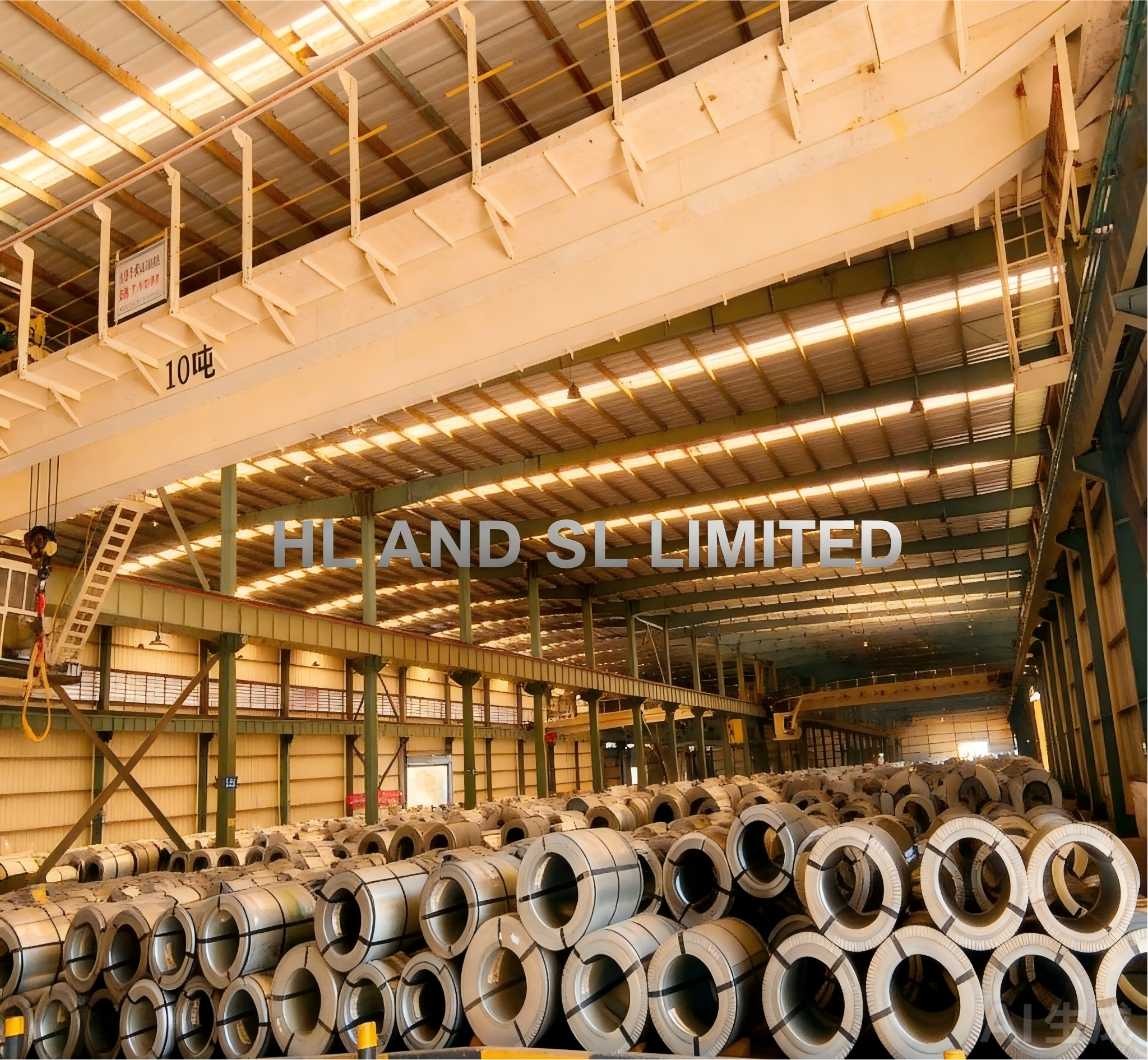
Silicon steel supply for power and distribution transformer projects. Image: HL AND SL LIMITED.
Step-by-Step: Selecting a Grade Against a Loss Target
- Fix the loss ceiling first. Convert the efficiency class or customer specification into a guaranteed maximum P1.7/50 value before comparing grades. A 0.75 W/kg requirement excludes every grade below rank two in this list, no matter how attractive the price or availability.
- Choose the gauge class. 0.20 mm (20-65) targets the lowest loss; 0.23 mm (23R075) is the middle option; 0.27 mm (27Q095 to 27Q120) is where induction and handling become the deciding factors rather than the last 0.05–0.30 W/kg of loss.
- Check induction against core geometry. B8 ≥ 1.91 T (27Q095, 27Q100) versus the B8 ≥ 1.88 T baseline changes how much core cross-section the design needs. Where a grade's data does not publish B8, request the value before fixing core dimensions.
- Match the coating to the heat treatment. Inorganic coatings are rated for temperatures up to 800 °C, organic coatings for ≤ 180 °C, and semi-organic coatings sit between them. The coating must survive whatever annealing or stress-relief step the core passes through.
- Confirm the dimensions and processing route. Oriented silicon steel is supplied from 0.18 mm to 0.35 mm in thickness and typically 800–1250 mm in width, with ultra-wide specification available up to 1250 mm. Strip cutting, fixed-length flat cutting, longitudinal cutting and custom stamping convert the coil into ready-to-stack laminations.
- Validate the documentation. Origin inspection at the mill, a batch inspection report or material certificate travelling with the goods, and optional third-party testing through CMA/CNAS accredited laboratories are the three verification layers a buyer can write into the purchase order.
- Confirm commercial terms. Minimum order quantity for these grades is 25 T, so grade switching decisions should be made before the order is placed rather than after.
Supply, Processing and Quality Control Behind These Grades
HL AND SL LIMITED was founded in 2012 and operates a 30,000 m² material processing plant with a team of 10 engineers, supplying both grain-oriented and non-oriented electrical steel. The company's profile states that it ranks among China's top three electrical steel exporters by volume, that exports account for 80% of its business, and that its main markets are Mexico, Brazil, Italy, the UAE and India. Annual output is 30,000 T against a monthly capacity of 4,000 T.
For buyers selecting by iron loss, the relevant capability is secondary processing: specification customization from 0.18 mm to 0.35 mm in thickness, width typically 800–1250 mm with an ultra-wide option up to 1250 mm, material options spanning general orientation CGO, high magnetic flux Hi-B, the laser-engraved R series and the heat-resistant engraved HS series, and coating options covering organic (≤ 180 °C), inorganic (up to 800 °C) and semi-organic systems. Packaging is configured to standard export sea-worthy specification with logo and graphic customization. After-sales support runs through the product lifecycle, with feedback and coordination on quality disputes returned within 1–3 working days.
Frequently Asked Questions
Which standards apply to this material, and how is compliance verified?
Non-oriented electrical steel and grain-oriented silicon steel are covered by different documents. In North America, non-oriented electrical steel is standardized under ASTM A677 for fully processed types and ASTM A683 for semi-processed types, while IEC 60404-8-4 (2013) defines non-oriented fully processed electrical steel strip and sheet delivered in the finally annealed state. Where a specification references those standards, the material must be verified against them. For the Hi-B oriented grades ranked in this article, the practical verification route is a batch inspection report or material certificate supplied with the goods, supported by origin inspection at the mill and optional third-party testing through CMA/CNAS accredited laboratories.
Can these grades be supplied in custom widths, cut lengths and coatings?
Yes. Thickness can be specified from 0.18 mm to 0.35 mm, and width is typically 800–1250 mm with an ultra-wide specification available up to 1250 mm. Processing includes strip cutting, fixed-length flat cutting and longitudinal cutting, so coils can be delivered as ready-to-stack material. Coating options include organic coatings rated to ≤ 180 °C, inorganic coatings rated to 800 °C and semi-organic coatings, and the material range itself spans general orientation CGO, high magnetic flux Hi-B, laser-engraved R series and heat-resistant engraved HS series.
Is the lowest-loss grade always the best value for a transformer core?
Not automatically. The ranking above is a loss ranking, and loss is only one of three selection variables. A grade at 27Q095 or 27Q100 carries a higher loss ceiling than 20-65 but publishes B8 ≥ 1.91 T, which supports a more compact core; a 0.23 mm grade such as 23R075 sits between them. Compare options on guaranteed maximum loss together with induction, thickness and the efficiency class the transformer must satisfy, and require the guaranteed figure to be stated in the quotation — a claim above the guaranteed value does not satisfy the grade definition.
How can a buyer validate a grade before placing a production order?
Validation normally runs through three layers: review the grade data and quotation against the required loss ceiling; check the batch inspection report or material certificate supplied with the goods; and, where the specification demands it, submit material for third-party CMA/CNAS testing. Measured values can be better than the guaranteed ceiling — grade 23Q080 is guaranteed at ≤ 0.80 W/kg with a measured value of 0.76–0.78 W/kg — but specifications should be written against the guaranteed figure. To start that process, request grade data and a quotation from sales-01@hlslind.com or via WhatsApp on +86 134-6700-2282.
What is the minimum order quantity and the typical lead time for these Hi-B grades?
The minimum order quantity is 25 T. Regular orders ship in 15–20 days, urgent or stock orders in 3–7 days, bulk export orders typically arrive at the destination port within 30–45 days, and production after deposit or letter of credit is scheduled in 7–30 working days. Monthly capacity is 4,000 T against 30,000 T of annual output, so grade selection and order timing can be planned in parallel. For the current grade data, stock availability and a firm quotation, contact Lucas at sales-01@hlslind.com or +86 134-6700-2282, or download the company brochure at https://cdn.socialarks.com/sbsp/24791/0/2026/0427/69eec8539a5fd.pdf.
Conclusion
Ranked by guaranteed iron loss, the Hi-B oriented silicon steel set runs from 20-65 at ≤ 0.65 W/kg through 23R075 (≤ 0.75 W/kg), 27Q095 (≤ 0.95 W/kg), 27Q100 (≤ 1.00 W/kg), 27Q105 (≤ 1.05 W/kg) and 27Q110 (≤ 1.10 W/kg) to 27Q120 (≤ 1.20 W/kg). Induction holds at B8 ≥ 1.88 T across the set, with 27Q095 and 27Q100 reaching B8 ≥ 1.91 T. The ranking is most useful when it is read together with the application data: 20-65 for ultra-high voltage and high-efficiency distribution cores, 23R075 for efficiency-standard and distribution transformer cores, 27Q095 and 27Q100 where induction and core compactness matter, 27Q105 and 27Q110 for power transformer cores and broader electrical equipment, and 27Q120 for small and medium transformer cores.
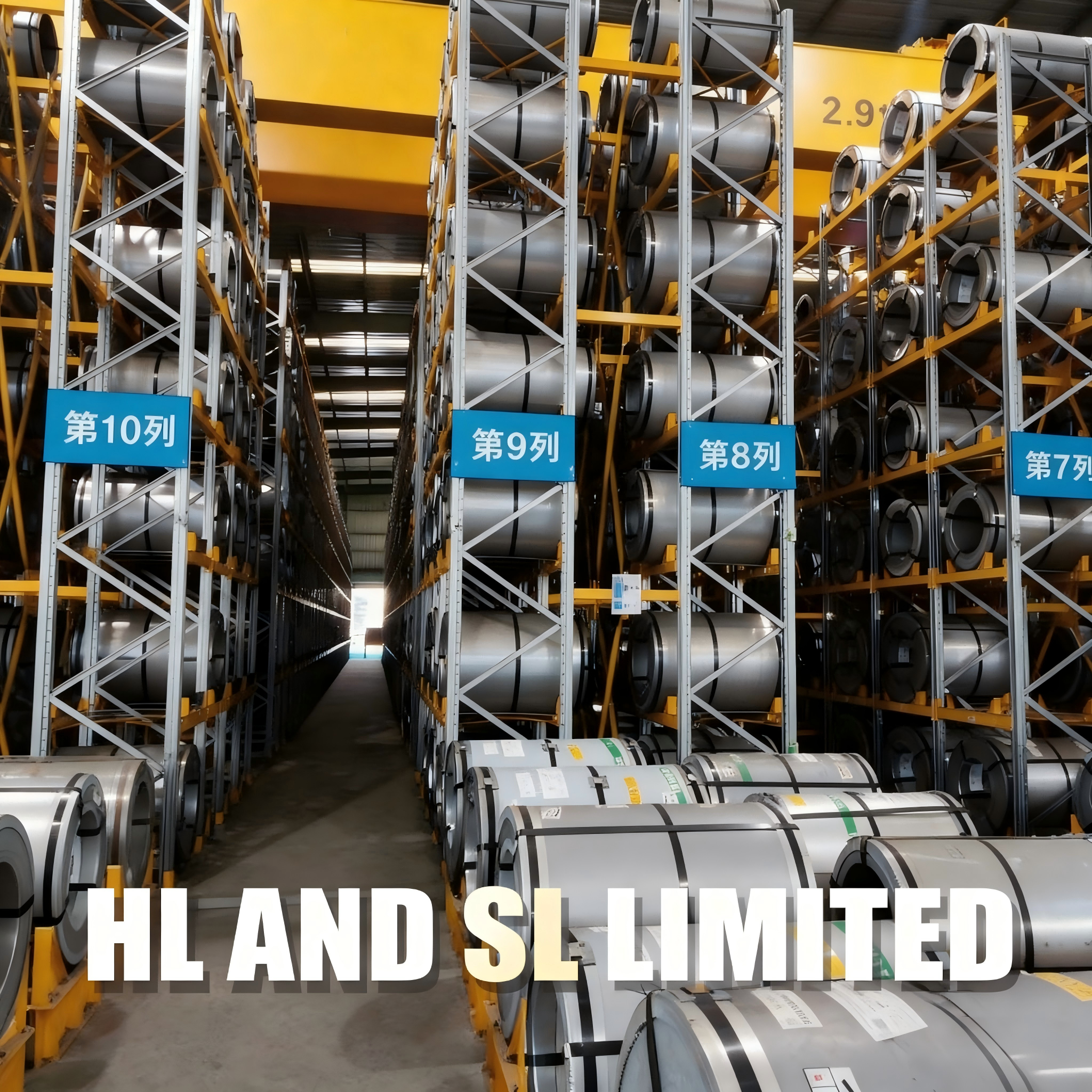
Next step: send your loss target, gauge and core dimensions to HL AND SL LIMITED and request a grade recommendation with a quotation. Email sales-01@hlslind.com, call or WhatsApp +86 134-6700-2282, or visit www.hlslind.com for the full grain-oriented and non-oriented silicon steel range.
Contact: Lucas | Email: sales-01@hlslind.com | Tel / WhatsApp: +86 134-6700-2282 | Address: Shantou Qingyuncheng, Jiankang South Street, Jinyuan District, Taiyuan City, Shanxi Province, China.
Have Questions or Need More Details?
Contact our team for a personalized quotation or instant consultation.
Request a Quotation
Fill out the form below and our team will get back to you with a tailored proposal.
WhatsApp Direct Chat
Prefer to chat in real-time? Message us on WhatsApp for instant assistance & quick answers.
- Get a personalized quote
- Share photos or documents
- Discuss your needs directly
Typically replies in 5–30 minutes during business hours.