
Thickness vs Iron Loss: Choosing Hi-B Electrical Steel Grades
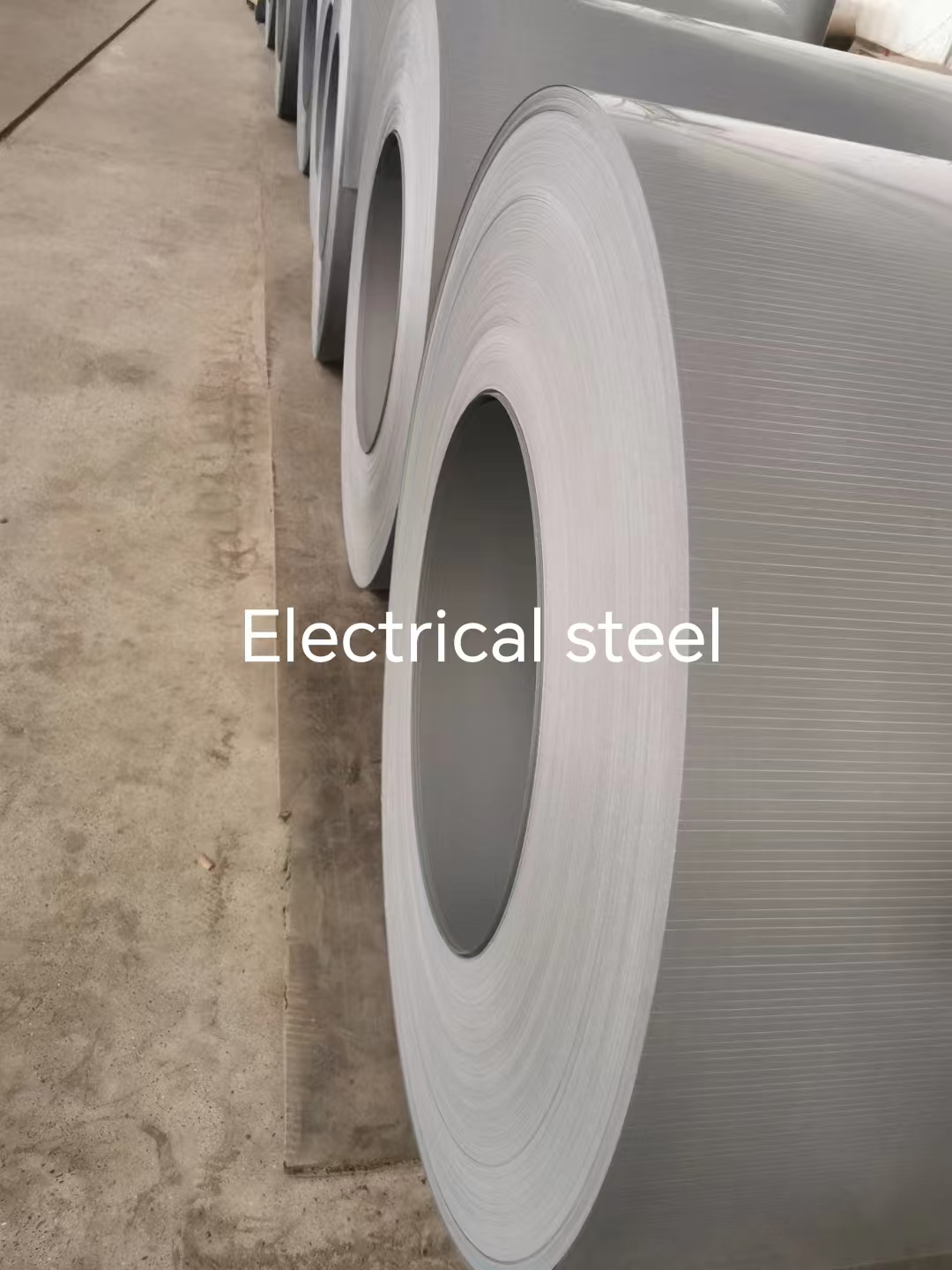
In Hi-B (high magnetic induction grain-oriented) electrical steel, iron loss falls as nominal thickness decreases: across the grade set covered here, the P1.7/50 ceiling runs from ≤ 1.00 W/kg at 0.23 mm (23Q100) down to ≤ 0.65 W/kg at 0.18 mm (18-65). The trade-off is mechanical and commercial rather than magnetic — thinner strip means more laminations per stack, tighter burr and slitting control, and a higher cost per tonne — while flux density stays inside a narrow band of B8 ≥ 1.86 T to ≥ 1.89 T for most grades in the range.
This guide is written for transformer designers, procurement engineers and importers who are at the research and evaluation stage of a core material decision. It works through a single, specific selection problem: how thickness and iron loss trade off inside the Hi-B grade range, using seven grades as the working set — 18-65, 20R070, 23Q080, 23Q085, 23Q090, 23Q095 and 23Q100.
The Selection Problem: Thickness and Iron Loss Are Not One Variable
Hi-B oriented silicon steel is a cold-rolled grain-oriented product in which magnetic permeability along the rolling direction is raised through grain orientation and inhibitor control. The grades referenced in this guide contain 3.0%–3.2% silicon, with 2.5%–3.5% specified for 23Q095 and 23Q100. Impurity elements such as carbon, sulphur and nitrogen are strictly controlled in the Hi-B grades.
Core loss in a laminated transformer core has a hysteresis component and an eddy-current component. The hysteresis part is driven mainly by the metallurgy of the steel and by impurity control, while the eddy-current part scales with sheet thickness. That is the physical reason a 0.18 mm grade can publish a lower P1.7/50 ceiling than a 0.23 mm grade built on a comparable Hi-B platform. The loss index P1.7/50 denotes specific total loss measured at 1.7 T and 50 Hz.
Two practical consequences follow from that relationship:
- Thickness is the strongest single lever on the loss figure — but it is not free. Thinner strip means more laminations for the same stack height, tighter burr and edge-quality control, and a lower stacking factor if handling is poor.
- Loss is not the only number on the datasheet. Flux density (B8) sets how much magnetic performance the core delivers for a given cross-section. In this grade set B8 ranges from ≥ 1.86 T to ≥ 1.89 T across most grades, with 23Q100 the clear exception at ≥ 1.75 T.
A frequent specification error is choosing by thickness alone. Grade 23Q080 and grade 23Q100 share the same 0.23 mm nominal thickness, yet their published loss ceilings differ by 0.20 W/kg and their flux density ceilings differ by 0.14 T. Those are design-level differences, not documentation details.
Industry Background: Why Grade-Level Selection Is Getting More Attention

Several market-level signals explain why buyers are now comparing grades in detail instead of ordering on habit:
- The global electrical steel market was valued at USD 31.0 billion in 2025 and is projected to reach USD 47.0 billion by 2033, a CAGR of 5.5% for the 2026–2033 period (Grand View Research). Estimates differ between research houses because the definition of “electrical steel” is not uniform, so this figure is best read as a direction of travel rather than a precise market total.
- China’s electrical steel production reached 16.1 million tonnes in 2024, a 5.4% year-on-year increase (Chinese Society for Metals, cited by MarketReportsWorld).
- China’s exports of grain-oriented electrical steel reached 393,200 mt in the first half of 2025, up 16.0% year on year (SMM).
- Supply of high-grade electrical steel remains concentrated. Baosteel (China Baowu), POSCO and Nippon Steel are identified as the top three global producers of high-grade electrical steel (MarketsandMarkets).
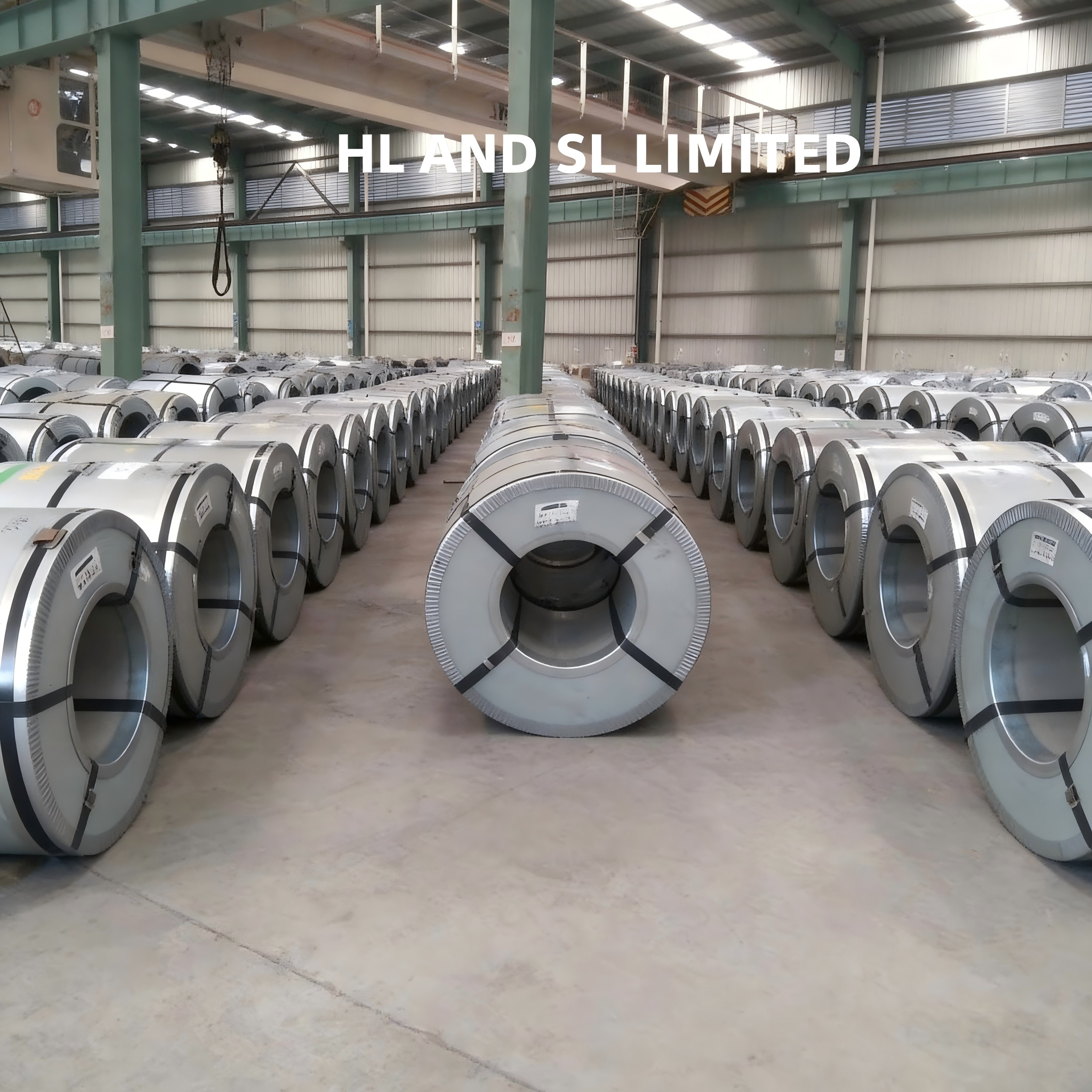
HL AND SL LIMITED is a China-based electrical steel supply and processing company, founded in 2012, operating a 30,000 m² processing facility with an annual output of 30,000 t, a 10-engineer technical team and an export share of around 80%. Its main markets include Mexico, Brazil, Italy, the UAE and India, and it is an authorised agent of China Baowu Steel Group while also integrating supply from private mills to cover both high-grade and economy tiers (www.hlslind.com). Third-party trade data lists HL AND SL LIMITED as an exporter of grain-oriented silicon steel under HS code 72261101 (Export Genius).
The Thickness–Loss Relationship Across Seven Hi-B Grades
0.18 mm: grade 18-65 is the loss floor of this set
Grade 18-65 is a 0.18 mm Hi-B product with iron loss P1.7/50 ≤ 0.65 W/kg and flux density B8 ≥ 1.88 T. It is positioned for ultra-high voltage transformers, power transformers and high-efficiency energy-saving transformer cores. Within the seven grades discussed here, it holds the lowest loss ceiling, which makes it the natural candidate when a project loss target cannot be met by any 0.20 mm or 0.23 mm option. The counterweight is process: more laminations per stack, no tolerance for burr or edge damage, and greater sensitivity to handling on the core-building line.
0.20 mm: grade 20R070 trades a little flux density for 0.10 W/kg of loss
Grade 20R070 is a 0.20 mm Hi-B product with P1.7/50 ≤ 0.70 W/kg and B8 ≥ 1.86 T, specified for high-efficiency distribution transformers and power transformer cores. Against 23Q080 it publishes 0.10 W/kg lower loss while giving up 0.03 T of flux density headroom (≥ 1.86 T versus ≥ 1.89 T). Whether that exchange is worth taking depends on which constraint binds first in the design — a loss or temperature-rise limit, or an excitation and dimension limit.
0.23 mm: one thickness, five different grades
All five remaining grades share a nominal thickness of 0.23 mm, and this is exactly where selection mistakes cluster, because thickness alone says very little about what the material will do:
- 23Q080 — P1.7/50 ≤ 0.80 W/kg, with measured values reported in the 0.76–0.78 W/kg band; B8 ≥ 1.89 T, the highest flux density ceiling in this set; 3.0%–3.2% Si; specified for energy-efficient transformers, power transformers, reactors and high-power frequency converters.
- 23Q085 — P1.7/50 ≤ 0.85 W/kg; B8 ≥ 1.88 T; 3.0%–3.2% Si; specified for HVDC converter transformers and high-efficiency power transformer cores.
- 23Q090 — P1.7/50 ≤ 0.90 W/kg; B8 ≥ 1.88 T; 3.0%–3.2% Si; specified for industrial small and medium-sized transformers and power equipment cores.
- 23Q095 — P1.7/50 ≤ 0.95 W/kg; B8 ≥ 1.88 T; 2.5%–3.5% Si; specified for high-efficiency transformers, power equipment cores and motors.
- 23Q100 — P1.7/50 ≤ 1.00 W/kg; B8 ≥ 1.75 T; 2.5%–3.5% Si; specified for common distribution transformers, general industrial transformers and electromagnetic equipment.
Two observations matter during evaluation. First, the spread between 23Q080 and 23Q100 at the same 0.23 mm thickness is 0.20 W/kg of loss ceiling and 0.14 T of flux density — wide enough to change core dimensions and loss calculations. Second, the published figure for the 0.23 mm grades is a ceiling; where measured data exists, as with 23Q080 at 0.76–0.78 W/kg against a ≤ 0.80 W/kg limit, buyers should ask for measured values whenever a design is engineered close to an efficiency or certification threshold.
Where 23Q085 fits: power transformer cores and HVDC converter transformers
Grade 23Q085 sits between 23Q080 and 23Q090 on loss (≤ 0.85 W/kg) and shares the ≥ 1.88 T flux density ceiling with 23Q090, 23Q095 and 18-65. Its stated application focus is high-voltage direct current converter transformers and high-efficiency power transformer cores — applications where loss accumulates over continuous operation and the material must perform consistently under sustained excitation. Project specifications in this category can be demanding: the ±800 kV Belém Mountain Phase II HVDC link in Brazil is documented with core requirements reaching a flux density of ≥ 1.92 T and iron loss below 0.85 W/kg. Grade selection for a converter transformer therefore has to be checked line by line against the project datasheet, because a loss advantage does not automatically come with a flux density advantage.
Comparison Table: Thickness, Iron Loss, Flux Density and Application Fit
| Grade | Nominal thickness | Iron loss P1.7/50 | Flux density B8 | Silicon content | Typical application |
|---|---|---|---|---|---|
| 18-65 | 0.18 mm | ≤ 0.65 W/kg | ≥ 1.88 T | 3.0%–3.2% | Ultra-high voltage transformers, power transformers, high-efficiency energy-saving transformer cores |
| 20R070 | 0.20 mm | ≤ 0.70 W/kg | ≥ 1.86 T | 3.0%–3.2% | High-efficiency distribution transformers, power transformer cores |
| 23Q080 | 0.23 mm | ≤ 0.80 W/kg (measured 0.76–0.78 W/kg) | ≥ 1.89 T | 3.0%–3.2% | Energy-efficient transformers, power transformers, reactors, high-power frequency converters |
| 23Q085 | 0.23 mm | ≤ 0.85 W/kg | ≥ 1.88 T | 3.0%–3.2% | HVDC converter transformers, high-efficiency power transformer cores |
| 23Q090 | 0.23 mm | ≤ 0.90 W/kg | ≥ 1.88 T | 3.0%–3.2% | Industrial small and medium-sized transformers, power equipment cores |
| 23Q095 | 0.23 mm | ≤ 0.95 W/kg | ≥ 1.88 T | 2.5%–3.5% | High-efficiency transformers, power equipment cores, motors |
| 23Q100 | 0.23 mm | ≤ 1.00 W/kg | ≥ 1.75 T | 2.5%–3.5% | Common distribution transformers, general industrial transformers, electromagnetic equipment |
All values above are the published figures for the grades referenced in this guide. Measured values, where available, are noted in the same cell as the guaranteed ceiling so the two are not confused.
Step-by-Step Breakdown: A Six-Step Grade Selection Workflow
- Start from the project constraint, not from the grade list. Collect the loss limit, the flux density requirement, the noise limit, the climate and coating exposure, and any certification condition before opening a material table.
- Convert the requirement into a P1.7/50 target and check the ceiling. If a project states an iron loss limit of ≤ 0.60 W/kg — as documented for a European distribution-network transformer replacement programme — none of the grades covered in this guide meets that limit at its published ceiling. In that case the answer lies in a different grade or a different core design, not in a re-reading of the same table.
- Check flux density headroom next. A grade that solves the loss problem can still fail on excitation. Compare the project’s B8 requirement with the grade ceiling, and be aware that converter transformer specifications can sit above what standard Hi-B grades in this set publish.
- Confirm material family and silicon content. Distinguish general oriented CGO from high magnetic induction Hi-B, and where relevant from laser-scribed R series and heat-resistant HS series. Note that 23Q095 and 23Q100 are specified with a wider silicon range (2.5%–3.5%) than the other grades listed.
- Confirm the processing format and stacking discipline. Thickness can be customized from 0.18 mm to 0.35 mm and width is typically 800–1250 mm, with an ultra-wide 1250 mm specification available. Processing includes strip cutting, fixed-length flat cutting and longitudinal cutting. For 0.18 mm and 0.20 mm material, cut quality directly affects stacking factor and final loss.
- Confirm supply and documentation before locking the grade. Monthly capacity, order minimum, lead time, coating option and inspection documentation all belong in the same decision as the loss figure, because a grade that cannot be delivered on schedule does not solve the project problem.
Use Cases: Matching the Grade to the Transformer Type
Grade selection becomes faster once the application type is fixed, because each transformer category tends to bind on a different constraint:
- Common and general distribution transformers — 23Q100 covers common distribution transformers, general industrial transformers and electromagnetic equipment, where cost and adequate performance dominate.
- Industrial small and medium-sized transformers — 23Q090 is specified for industrial small and medium-sized transformers and power equipment cores.
- High-efficiency distribution transformers — 20R070 is specified for high-efficiency distribution transformers, with 18-65 reaching the same category at the highest efficiency end.
- Power transformers — 18-65, 20R070, 23Q080 and 23Q085 all publish power transformer or power transformer core applications, with the choice driven by how tight the loss target is.
- HVDC converter transformers — 23Q085 is specified for HVDC converter transformers and high-efficiency power transformer cores, and should be validated against the project datasheet as described above.
- Reactors and high-power frequency converters — 23Q080 is specified for reactors and high-power frequency converters in addition to transformers.
- Motors and power equipment cores — 23Q095 is specified for high-efficiency transformers, power equipment cores and motors.
Climate and noise requirements can shift the decision beyond the loss table. Cold-region grid upgrade programmes in Canada, operating between −40 °C and −20 °C with freeze-thaw cycling and coastal salt fog, are documented with a magnetic permeability retention requirement of ≥ 95% at −40 °C and low-noise rolled core transformer designs. European distribution upgrades can add a noise requirement 2–3 dB below the standard level and salt-spray resistant coating performance. In these cases the coating choice becomes part of grade selection: organic coatings are rated to ≤ 180 °C, inorganic coatings up to 800 °C, and semi-organic coatings sit between them.
Frequently Asked Questions
What documentation and testing support comes with these Hi-B grades?
Shipments can be supported with a material certificate or warranty certificate, issued as a batch inspection report that travels with the goods. Inspection begins at origin, where material is checked by full-process random inspection or batch inspection, and third-party testing through CMA/CNAS laboratories can be arranged when a project requires an external report. Buyers specifying a floor or ceiling value — for example the ≤ 0.80 W/kg ceiling of 23Q080 — should confirm which numbers are guaranteed limits and which are measured results, because the two are reported differently.
Can thickness, width, coating and cut format be customized?
Yes. Specification customization covers thickness from 0.18 mm to 0.35 mm and width typically from 800 mm to 1250 mm, with an ultra-wide 1250 mm specification available. Material options include general oriented CGO, high magnetic induction Hi-B, laser-scribed R series and heat-resistant HS series, and packaging can be customized to standard export sea-worthy specification with logo and graphic options. Coatings include organic (temperature resistance ≤ 180 °C), inorganic (up to 800 °C) and semi-organic types. Processing covers strip cutting, fixed-length flat cutting and longitudinal cutting.
Why does a thinner grade cost more, and when is the extra material cost justified?
Cost per tonne generally rises as nominal thickness falls, because thin-gauge Hi-B material requires additional rolling and processing steps and is supplied in a narrower range of formats. The commercial question is not the price difference by itself, but whether the loss reduction changes the outcome of the design — a lower P1.7/50 ceiling can allow a smaller core, a lower temperature rise, or compliance with an efficiency class that a 0.23 mm grade cannot reach. Quotations are issued per grade, thickness, coating and processing scope; the standard order minimum is 25 t and monthly capacity is 4,000 t.
How can a buyer validate material before committing to a full production order?
Validation usually combines three things: a grade recommendation checked against the actual core design, sample or trial arrangements agreed with the sales team, and batch inspection documentation for the material supplied. Lifecycle-wide technical guidance and application support are provided, and quality questions or complaints are handled through a closed loop with feedback within 1–3 working days. Requests for grade recommendations, samples or quotation can be sent to sales-01@hlslind.com or +86 134-6700-2282.
What are the typical lead times?
Regular orders are typically delivered in 15–20 days. Urgent or stock orders can be shipped in 3–7 days, and bulk export orders typically take 30–45 days to arrive at the destination port. After the deposit or letter of credit is in place, the working window is 7–30 working days depending on grade, quantity and processing scope. Sharing core design parameters and the required delivery date at the inquiry stage makes it easier to confirm which of these windows applies.
Conclusion: Select the Loss Figure and the Flux Density Figure Together
Thickness is the fastest way to move iron loss in Hi-B oriented electrical steel. Within the grades covered here, the P1.7/50 ceiling falls from ≤ 1.00 W/kg at 0.23 mm to ≤ 0.65 W/kg at 0.18 mm, and most of that movement comes from the eddy-current component of loss. But the decision is only correct when the flux density ceiling, the silicon range, the coating, and the cut format are selected at the same time. Two grades at 0.23 mm can differ by 0.20 W/kg of loss and 0.14 T of flux density — a spread that changes core dimensions, temperature rise and efficiency classification, not just paperwork.
A practical sequence for the evaluation stage is to fix the project constraint first, check the loss ceiling and flux density headroom against it, then confirm that the chosen grade can actually be delivered in the required thickness, coating and cut format. That last step is where a supplier’s processing capability stops being a commercial detail and becomes part of the technical answer.
Need the right Hi-B grade for your core design?
Send your thickness, loss target (P1.7/50), flux density requirement and cut format to the HL AND SL LIMITED team for a matched grade recommendation and quotation.
Email: sales-01@hlslind.com · Tel / WhatsApp: +86 134-6700-2282 · Website: www.hlslind.com
Download the product catalogue: HL AND SL LIMITED electrical steel brochure (PDF)
Company address: Shantou Qingyuncheng, Jiankang South Street, Jinyuan District, Taiyuan City, Shanxi Province, China.
Have Questions or Need More Details?
Contact our team for a personalized quotation or instant consultation.
Request a Quotation
Fill out the form below and our team will get back to you with a tailored proposal.
WhatsApp Direct Chat
Prefer to chat in real-time? Message us on WhatsApp for instant assistance & quick answers.
- Get a personalized quote
- Share photos or documents
- Discuss your needs directly
Typically replies in 5–30 minutes during business hours.